

5 Best ‘Secondhand’ Apps (Beyond Poshmark) to Buy Designer Clothes for 70% Off
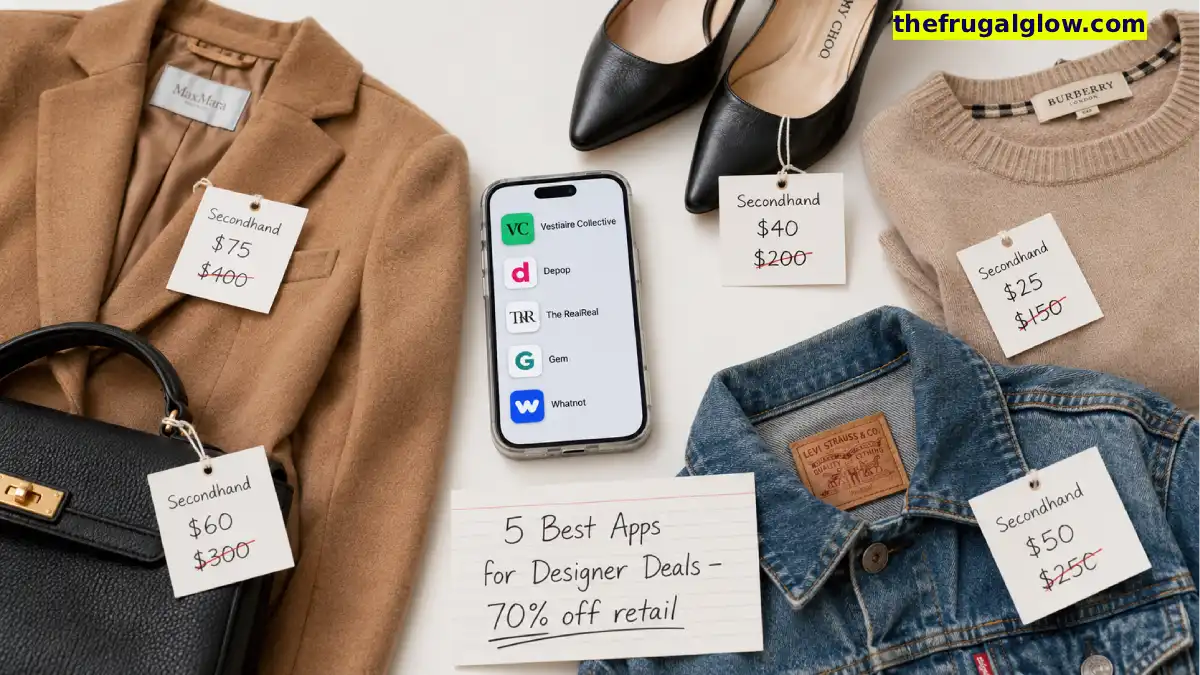
Let me tell you about the $400 designer blazer I bought for $75.
It was from a brand I’d been stalking for months. The retail price was $400. Way out of my budget. I checked Poshmark. Nothing. eBay. Nothing. I was about to give up when a friend told me about Vestiaire Collective.
I downloaded the app. I searched for the blazer. There it was. Same brand. Same size. Same color. Listed for $95. I made an offer for $75. The seller accepted.
The blazer arrived in perfect condition. Authentic. Gently worn. With the original tags still attached. I paid $75. The person who bought it new paid $400.
That was three years ago. Since then, I’ve bought a $300 bag for $60, a $200 pair of shoes for $40, and a $150 cashmere sweater for $25. All authentic. All in great condition.
And none of them came from Poshmark.
Don’t get me wrong. Poshmark is fine. It’s great for mid-tier brands like Lululemon, Free People, and Madewell. But for actual designer clothes? There are better apps. Apps with better authentication. Better prices. Better selection.
Today, I’m sharing the five best secondhand apps beyond Poshmark. These are the platforms where designer pieces sell for 70-90% off retail. Where authentication is built in. Where you can find that jacket, bag, or dress you’ve been dreaming of, for a fraction of the price.
Let’s get into it.
Jump Links
- The $400 Blazer That Taught Me About Better Apps
- Why Poshmark Isn’t Always the Best for Designer
- App #1: Vestiaire Collective – The Global Luxury Marketplace
- App #2: Depop – The Vintage and Streetwear Goldmine
- App #3: The RealReal – The Full-Service Consignment Powerhouse
- App #4: Gem – The Search Engine That Finds Everything
- App #5: Whatnot – The Live Auction Thrill
- How to Avoid Fakes (Authentication Explained)
- The Math: What I Saved in One Year
- Frequently Asked Questions (FAQ)
- Final Thoughts: Your Dream Designer Piece Is Out There (For 70% Off)
The $400 Blazer That Taught Me About Better Apps
I need to describe that moment I found the blazer on Vestiaire.
I had been refreshing Poshmark and eBay every day for three weeks. Nothing. I was convinced the blazer didn’t exist in the secondhand market. Then a friend said, “Try Vestiaire Collective. It’s where people sell European designer stuff.”
I downloaded the app. I typed in the brand name. And there it was. The blazer. My size. My color. Listed by a seller in France. The price? $95.
I made an offer for $75. The seller accepted within an hour. I paid. The blazer shipped from France to my apartment in the US. It took two weeks. When it arrived, I opened the box like it was Christmas morning.
The blazer was perfect. Authentic. Gently worn. The seller had included photos of the original receipt. I looked up the retail price online. $400. I paid $75. That’s 81% off.
That blazer taught me that Poshmark isn’t the only game in town. For luxury and designer pieces, there are better platforms. Platforms with built-in authentication. Global inventory. Serious sellers who know what they have.
I’ve been using these apps for three years now. I’ve saved thousands. And I’ve learned which platform is best for which type of designer piece.
Why Poshmark Isn’t Always the Best for Designer
Let me be clear. I don’t hate Poshmark. It’s great for mid-tier brands. I’ve bought Lululemon leggings, Free People tops, and Madewell jeans on Poshmark. The selection is huge. The social features are engaging. But for high-end designer pieces? There are better options.
The problems with Poshmark for designer:
Authentication is limited. Poshmark only authenticates items sold for $500 or more. That means a $400 designer bag? No authentication. A $300 designer blazer? No authentication. You’re trusting a stranger’s photos.
Fees drive prices up. Poshmark takes a 20% commission on sales over $15. Sellers raise their prices to compensate. That $400 blazer might be listed for $150 on Poshmark, but the same piece could be $95 on a lower-fee platform.
The audience is different. Poshmark’s core users are looking for mid-range mall brands, not archival designer pieces. Your dream vintage Chanel bag might sit undiscovered on Poshmark for months.
The social pressure is real. Poshmark’s sharing, following, and Posh Parties can be exhausting. Some people love it. Some just want to buy a blazer without attending a virtual party.
I still use Poshmark. But for designer pieces? I go elsewhere.
App #1: Vestiaire Collective – The Global Luxury Marketplace
Price range: $50-$10,000+
Authentication: Yes (mandatory for most items)
Best for: European luxury brands, designer handbags, high-end vintage
Fees for sellers: 12-15% commission + small flat fees
Why it made the list:
Vestiaire Collective is the app that changed how I buy designer clothes. It’s a global marketplace that connects buyers and sellers of authenticated luxury fashion. The platform is based in France, so the inventory leans heavily into European luxury brands.
Every item over a certain value goes through Vestiaire’s authentication process before it reaches the buyer. Digital screening first, then physical inspection by experts. That means you’re not guessing. You’re not trusting a stranger’s “I swear it’s real.” You’re buying with confidence.
The platform has been around for years and is consistently ranked as one of the top luxury resale marketplaces worldwide.
What you can find:
- Handbags from Chanel, Hermès, Louis Vuitton, Gucci, and Prada – often 50-70% off retail
- Designer clothing from Saint Laurent, Celine, Dior, Balenciaga – pieces you won’t find anywhere else
- High-end vintage and archival pieces – serious collectors use Vestiaire
- Shoes, accessories, and jewelry from top brands
What to look for:
European luxury brands are the sweet spot here. Chanel, Hermès, and Louis Vuitton bags hold their value, but you can still find them for 30-50% less than retail. Niche designer pieces (The Row, Lemaire, Toteme) are also common and often deeply discounted because the resale market for those brands is smaller.
Pro tips:
- Make offers. List prices are rarely final. I offered $75 on a $95 blazer. They accepted. Most sellers are open to negotiation.
- Check the seller’s location. International shipping takes time but often yields better prices. European sellers have access to different inventory than US sellers.
- Watch for authentication tags. Items that have been through Vestiaire’s authentication process come with a tag. Look for it when your package arrives.
- Use the “price drop” filter. Sellers on Vestiaire are notified when items have been sitting for too long. They often drop prices significantly.
What to skip:
If you’re looking for contemporary brands (Madewell, Everlane, Reformation), skip Vestiaire. The selection is limited, and prices aren’t competitive. Stick to Poshmark or Vinted for those.
App #2: Depop – The Vintage and Streetwear Goldmine
Price range: $20-$500 (with some higher-end pieces)
Authentication: None (trust the seller)
Best for: Vintage, Y2K, streetwear, one-of-a-kind pieces
Fees: Depop eliminated its seller fee in 2024. Buyers pay 3.3% + $0.45.
Why it made the list:
Depop is where fashion has personality. The app looks like Instagram but for selling clothes. Listings feel like posts. You see the person behind the item, their aesthetic, their vibe. That context makes buying feel more intentional.
The platform was just named a TIME100 Most Influential Company of 2026 for its role in making circular fashion mainstream. Ninety percent of Depop users are under 26. They’re young, they’re style-conscious, and they want unique pieces.
What you can find:
- Vintage band tees – 80s and 90s concert tees sell for $60-200 depending on the band and condition
- Y2K fashion – the early 2000s are having a huge moment. Think low-rise jeans, baby tees, and butterfly tops
- Streetwear – Supreme, Off-White, Palace, and other hype brands
- Authentic vintage – 70s floral dresses, 90s leather jackets, western wear
- Upcycled and handmade pieces – Depop has a strong community of creators who remake vintage clothing
What makes Depop special:
The discovery element is unmatched. You can fall into a rabbit hole on Depop. One search leads to another leads to a whole brand you’ve never heard of. It’s not just transactional. It’s cultural.
The seller community is also more engaged. Because Depop feels like social media, sellers put real effort into styling their photos, writing compelling descriptions, and building followings.
Pro tips:
- Good photos matter. Depop users scroll fast. Bright natural light, plain background, and detail shots of any flaws are essential.
- Include actual measurements. “Size Small” means nothing on Depop, where vintage sizing is all over the place. List bust, waist, hips, and length in inches.
- Check seller reviews. Depop doesn’t have the same authentication as Vestiaire. Read reviews before buying anything expensive.
- Use specific search terms. “Vintage Levi’s 501” will get you better results than “jeans.”
What to skip:
If you want a specific, current-season designer piece, Depop might not be the best bet. It’s better for discovery and vintage than for targeted designer hunting.
App #3: The RealReal – The Full-Service Consignment Powerhouse
Price range: $100-$10,000+
Authentication: Yes (in-house experts)
Best for: High-end luxury, consignment, hands-off selling
Fees for sellers: 40-55% commission (but you do nothing)
Why it made the list:
The RealReal is the gold standard for full-service luxury consignment. You send them your items. They photograph, price, list, and ship. You get a payout when it sells.
For buyers, The RealReal offers something unique: trust. Every item is authenticated by in-house experts. The platform is publicly traded. They have physical retail stores where you can see items in person.
The RealReal’s AI-driven pricing engine and use of blockchain technology have made it a leader in authentication. They’re consistently ranked as the number one luxury resale platform.
What you can find:
- Luxury handbags from Chanel, Hermès, Louis Vuitton, Gucci – the platform’s specialty
- Designer clothing from top brands – often with tags still attached
- Fine jewelry and watches – authenticated by experts
- Home goods and decor – a surprisingly good selection
How it’s different from Vestiaire:
The RealReal is consignment, not peer-to-peer. You’re buying from the platform, not directly from another person. That means prices are set by The RealReal’s experts, not by individual sellers. Sometimes that means higher prices. Sometimes it means more accurate pricing.
The RealReal also has physical stores in major cities. If you’re spending serious money on a handbag, you can see it in person before buying.
What to look for:
Items from brands that hold their value: Hermès, Chanel, Louis Vuitton, Gucci, Prada. The RealReal is particularly strong for handbags and fine jewelry.
Pro tips:
- Check the condition notes. The RealReal has a detailed condition rating system (Pristine, Excellent, Very Good, Good). Read the notes carefully.
- Look for “final sale” items. These are often deeply discounted because returns aren’t accepted.
- Sign up for email alerts. The RealReal runs frequent sales (extra 20% off, etc.). Don’t pay full price.
What to skip:
If you’re looking for mid-tier brands (J.Crew, Banana Republic), skip The RealReal. The commissions are too high for those items to be priced competitively. Stick with Poshmark or Vinted for those.
App #4: Gem – The Search Engine That Finds Everything
Price range: Varies (aggregates from other platforms)
Authentication: Depends on source platform
Best for: Serious hunting, price comparison, finding rare items
Cost: Free
Why it made the list:
Gem isn’t a marketplace. It’s a search engine for secondhand fashion. It scans over 700 vintage sellers and major resale platforms simultaneously: eBay, Etsy, The RealReal, Depop, Vestiaire Collective, and Poshmark.
If you’re looking for a specific piece – a Fendi Baguette bag, a vintage Levi’s jacket, an archival Marc Jacobs dress – Gem will show you every listing across the internet in one scrollable page.
The New York Times profiled Gem in 2025, calling it “an in-the-know way to find wardrobe treasures”. Fashion writers, vintage collectors, and costume designers all use it.
What makes Gem special:
You can compare prices instantly. That vintage bag you found on The RealReal for $180? Gem will show you the same bag on eBay for $500 and on Vestiaire for $500, all in one place. You’ll know if you’re getting a deal.
It saves time. Instead of opening 20 browser tabs for all the different platforms, you search once.
It has a search-by-image feature. Upload a photo of the item you’re looking for, and Gem will find similar listings.
Who uses Gem:
- Television costume designers sourcing specific vintage pieces
- Jewelry designers looking for Art-Deco-era pieces
- Vintage collectors comparing prices on archival designer bags
- Regular people who want to find something specific without checking six apps
Pro tips:
- Use specific search terms. “Vintage Chanel tweed jacket” is better than “Chanel jacket.”
- Filter by condition. You can filter for “like new” or “excellent condition” to avoid beat-up items.
- Check the source platform’s return policy. Gem is just a search tool. You’ll be buying on the original platform. Know their policies before purchasing.
- The color filter is missing. Users report that Gem lacks a color filter, which can be annoying when searching for something specific.
What to skip:
If you’re just casually browsing and don’t know what you want, Gem might feel overwhelming. It’s best for targeted hunting.
App #5: Whatnot – The Live Auction Thrill
Price range: $10-$1,000+
Authentication: Yes for select categories
Best for: Live auctions, sneakers, streetwear, collectibles
Fees for sellers: 8% commission plus processing
Why it made the list:
Whatnot is completely different from every other app on this list. It’s a live streaming auction platform. Sellers go live, show their items in real time, and buyers bid, chat, and compete.
The energy is addictive. Sellers are personalities. The chat moves fast. Bids come in seconds. You can feel the excitement. It’s part shopping, part entertainment, and part community hang.
Whatnot started in collectibles (sports cards, Pokémon, comics) and has been expanding into fashion, sneakers, and vintage. The platform has carved out an especially devoted following in streetwear and sneaker communities.
What you can find:
- Sneakers – Jordans, Nike Dunks, Yeezys. If you know sneakers, Whatnot is a goldmine
- Streetwear – Supreme, Off-White, Palace, Bape
- Vintage – Band tees, leather jackets, 90s sportswear
- Luxury handbags – growing category, but do your research
Why it’s different:
You’re not just clicking “buy.” You’re watching. Waiting. Bidding. Winning. The live format creates genuine excitement. And because sellers are on camera, you can ask questions in real time. “Can you show the back?” “Is there any staining?” “What’s the condition of the soles?”
The community aspect is also strong. Buyers follow specific sellers they trust. They show up to every stream. Sellers build loyal audiences.
Pro tips:
- Watch before you bid. Spend a few streams just observing. Learn how bidding works. See which sellers have good reputations.
- Set a budget. The live format encourages impulse buying. Decide what you’re willing to spend before you start bidding.
- Check the seller’s reviews. Whatnot has seller ratings. Don’t buy from someone with a low score.
- Factor in shipping and fees. Whatnot takes an 8% cut plus processing. Buyers also pay shipping.
What to skip:
If you don’t like the pressure of auctions or prefer to browse at your own pace, Whatnot might not be for you. It’s not relaxing. It’s thrilling.
How to Avoid Fakes (Authentication Explained)
Buying secondhand designer clothes comes with risks. Here’s how to protect yourself.
Which apps have authentication:
| App | Authentication | Process |
|---|---|---|
| The RealReal | Yes (mandatory) | In-house expert review before listing |
| Vestiaire Collective | Yes (mandatory for most) | Digital screening + physical inspection |
| Depop | No | Trust the seller (but has buyer protection) |
| Whatnot | Yes for select categories | Varies by category |
| Gem | N/A | Gem aggregates listings; authentication depends on source |
How to spot fakes yourself:
Check the price. If a $2,000 bag is selling for $200, be suspicious. Authentic luxury holds value. An authentic Chanel bag might be 50-70% off retail, not 90%.
Look at the photos. Are they blurry? Poorly lit? Sellers of authentic luxury invest in good photos. If the photos look like they’re hiding something, they probably are.
Ask for more photos. A legitimate seller will happily provide photos of the serial number, the logo stamp, the stitching, and the hardware. A scammer will make excuses.
Compare to known authentic items. Google the brand and item name. Look at the brand’s official website. Compare the logo font, the hardware shape, and the stitching pattern.
Trust your gut. If something feels off, walk away. There will always be another listing.
What to do if you buy a fake:
Most platforms have buyer protection. If you receive a fake, file a claim immediately. Take photos of the item and the packaging. Show why you believe it’s counterfeit. Most platforms will refund you.
The Math: What I Saved in One Year
Let me break down the actual dollars.
Before (buying designer at retail or from the brand’s website):
| Item | Retail Price |
|---|---|
| Designer blazer | $400 |
| Designer bag | $300 |
| Designer shoes | $200 |
| Cashmere sweater | $150 |
| Vintage denim jacket | $250 |
| Total | $1,300 |
After (buying on secondhand apps):
| Item | Platform | Price Paid |
|---|---|---|
| Designer blazer | Vestiaire Collective | $75 |
| Designer bag | The RealReal | $60 |
| Designer shoes | Depop | $40 |
| Cashmere sweater | Vestiaire Collective | $25 |
| Vintage denim jacket | Whatnot | $50 |
| Total | $250 |
Annual savings: $1,050
Over 5 years: $5,250
That’s not a typo. Five thousand dollars saved by buying secondhand.
What I did with the savings:
- Took a vacation ($800)
- Bought a nice leather bag (full price, from the brand – my one splurge)
- Put the rest into savings
And my closet is full of pieces I genuinely love, not just things I bought because they were “a good deal.”
The ‘Incognito’ Shopping Hack: How to Get Lower Prices on Flights & Fashion
Frequently Asked Questions (FAQ)
1. Which app is best for authentic luxury handbags?
The RealReal is the gold standard for luxury handbags. Their in-house authentication process is rigorous, and they have physical stores where you can see items in person. Vestiaire Collective is also excellent, especially for European brands like Chanel and Hermès.
2. Can I trust Depop for expensive purchases?
Depop has no formal authentication process. For purchases under $200, it’s usually fine. For expensive items, stick with Vestiaire or The RealReal. If you do buy something pricey on Depop, check seller reviews thoroughly and ask for detailed photos.
3. Why are prices so much lower on Vestiaire than on The RealReal?
Vestiaire is peer-to-peer. Sellers set their own prices. The RealReal is consignment. They set the prices and take a higher commission (40-55%). That means sellers on Vestiaire can afford to list lower prices because they keep more of the sale.
4. Which app has the lowest fees for sellers?
Depop eliminated its seller fee in 2024. Sellers only pay the 3.3% + $0.45 payment processing fee. Vinted is even cheaper – zero seller fees, but buyers pay a small protection fee.
5. How does Gem work if it’s not a marketplace?
Gem is a search engine. It scans over 700 vintage sellers and major resale platforms simultaneously. You search once, and Gem shows you listings from eBay, Etsy, The RealReal, Depop, Vestiaire, and Poshmark all in one place. When you find something you want to buy, Gem sends you to the original platform to complete the purchase.
Final Thoughts: Your Dream Designer Piece Is Out There (For 70% Off)
Here’s what I want you to take away.
That $400 blazer taught me that the secondhand market is bigger and better than most people realize. Poshmark is fine. But for designer pieces, there are better apps. Apps with better authentication. Better prices. Better selection.
Vestiaire Collective for European luxury and handbags. Depop for vintage and streetwear. The RealReal for full-service consignment and peace of mind. Gem for hunting down specific pieces. Whatnot for the thrill of the live auction.
Each app has its strengths. Each has its weaknesses. The key is knowing which one to use for which purchase.
And the savings? They’re real. Thousands of dollars per year. Real money that can go toward travel, savings, or anything else.
So next time you’re dreaming of a designer piece, don’t go straight to the brand’s website. Don’t pay full price. Download these apps. Start hunting. Be patient.
Your dream piece is out there. And it’s probably 70% off.
That’s the frugal glow. And it’s hiding in someone else’s closet. 👗💛
For more secondhand shopping guides, luxury resale tips, and money-saving fashion strategies, visit The Frugal Glow.