

The $1 Banana Hair Mask: Deeply Repair Frizzy, Damaged Hair Without the Salon Price Tag
Jump Links
- Why Your Damaged Hair Might Just Need a Banana
- What the Research Actually Says
- What You’ll Need (Total Cost: About $1)
- How to Make and Apply the Mask
- Banana Mask Variations for Different Hair Concerns
- Realistic Results Timeline
- Common Mistakes That Leave Banana Chunks in Your Hair
- Who Should Be Cautious With This Mask
- Cost Breakdown: Banana Mask vs. Salon Deep Conditioning
- The Bottom Line
- FAQ
Why Your Damaged Hair Might Just Need a Banana
Between heat styling, color treatments, and just general life stress on your strands, damaged hair is basically a universal experience at this point. And the salon fix, a $60-100 deep conditioning treatment, isn’t always in the budget, especially if your hair needs that kind of TLC more than once a month.
Here’s where things get interesting. One of the most effective, and cheapest, deep conditioning ingredients might already be sitting in your fruit bowl going soft and speckled. Bananas are loaded with potassium, natural oils, and moisture-binding compounds that genuinely help smooth the hair cuticle and cut down on frizz. This isn’t a miracle cure that regrows damaged hair overnight, but for temporary softness, shine, and manageability, it holds up surprisingly well against ingredients you’d find in pricier salon products.
This guide walks you through exactly how to make and use a banana hair mask, what the actual research says (and doesn’t say) about why it works, a few smart variations depending on your hair type, and how to avoid ending up picking banana chunks out of your hair for a week (yes, that’s a real risk if you skip a step).
What the Research Actually Says
Let’s be upfront here: dedicated clinical research on banana hair masks specifically is limited. There isn’t a large randomized trial that put banana paste head-to-head against a salon treatment. What we do have is solid science on the individual components that make up a banana, and on how oils and humectants interact with hair structure, which explains why this remedy has stuck around for so long.
Bananas are rich in potassium and natural sugars that act as humectants, meaning they help draw and hold moisture into the hair shaft. The hair cuticle, the outermost protective layer of each strand, is made up of overlapping keratin scales, and when hair is dehydrated or damaged, those scales lift and separate, which is exactly what creates that rough, frizzy texture. Ingredients that bind moisture into the shaft help those cuticle scales lie flatter, which is what gives hair a smoother, shinier look immediately after a mask.
If you add oil to your banana mask, and most versions do, there’s stronger research to lean on. A well-known study published in the Journal of Cosmetic Science examined how coconut, sunflower, and mineral oil affected hair damage, and researchers found that coconut oil in particular was the only oil among those tested that meaningfully reduced protein loss in both damaged and undamaged hair when used before or after washing. The reason comes down to coconut oil’s molecular structure: it’s small and linear enough to actually penetrate into the hair shaft rather than just coat the surface, which limits swelling and the resulting cuticle damage that happens during washing.
So while the banana itself is more of a moisture and shine booster, pairing it with a penetrating oil like coconut oil gives you a mask that’s doing real, evidence-backed work at the strand level, not just smelling nice and feeling fun to apply.
What You’ll Need (Total Cost: About $1)
| Ingredient | Amount | Approx. Cost | Purpose |
|---|---|---|---|
| Very ripe banana | 1 medium | $0.25 | Base moisture and shine |
| Coconut oil | 1 tablespoon | $0.20 | Penetrates shaft, reduces protein loss |
| Honey | 1 tablespoon | $0.15 | Humectant, adds softness |
| Plain yogurt (optional) | 1 tablespoon | $0.20 | Extra protein and slip for detangling |
| Shower cap or plastic wrap | — | $0 (reusable) | Traps heat, boosts absorption |
Total cost per mask: roughly $0.60 to $1, depending on which optional add-ins you use. If you already have coconut oil and honey in your pantry, which a lot of people do, you’re looking at spending almost nothing beyond the banana itself.
How to Make and Apply the Mask
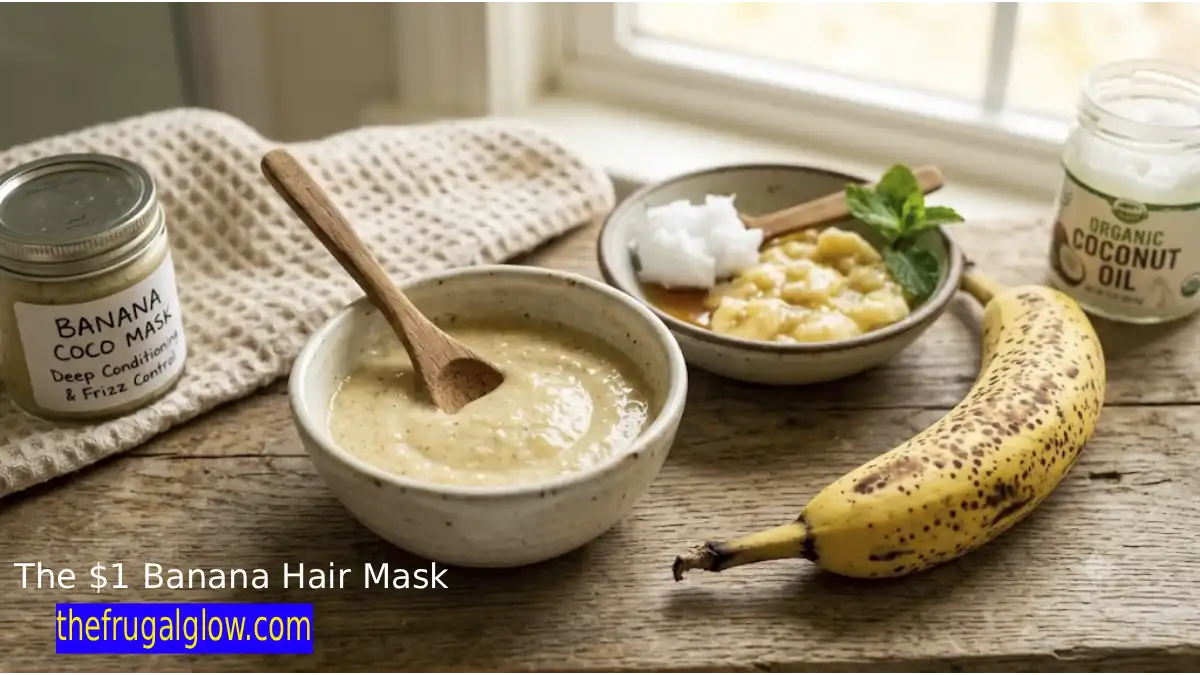
- Choose an overripe banana. The riper and softer the banana, the easier it blends into a smooth paste and the fewer lumps you’ll be dealing with later. Brown-speckled bananas are ideal.
- Mash thoroughly. Use a fork or, better yet, a blender to get a completely smooth, lump-free consistency. This step matters more than people expect, since banana chunks left behind in hair are notoriously annoying to rinse out.
- Mix in your oil and honey. Stir in the coconut oil and honey (and yogurt, if using) until fully combined into a creamy, spreadable paste.
- Apply to damp, freshly washed hair. Section your hair and work the mask from mid-length to ends, focusing on the driest and most damaged areas. If your scalp is oily, avoid applying directly to your roots.
- Cover and let it sit. Twist your hair up, cover with a shower cap, and let the mask sit for 20-30 minutes. Adding gentle heat, like a warm towel wrapped over the cap, can help the oil penetrate more effectively.
- Rinse extremely thoroughly. This is the step people skip and regret. Rinse with lukewarm water first to loosen the banana, then follow with your regular shampoo to make sure every trace is gone. Skipping a proper shampoo rinse is the number one reason people end up with bits of dried banana in their hair later.
- Follow with conditioner as usual. The mask isn’t a replacement for your regular conditioner, think of it as a weekly booster layered into your normal routine.
Banana Mask Variations for Different Hair Concerns
| Hair Concern | Add This to the Base Mask | Why It Helps |
|---|---|---|
| Frizzy, humidity-prone hair | Extra tablespoon of coconut oil | Coconut oil’s penetration helps seal the cuticle against moisture swings |
| Dry, brittle ends | 1 tablespoon of honey + 1 tablespoon olive oil | Honey binds moisture, olive oil adds slip and softness |
| Color-treated hair | 1 tablespoon plain yogurt | Added protein helps support strands weakened by chemical processing |
| Fine, limp hair | Skip the oil, use banana + honey only | Keeps the mask lightweight so hair doesn’t feel weighed down |
| Dandruff-prone scalp | 1 teaspoon lemon juice (ends only, avoid scalp) | Natural acidity may help with buildup, though patch test first |
Realistic Results Timeline
- Immediately after rinsing: Hair typically feels noticeably softer and looks shinier. This is the humectant and oil coating effect, and it’s very real, just not permanent.
- After 3-4 weekly uses: Cumulative smoothing becomes more apparent, especially in terms of reduced frizz and easier detangling.
- After 6-8 weeks: If used consistently alongside gentler heat styling habits, hair generally shows improved manageability and shine retention between washes.
Keep in mind this mask addresses surface-level moisture and shine. It is not going to reverse structural damage like split ends. For that, regular trims are still the only real fix.
Common Mistakes That Leave Banana Chunks in Your Hair
- Not blending the banana smooth enough. Fork-mashing alone often leaves small chunks. A quick pulse in a blender solves this completely.
- Skipping the shampoo rinse. Water alone won’t fully remove the mask. Always follow with shampoo.
- Applying too close to the scalp. Unless you’re specifically targeting scalp dryness, keep the mask on your lengths and ends to avoid weighing down your roots.
- Leaving it on too long. More than 30-40 minutes doesn’t add extra benefit and just makes rinsing harder.
- Using an underripe banana. Firmer bananas are harder to blend smooth and more likely to leave residue behind.
Who Should Be Cautious With This Mask
While a banana hair mask is an incredibly safe, food-grade treatment for the vast majority of hair types, it isn’t a one-size-fits-all solution. To protect your scalp health and your investment in your hair care routine, there are a few specific scenarios where you should exercise caution or bypass this treatment entirely:
- The Latex-Fruit Syndrome Risk: If you have a known allergy to bananas, this is an obvious skip. However, what many people don’t realize is the high rate of cross-reactivity with latex allergies. Bananas contain specific proteins (chitinases) that are structurally almost identical to the allergens found in natural rubber latex. If you experience oral allergy syndrome or skin irritation around latex, do not apply this mask to your hair or scalp—opt for a pure oil or aloe-based treatment instead.
- Oily Scalps & Hairline Acne: Bananas are rich in heavy natural sugars and starches. If your scalp leans oily or you are prone to acne breakouts along your hairline, temple, or neck, you need to change your application technique. Applying this mask directly to the roots can easily clog pores, trap excess sebum, and lead to localized breakouts. The smart fix? Treat the mask like a high-end salon conditioner: apply it strictly from the mid-lengths down to your ends, where the moisture is actually needed, keeping it at least two inches away from your scalp.
- Chemically Altered & Keratin-Treated Hair: If you have recently invested in a professional keratin treatment, chemical relaxer, or Brazilian blowout, treat at-home raw masks with caution. While bananas won’t strip your hair, the dense mechanical buildup of raw starches can occasionally weigh down the chemical coating or alter the sleek texture your treatment is designed to maintain. Always consult your stylist first, or stick to the specific post-treatment salon products to ensure your $200+ investment lasts as long as possible.
Cost Breakdown: Banana Mask vs. Salon Deep Conditioning
| Treatment Type | Average Cost | Frequency People Typically Afford |
|---|---|---|
| Salon deep conditioning treatment | $60-100 | Once a month, if budget allows |
| High-end store-bought hair mask | $20-35 | Every few weeks |
| DIY banana hair mask | $0.60-$1 | Weekly, with no real budget strain |
Using this mask weekly instead of a monthly salon treatment can save you anywhere from $200 to $400 a year, while still giving your hair a consistent moisture boost in between.
The Best Budget Hair Growth Oils, According to Dermatologists
The Bottom Line
You don’t need a salon appointment or an expensive tub of hair mask to give damaged, frizzy hair a real moisture boost. A ripe banana, a spoonful of coconut oil, and a bit of honey cover the same basic job that a lot of pricier products are doing, hydrating the strand, smoothing the cuticle, and cutting down on frizz, for a fraction of the cost. It’s not a permanent fix for deep structural damage, but as a regular part of your routine, it’s a legitimately smart, budget-friendly way to keep your hair looking healthier between washes.
For more affordable hair and beauty fixes like this one, check out The Frugal Glow for more ways to take care of yourself without spending a fortune.
FAQ
Does a banana hair mask actually repair damaged hair?
It cannot repair structural, permanent damage like split ends, but it does provide immediate moisture, softness, and shine benefits. When paired with an oil like coconut oil—which is research-backed to reduce protein loss—it temporarily fills in cuticle gaps to make hair look healthier.
How often should I use a banana hair mask?
Once a week is an ideal starting point for normal to dry hair types. If you have fine or oily hair, it is better to use it every other week to prevent heavy starches and sugars from causing product buildup.
Why does a banana mask leave stubborn chunks in my hair?
This happens when the banana is mashed with a fork instead of being pureed completely smooth, or if it dries out in your hair. Using a high-speed blender, straining the mixture, and doing a proper double rinse with warm water solves this completely.
Can I leave a banana hair mask on overnight?
No, it is not recommended. Leaving it overnight doesn’t add extra benefits and carries a high risk of the mixture drying into a hard, cement-like texture that is incredibly difficult to rinse out without causing hair breakage.
Is coconut oil necessary for this mask to work?
No, but it is highly recommended if you want maximum repair. Coconut oil is one of the few oils proven to penetrate the hair shaft deeply and prevent protein loss, rather than just sitting on top of the strands.
Can I use a banana hair mask on color-treated hair?
Yes, it is safe for color-treated hair. To boost its effects for chemically weakened strands, consider adding a tablespoon of plain yogurt to deliver an extra dose of strengthening proteins.