

Why I Stopped Buying $40 Scalp Scrubs and Made This $2 Sea Salt Alternative
Jump Links
- The $40 Bottle That Made Me Stop and Do the Math
- What the Research Says About Scalp Exfoliation
- What You’ll Need (Total Cost: About $2)
- How to Make and Use the Sea Salt Scrub
- Sea Salt Scrub Variations Based on Your Scalp Type
- How Often You Should Actually Use It
- Mistakes That Can Leave Your Scalp Worse Off
- Who Should Skip Sea Salt Scrubs
- Cost Breakdown: Bottled Scrub vs. DIY
- The Bottom Line
- FAQ
The $40 Bottle That Made Me Stop and Do the Math
I bought my first “scalp detox scrub” because a hairstylist mentioned my scalp had some buildup going on, and honestly, once someone says the word “buildup” out loud, you can’t unhear it. So I dropped $38 on a fancy little jar that turned out to contain exactly what I expected once I flipped it over and read the ingredient list: salt, a couple of oils, and some fragrance.
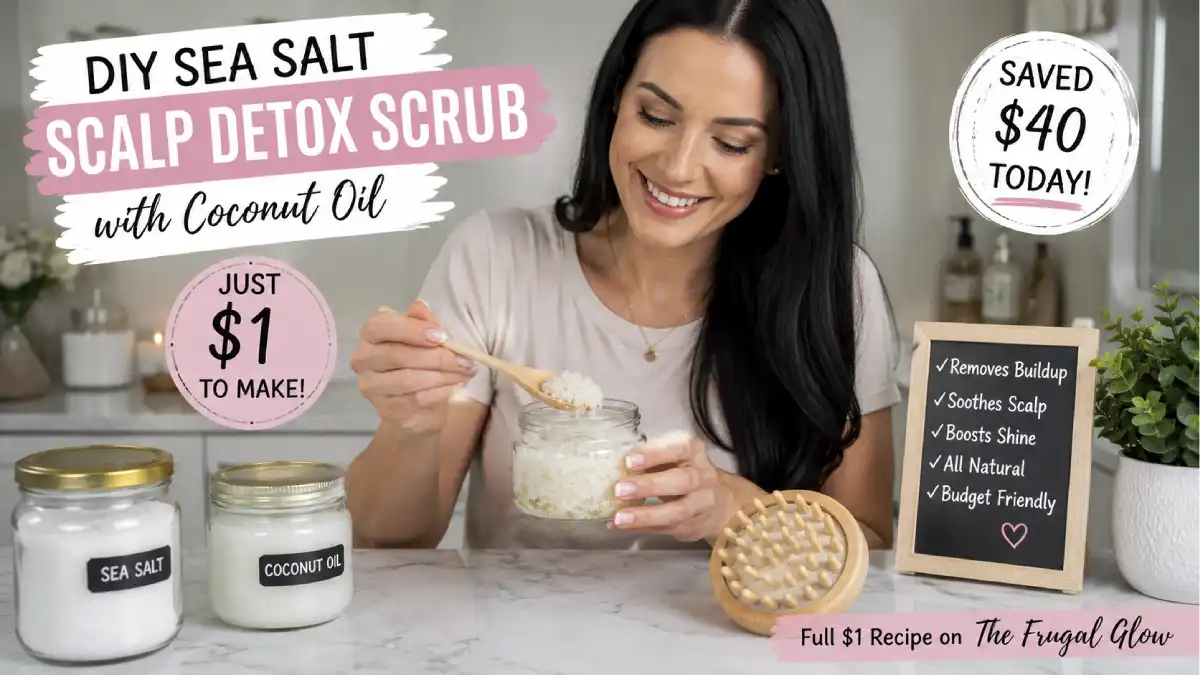
That was the moment I stopped and actually did the math. I had just paid nearly $40 for something I could put together on my kitchen counter in about two minutes for roughly the cost of a candy bar. So I did exactly that, and I haven’t bought a bottled scalp scrub since.
This isn’t me telling you every $40 scrub is a scam. Some brands do add legitimately beneficial extras like salicylic acid or specific botanical actives. But for a basic mechanical exfoliation scrub, the kind most people actually reach for, sea salt does the job just as well, and there’s real research backing up why scalp exfoliation matters in the first place.
What the Research Says About Scalp Exfoliation
Scalp exfoliation isn’t just a trendy TikTok routine, there’s genuine clinical research behind it. A study assessing a scalp treatment regimen that combined a hydroxy-acid-based exfoliating scrub with a hydrating serum, published and tracked through the National Center for Biotechnology Information, found that after just 15 days of use, the percentage of participants with a normal, healthy-looking scalp increased from zero to nearly 45 percent, alongside significant improvements in scalp hydration and reductions in itchiness, redness, and flaking.
The underlying mechanism makes sense once you understand what’s actually happening on your scalp. Dead skin cells, product residue, and natural oils accumulate over time, and when they’re not regularly cleared away, they can clog hair follicles and create a favorable environment for a yeast called Malassezia, which is closely linked to dandruff and flaking. Regular, gentle exfoliation physically lifts this buildup away, which is the same basic mechanism whether you’re using a $40 bottled scrub or a homemade sea salt version.
Board-certified dermatologists have generally supported the idea that a clean, well-exfoliated scalp creates a better environment for healthy hair growth, since clogged or inflamed follicles can slow down normal hair cycling. That said, the research and dermatologist consensus are consistent on one point: the benefit comes from the physical exfoliation and gentle massage itself, not from any specific expensive ingredient. Salt, sugar, and coffee grounds all work through the same basic mechanical principle.
What You’ll Need (Total Cost: About $2)
| Ingredient | Amount | Approx. Cost | Purpose |
|---|---|---|---|
| Coarse sea salt | 3 tablespoons | $0.30 | Physical exfoliant |
| Olive oil or coconut oil | 2 tablespoons | $0.40 | Softens texture, moisturizes scalp |
| Tea tree oil (optional) | 3-4 drops | $0.20 | Additional anti-dandruff support |
| Peppermint or rosemary oil (optional) | 2-3 drops | $0.20 | Cooling sensation, scalp stimulation |
| Small jar for storage | — | $0 (reusable) | Storage between uses |
Total cost per batch: around $1 to $2, and since this makes multiple uses per batch, your actual cost per application ends up closer to 30-40 cents.
A quick note on salt size: go coarse, not fine table salt. Fine salt dissolves too quickly and doesn’t provide enough texture to actually exfoliate, while coarse sea salt holds its shape long enough to do the job properly.
How to Make and Use the Sea Salt Scrub
- Combine your ingredients. In a small bowl or jar, mix the sea salt with your chosen oil until you get a wet, sandy texture, not a runny liquid and not a dry pile of salt.
- Add optional extras. If you’re using tea tree or peppermint oil, stir those in now. A few drops go a long way, so don’t overdo it.
- Apply to dry hair before washing. Section your hair and apply the scrub directly to your scalp, focusing on areas prone to buildup like your part line and the crown.
- Massage gently in circular motions. Spend 2-3 minutes working the scrub in with your fingertips or a scalp massage brush. Let the salt do the work, you don’t need to press hard.
- Let it sit for 5 minutes. This gives the oil time to soften any product buildup before you rinse.
- Rinse thoroughly, then shampoo as normal. Rinse most of the salt out with warm water first, then follow with your regular shampoo to fully clear away the oil and any remaining residue.
- Follow with conditioner. Since exfoliation can leave hair feeling slightly dry, always follow with your usual conditioner on the lengths and ends.
Sea Salt Scrub Variations Based on Your Scalp Type
| Scalp Type | Recommended Add-In | Why It Helps |
|---|---|---|
| Oily, buildup-prone scalp | Tea tree oil (3-4 drops) | Tea tree has natural antimicrobial properties that pair well with oily conditions |
| Dry, flaky scalp | Extra tablespoon of oil, skip tea tree | Extra moisture prevents the scrub from feeling too stripping |
| Itchy or irritated scalp | Peppermint oil (2 drops only) | Provides a cooling sensation, but use sparingly since it can be stimulating |
| Fine or thinning hair | Reduce salt to 2 tablespoons | Gentler texture reduces the chance of irritation on sensitive scalps |
| Color-treated hair | Skip tea tree, use jojoba oil instead | Jojoba is gentle and less likely to affect color vibrancy |
How Often You Should Actually Use It
- Oily or buildup-prone scalp: Once a week is generally well tolerated.
- Normal scalp: Every 1-2 weeks strikes a good balance.
- Dry or sensitive scalp: Every 2-3 weeks, or less if you notice any irritation.
More frequent use does not equal better results. Over-exfoliating can actually damage the scalp barrier and make dryness, flaking, and irritation worse instead of better, so resist the urge to scrub daily even if it feels satisfying.
Mistakes That Can Leave Your Scalp Worse Off
Avoiding execution errors is just as important as choosing the right ingredients. Because sea salt is a powerful, coarse exfoliant, small mistakes in how you apply it can quickly turn a clarifying spa treatment into an irritating, painful experience. If you want to avoid damaging your hair and scalp, make sure you aren’t making these common mistakes:
- Scrubbing Too Hard (Aggressive Friction): Scalp exfoliation is about consistent, gentle contact, not deep muscle massage. Pressing down too hard or using your fingernails instead of your fingertips can create painful micro-tears in the sensitive scalp skin. These microscopic open wounds disrupt your skin barrier, making you highly vulnerable to bacterial infections, burning, and localized inflammation.
- Using Fine Table Salt Instead of Coarse Sea Salt: It is a major misconception that fine table salt is gentler. Highly processed table salt dissolves almost instantly upon contact with any moisture, failing to provide any real physical exfoliation. Worse, table salt often contains anti-caking chemical additives and has a higher density that can cause severe stinging on a sensitive scalp compared to natural, mineral-rich coarse sea salt.
- Applying to Drastically Wet or Bone-Dry Hair: Timing the moisture level is everything. If you apply the scrub to hair that is dripping wet, the salt will dissolve completely before it even touches your scalp. Conversely, applying it to bone-dry hair creates harsh friction that leads to severe hair breakage. The professional fix? Apply the scrub to damp, towel-dried hair right before stepping into the shower. This provides enough lubrication (slip) to protect your hair strands while keeping the salt crystals intact long enough to clean the scalp.
- Skipping the Patch Test with Essential Oils: Popular clarifying additives like tea tree, eucalyptus, or peppermint essential oils are incredible for blood circulation, but they are highly concentrated. Skipping a 24-hour patch test on a small patch of skin (like behind your ear) is a recipe for disaster. If your skin is sensitive to these volatile compounds, you risk developing contact dermatitis across your entire hairline.
- Exceeding the Safe Frequency Limit (Over-Exfoliating): Exfoliating your scalp more than once or twice a week is the fastest way to strip your skin of its natural, protective sebum. When you over-strip the scalp barrier, your body goes into survival mode and triggers a rebound effect—producing twice as much oil to compensate. Stick to a maximum of one to two sessions per week to keep your scalp balanced, clean, and healthy.
Who Should Skip Sea Salt Scrubs
While a sea salt scrub can be a game-changer for clearing out styling buildup, it is a highly mechanical physical exfoliant. Because salt crystals have sharp, micro-coarse edges, this treatment isn’t suitable for everyone. To protect your scalp barrier and prevent long-term hair damage, skip or modify this routine if you fall into any of the following categories:
- Open Cuticles, Sores, or Recent Chemical Processing: If you have any active acne sores, open cuts, scratched areas, or a sunburned scalp, avoid this scrub entirely. Salt in broken skin causes intense stinging and localized inflammation. Furthermore, if you have had a recent salon treatment—such as a perm, chemical relaxer, or a fresh hair color—wait at least two weeks before scrubbing. Physical abrasion can easily strip fresh hair color pigments and disrupt the freshly altered bonds of chemically treated strands.
- Chronic Scalp Conditions (Dandruff, Dermatitis, or Psoriasis): If you are dealing with diagnosed scalp conditions like psoriasis or seborrheic dermatitis, harsh physical scrubbing can trigger a “Koebner phenomenon,” where physical trauma actually worsens the inflammation and flaking. Instead of a physical scrub, recent clinical research suggests that chemical exfoliants, such as oil-soluble Salicylic Acid (BHA), are far more effective. These targeted acids smoothly penetrate dense sebum buildup and dissolve flakes at a cellular level without the risk of tearing the delicate scalp barrier.
- Fine, Fragile, or Thinning Hair: If your hair strands are naturally fine or you are currently experiencing hair thinning, you need to exercise extreme caution. The friction generated by massaging coarse salt crystals against the roots can cause micro-abrasions to the hair cuticle, leading to immediate hair breakage right at the base. If you still want to clarify your scalp, significantly reduce the ratio of salt in your recipe, blend it with a high-slip carrier oil, and limit your application to once every three weeks with a very light, feather-weight touch.
Cost Breakdown: Bottled Scrub vs. DIY
| Product Type | Average Cost | Cost Per Use (approx.) | Number of Uses Per Bottle |
|---|---|---|---|
| Drugstore scalp scrub | $15-25 | $1.25-$2.00 | ~12 uses |
| High-end scalp scrub | $35-45 | $2.90-$3.75 | ~12 uses |
| DIY sea salt scrub | $1-2 total | $0.15-$0.30 | ~6-8 uses per batch |
Even at the low end, switching to a DIY version saves roughly $15-40 every time you’d otherwise repurchase a bottled scrub, and that adds up fast if you’re exfoliating weekly or biweekly.
The Bottom Line
Scalp exfoliation is one of those rare skincare-adjacent trends that actually has solid research behind it, clogged follicles and built-up dead skin genuinely do affect scalp health and comfort. What the research doesn’t say is that you need a $40 bottle to get those benefits. A simple mix of coarse sea salt and oil, applied with the same gentle massage technique, does the same fundamental job. Give it a try for a few weeks, listen to how your scalp responds, and adjust frequency and add-ins from there.
For more ways to get salon-level results without the salon-level price tag, check out The Frugal Glow for more budget beauty breakdowns like this one.
FAQ
Does a DIY sea salt scrub work as well as a store-bought scalp scrub?
For basic mechanical exfoliation, yes, the core mechanism is identical. Store-bought versions with added actives like salicylic acid may offer extra benefits for specific conditions like dandruff, but for general buildup removal, sea salt performs the same function.
How often should I use a sea salt scalp scrub?
Most people do well with once a week for oily scalps and every 2-3 weeks for dry or sensitive scalps. Overdoing it can irritate the scalp barrier.
Can I use regular table salt instead of sea salt?
It’s not recommended. Table salt is too fine and dissolves too quickly to provide real exfoliation, and it can sting more on sensitive skin.
Will a sea salt scrub help with dandruff?
It can help with buildup-related flaking by removing dead skin and residue, but for dandruff linked to Malassezia yeast overgrowth or seborrheic dermatitis, a targeted anti-fungal or medicated treatment is usually more effective.
Is it safe to use a sea salt scrub on color-treated hair?
Yes, when applied correctly to the scalp rather than the hair shaft. Choosing a gentle oil like jojoba over stronger essential oils is a safer bet for preserving color vibrancy.
Can this scrub help with hair growth?
It won’t directly grow hair, but by keeping follicles clear of buildup and boosting circulation through massage, it can create a healthier environment that supports normal hair growth cycles.