

The True Cost of Salon Gel Nails vs. At-Home Kits: A 1-Year Financial Breakdown
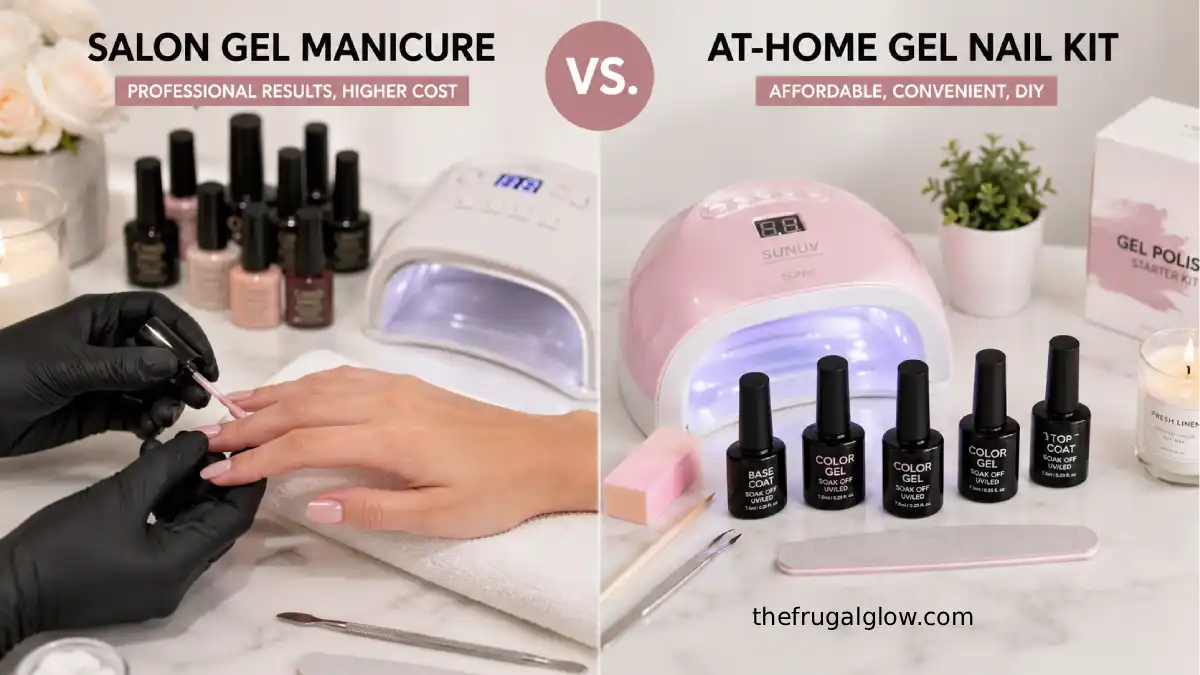
Gel manicures have a way of quietly becoming one of the most expensive recurring line items in a beauty budget without ever feeling like a “big purchase.” It’s just $45 every couple of weeks — until you actually sit down and add up twelve months of those $45 charges and realize you’ve spent more on your nails than on a lot of actual bills.
This breaks down the real, full-year cost of both options: getting gel done at a salon every two to three weeks, versus buying an at-home gel kit and doing it yourself. Real price ranges, real maintenance costs, and the hidden expenses both sides tend to leave out of the conversation.
Jump Links
- How Salon Gel Manicures Are Actually Priced
- Salon Gel Nails: 1-Year Cost Breakdown
- What an At-Home Gel Kit Actually Requires
- At-Home Gel Kit: 1-Year Cost Breakdown
- Side-by-Side Annual Comparison Table
- Year 2 and Beyond: How the Math Shifts
- Hidden Costs Both Options Don’t Advertise
- Time Cost: The Number Nobody Factors In
- Quality and Longevity Differences
- When Salon Gel Still Makes Financial Sense
- How to Make At-Home Gel Actually Work Long-Term
- FAQ
- The Bottom Line
How Salon Gel Manicures Are Actually Priced
Salon gel pricing isn’t a single flat fee — it’s layered, and that layering is exactly why the real annual cost tends to surprise people. A base gel manicure typically runs $30 to $55 in most U.S. markets, with major cities like Manhattan pushing that range up to $45–$70, while smaller markets can land closer to $25–$40. On top of that base price, a separate removal fee of $10 to $20 often applies when you’re not simply getting a refill on existing gel, and any nail art, shape changes, or length adjustments add another $5 to $25 per visit.
Because gel typically lasts two to three weeks before it needs to be redone, that means roughly 17 to 26 salon visits over the course of a full year for someone maintaining gel continuously. Multiply that visit frequency by the base price plus removal, and monthly costs commonly land between $70 and $170, which pushes many regular gel wearers into an annual range of roughly $840 to just over $2,000, depending on their specific market and salon tier.
Salon Gel Nails: 1-Year Cost Breakdown
When evaluating salon gel manicures, most people focus on the single transaction — paying $35 or $50 at the register. However, gel polish is fundamentally a recurring service contract, not a one-off luxury. Because natural nails grow about 3 millimeters per month, the “gap” at the cuticle forces a return visit every two to three weeks, regardless of whether the polish itself has chipped.
To understand the true annual baseline, we have broken down the expenses across two realistic consumer profiles: a Budget-Conscious Minimalist (low-end estimate) and a Boutique Regular (high-end estimate).
| Cost Component | Low-End Estimate (Every 3 Weeks) | High-End Estimate (Every 2 Weeks) |
|---|---|---|
| Base gel manicure per visit | $30 | $70 |
| Removal fee per visit (when not bundled into a refill) | $10 | $20 |
| Nail art / design add-ons (french tips, chrome, accent nails) | $0 | $15 |
| Standard tip (15% – 20%) | $6 | $17 |
| Visits per year (17 vs. 26 visits) | 17 visits | 26 visits |
| Estimated Annual Total | ~$782 | ~$2,652 |
Why the Gap Is So Massive: Breaking Down the Variables
The wide range between $782 and $2,652 isn’t an accounting error — it genuinely reflects how location, salon tier, and service frequency compounds over twelve months.
Here is how those small line items quietly inflate your annual budget:
1. The “Frequency Trap” (17 vs. 26 Visits)
- Every 3 Weeks (17 visits/year): This is the maximum lifespan most gel manicures can stretch before looking unsightly or risking nail bed lifting.
- Every 2 Weeks (26 visits/year): Common for fast-growing nails, professional environments requiring flawless grooming, or clients who dislike any visible growth gap. Adding just 9 extra visits per year increases your annual base spend by over 50%.
2. The Unseen Removal Fees
Salons rarely mention removal in their headline pricing. If you switch polish colors or get a fresh set without getting a full refill, salons charge a $10 to $20 soak-off fee. Over 26 visits, paying for removal alone can add up to $260–$520 a year — a cost that at-home kit owners completely eliminate.
3. Tipping and Add-On Creep
A 20% tip is standard in beauty services, but it scales directly with add-ons. A simple request for French tips ($10–$15) or a single accent nail art ($5) bumps the base service from $40 to $60. Once you recalculate the 20% tip on the higher total, a single visit jumps from $48 out-of-pocket to $72.
The Financial Takeaway:
Even on the strict lower end, maintaining salon gel nails costs nearly $800 annually. For the average metro-area consumer, the cost easily reaches $2,000+ per year — equivalent to a round-trip vacation ticket, a major emergency fund contribution, or several months of groceries.
What an At-Home Gel Kit Actually Requires
The upfront cost of transitioning to a DIY setup is surprisingly low — often matching or coming in under the cost of a single salon session. However, viewing an at-home gel kit as a “one-and-done” $40 purchase is a financial miscalculation.
To build an accurate budget, you have to separate your gel kit into two distinct categories: CapEx (Capital Expenditure on durable hardware) and OpEx (Operational Expenses on recurring consumables).
1. The Initial Hardware Investment (Upfront Capital)
A standard starter kit ranges from $25 to $90, depending on the brand quality, wattage of the curing lamp, and the number of initial color polishes bundled in.
The UV/LED curing lamp is the centerpiece of your setup and the single most critical factor in manicure longevity:
- Traditional UV Lamps: Older or budget models rely on standard UV bulb technology. These require 2 to 3 minutes of cure time per coat, draw more power, and require replacement bulbs every 3 to 6 months ($10–$15 per bulb set) as their intensity degrades.
- Modern Dual UV/LED Lamps (Recommended): Most contemporary starter kits now include dual light-source LED lamps. These cure gel coats in 30 to 60 seconds, run on long-lasting solid-state diodes (lasting 50,000+ hours without bulb swaps), and cure virtually all gel formulas on the market.
Pro-Tip on Hardware: Investing an extra $10–$15 upfront in a 48W+ dual LED lamp pays for itself quickly. Weak lamps fail to cure gel layers fully down to the nail plate, leading to premature peeling, chipping, and potential contact allergies.
2. The Ongoing Consumable Expense (Monthly Maintenance)
While hardware is a one-time purchase, maintaining salon-quality nails at home requires restocking consumable products. On average, active DIY users spend $20 to $40 per month on replenishments once their starter kit supplies run out.
These recurring items include:
- Prep & Prime Essentials: Pure acetone (for soak-off removal), 99% isopropyl alcohol or dehydrator, and lint-free wipes (regular cotton balls leave fibers in gel).
- Nail Health Products: Cuticle oil, nourishing hand creams, and glass or high-grit nail files/buffing blocks that wear down after several uses.
- Expanding Your Color Library: While a kit includes 1 to 3 starter shades, most users naturally purchase 1–2 new seasonal colors every couple of months ($7 to $15 per bottle).
The Real 1-Year At-Home Breakdown
When factoring in the starter kit plus ongoing refills, your real first-year spend looks like this:
| Expense Category | Year 1 Budget Estimate |
|---|---|
| Starter Kit (Lamp + Base/Top Coat + Initial Tools) | $45 – $80 (one-time) |
| Consumables Restock (Acetone, Wipes, Prep, Oils) | $60 – $100 (annual total) |
| Color Library Expansion (4–6 new polishes per year) | $40 – $90 (annual total) |
| Total Estimated Year 1 Out-of-Pocket | ~$145 – $270 |
Even at the higher estimate of $270 per year, going the DIY route delivers a massive 65% to 90% savings compared to salon visits.
At-Home Gel Kit: 1-Year Cost Breakdown
To fairly compare DIY gel manicures against salon visits, we must evaluate the full 12-month balance sheet. Unlike salon visits, where every single appointment carries a full recurring service charge, an at-home kit requires a small initial equipment investment followed by significantly lower monthly maintenance costs.
The table below breaks down the first-year financial commitment across a Budget DIYer (low-end estimate) and a Gel Enthusiast (high-end estimate who collects multiple polish shades and premium tools):
| Cost Component | Low-End Estimate | High-End Estimate |
|---|---|---|
| Starter kit (one-time upfront purchase) | $25 | $90 |
| Monthly refill products (gel polish, acetone, prep supplies) | $20 | $40 |
| Months of ongoing use (after initial kit month) | 11 months | 11 months |
| Occasional tool replacement (buffers, files, UV lamp bulbs) | $10 | $30 |
| Estimated Annual Total | ~$255 | ~$560 |
Key Takeaways from the At-Home Financial Model
1. Why 11 Months of Refills?
The initial starter kit typically includes enough supplies (base coat, top coat, prep solution, and 1 to 3 polish colors) to cover your first month or two of manicures. Therefore, monthly refill expenses are calculated over the remaining 11 months of the year, keeping your out-of-pocket spending predictable.
2. The Upfront Hardware Efficiency
Even at the high-end estimate of $560 per year, your entire annual spending on DIY gel manicures is substantially lower than the low-end salon baseline (~$782).
3. Long-Term Compound Savings (Year 2 and Beyond)
The primary driver of this cost disparity is hardware amortization. The curing lamp, cuticle pushers, and basic tools are non-consumable investments. Once paid for in Year 1, your Year 2 costs drop exclusively to replenishment supplies — dropping your annual spending down to an estimated $220 to $440 per year.
The Financial Verdict:
Choosing to do gel manicures at home isn’t just about saving a few dollars per month; it completely changes the cost structure from an expensive service subscription to a low-cost hobby. The price cap of doing it yourself at the highest tier ($560) easily beats doing it at a budget salon ($782), saving you anywhere from $500 to over $2,000 annually.
Side-by-Side Annual Comparison Table
| Category | Salon Gel Nails | At-Home Gel Kit |
|---|---|---|
| Year 1 total cost | $782–$2,652 | $255–$560 |
| Includes professional application | Yes | No (self-applied) |
| Includes professional removal | Often, if bundled | No (self-removed) |
| Requires travel/appointment time | Yes | No |
| Skill required | None | Learning curve involved |
| Customization control | Limited by technician/menu | Full control |
| Risk of nail damage if done poorly | Lower (professional technique) | Higher, especially early on |
| Approximate savings choosing at-home | — | $500–$2,000+ |
Year 2 and Beyond: How the Math Shifts
This is where the at-home option pulls even further ahead. Salon costs remain essentially flat year over year (adjusted for inflation and any price increases at your specific salon), since every single visit involves paying full price for both product and labor again.
At-home costs, on the other hand, drop significantly after year one, since the lamp — the single biggest upfront expense — is already paid for and doesn’t need repurchasing. Year two and beyond largely consists of just the recurring $20–$40 monthly refill cost, pushing the annual at-home total down to roughly $240–$480 for most regular users, excluding any occasional tool replacements. Over a three-year period, that gap between salon and at-home spending can realistically stretch into the thousands of dollars.
Hidden Costs Both Options Don’t Advertise
On the salon side:
- Tipping, typically 15–20% of the service price, which isn’t always factored into the “sticker price” people quote when estimating salon costs.
- Upcharges for shape changes, length, or design, which can turn an advertised $35 manicure into a $55–$70 visit without much warning.
- Cancellation or no-show fees at some salons, which add up for anyone with an unpredictable schedule.
On the at-home side:
- Product waste while learning, since beginners often use more gel polish per application than necessary, or ruin a bottle through improper cap-sealing and evaporation.
- Replacement of dried-out or expired gel polish, since unlike traditional nail polish, gel formulas can separate or become unusable if not stored and sealed properly.
- Potential dermatologist visits or treatment if improper technique (especially peeling off gel rather than soaking it off) leads to nail damage or infection — an infrequent but real cost that’s worth factoring in as a risk, not a certainty.
Time Cost: The Number Nobody Factors In
Money isn’t the only resource being spent here, and it’s worth acknowledging honestly. A full salon gel appointment, including drive time, waiting, application, and removal (if not bundled), often takes 60 to 90 minutes round-trip. Over 17 to 26 visits a year, that’s realistically 17 to 39 hours annually spent specifically on gel manicure appointments.
At-home application, especially early on, can actually take just as long or longer per session for a beginner still learning technique — often 45 minutes to an hour for a full application including cure time between coats. That gap narrows significantly with practice, and unlike a salon visit, there’s no commute time added on top. For many people, the at-home time cost evens out or even improves once past the initial learning curve, but it’s genuinely not a given, and it’s worth an honest self-assessment of your own patience and manual dexterity before assuming DIY will save time as well as money.
Quality and Longevity Differences
It’s worth being fair to the salon side of this comparison here. Professional application generally holds up longer and looks more polished for a simple reason: technicians have far more repetition and experience with proper prep, thin even coat application, and full cure times, all of which directly affect how long gel lasts before chipping or lifting. Independent nail industry pricing analysis has noted that a higher-priced, unhurried salon application can genuinely last longer per set than a rushed, budget walk-in application — making the pricier option cheaper on a per-week basis in some cases, which is a useful reminder that “cheaper” and “better value” aren’t automatically the same thing even within salon options.
At-home gel quality varies more widely and depends heavily on technique, patience with proper nail prep (buffing, cuticle work, and using a dehydrator or primer before applying base coat), and not skipping cure time between layers. With good technique, at-home gel can genuinely rival salon longevity; with rushed or incomplete technique, it tends to chip noticeably sooner.
When Salon Gel Still Makes Financial Sense
Despite the clear cost advantage of at-home kits, there are legitimate situations where salon visits remain the smarter choice:
- You have limited time or patience to learn a new skill, and the time cost of a frustrating, failed at-home attempt outweighs the money saved.
- You want intricate nail art or designs that require skill genuinely difficult to replicate without professional training and tools.
- You have nail health concerns (thin, damaged, or brittle nails) where professional assessment and application reduces risk compared to at-home trial and error.
- The appointment itself serves as a valued self-care ritual, where the relaxation and experience carry real value beyond just the manicure itself.
How to Make At-Home Gel Actually Work Long-Term
- Invest in a quality dual UV/LED lamp from the start rather than the cheapest option available, since inconsistent curing is the single biggest cause of early chipping and peeling in at-home gel manicures.
- Never peel or pick off gel polish. Proper soak-off removal with acetone and foil wraps protects the natural nail; peeling gel off can strip layers of the nail plate and cause long-term damage.
- Practice thin, even coats. Thick gel coats are harder to fully cure and more prone to lifting and chipping early.
- Keep polish bottles sealed tightly and stored away from direct sunlight and heat, which extends their usable shelf life significantly.
- Give yourself a few practice sessions before judging the investment. Like most skills, at-home gel application improves noticeably after the first several attempts.
Smart financial decisions start with real data. Head over to our Price Analysis hub to compare real-world costs and stretch your dollar further.
FAQ
Is doing gel nails at home actually cheaper over a full year?
Yes, in almost every realistic scenario. Even accounting for the upfront kit cost and ongoing refill products, a year of at-home gel typically lands in the $255–$560 range, compared to $782–$2,652 for regular salon visits.
Does at-home gel last as long as salon gel?
It can, with good technique — including proper nail prep, thin even coats, and a quality curing lamp. Salon application generally has a slight edge in consistency and longevity simply due to technician experience and repetition.
What’s the single most important item in an at-home gel kit?
The curing lamp. An underpowered or incompatible lamp is the most common cause of gel that stays soft, sticky, or peels prematurely, regardless of how good the polish itself is.
Is it true that removing gel at home can damage your nails?
Improper removal, specifically peeling or picking off gel rather than soaking it off with acetone, can damage the natural nail plate. Proper soak-off technique, done at home or in a salon, is much safer for nail health.
How much should I budget monthly for at-home gel maintenance after the initial kit?
Most regular at-home gel users budget roughly $20 to $40 per month for refill products like gel polish, acetone, and prep supplies, once the initial lamp and starter tools are already purchased.
Does salon gel ever come out cheaper than at-home in the long run?
It’s uncommon over a full year of regular use, but for someone getting gel done only occasionally (a handful of times per year) rather than continuously, the salon route can end up cheaper than purchasing an at-home kit that then sits mostly unused.
The Bottom Line
Salon gel manicures and at-home kits solve the same basic goal, but the math genuinely isn’t close over a full year. A regular salon habit realistically runs somewhere between $782 and over $2,600 annually, while a well-used at-home kit typically lands under $600 in year one and drops even lower in every year after that. The trade-off is real too, including a learning curve, time investment upfront, and a small risk of nail damage while getting the technique right, but for anyone maintaining gel nails continuously throughout the year, the financial case for going DIY is hard to argue with.
For more honest cost breakdowns and budget beauty comparisons, check out more posts over at The Frugal Glow.