

Spotlight: The College Senior Who Built a 10-Step K-Beauty Routine on a $25 Budget
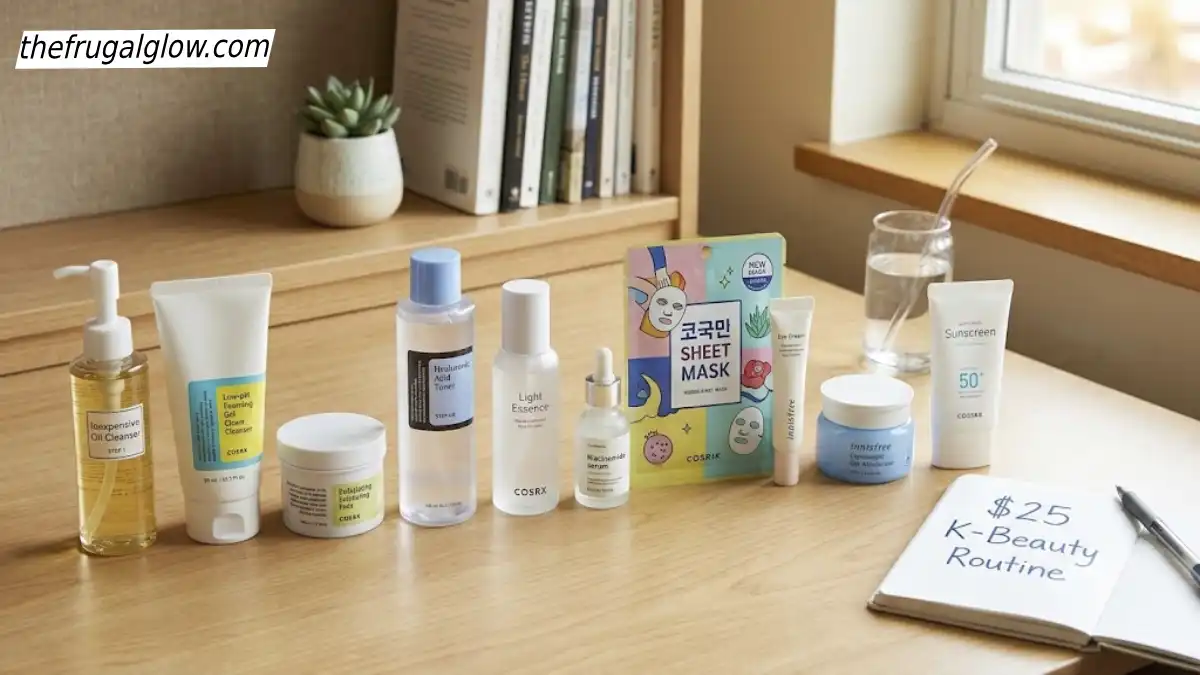
The 10-step Korean skincare routine has a reputation for being a rich-girl skincare shelf: double cleanse, exfoliate, tone, essence, serum, sheet mask, eye cream, moisturizer, sleeping mask, sunscreen — ten distinct products, ten distinct price tags, easily $150–$300 for a full setup at mainstream K-beauty retailers. For one budget-strapped college senior determined to get the glass-skin glow without touching a credit card, the challenge became a genuine puzzle: could a legitimate, correctly-ordered 10-step routine be built for $25 total?
The short answer is yes — but it took real strategy, not just buying the cheapest version of everything. Here’s the full breakdown of how each step got filled, what got swapped or doubled up to make the math work, and why the order of these steps matters just as much as which products fill them.
Jump Links
- Why the 10-Step Routine Actually Works
- The Core Strategy Behind the $25 Budget
- The Full 10-Step Routine, Explained
- $25 Budget Breakdown Table
- Where the Money Actually Went
- Where Corners Were Cut (and Why It Still Worked)
- Budget K-Beauty Brand Guide Table
- Morning vs. Night: How the Routine Changes
- Tips for Building Your Own Budget Version
- Common Mistakes When Doing K-Beauty on a Budget
- FAQ
- The Bottom Line
Why the 10-Step Routine Actually Works
Before getting into the budget breakdown, it’s worth understanding why this specific structure became so influential in the first place, rather than dismissing it as just a marketing gimmick to sell more bottles. The core philosophy layers products from thinnest, most watery consistency to thickest and richest, allowing each layer to be properly absorbed before the next, heavier product seals it in. That’s genuinely sound skincare logic, not just a Korean beauty industry invention — it’s the same “thin to thick” layering principle dermatologists recommend broadly, just formalized into a specific, repeatable sequence.
The other core philosophy is prevention over correction: rather than waiting for dryness, dullness, or breakouts to show up and then treating them, the routine builds in consistent hydration, gentle exfoliation, and barrier support as an everyday habit. That preventive approach doesn’t actually require expensive products to work — it requires the right categories of product, applied in the right order, consistently.
The Core Strategy Behind the $25 Budget
Fitting ten genuine skincare steps into $25 required three specific strategies working together:
- Prioritizing multi-use products. Several budget items in this routine pull double duty, filling more than one “step” in spirit even if they’re technically one purchase — for example, a hydrating toner that also functions as a light essence layer.
- Buying travel and sample sizes for lower-frequency steps. Sheet masks and exfoliating treatments aren’t used daily, so a smaller quantity or single-use packet keeps costs down without sacrificing the step itself.
- Leaning on dollar store and ultra-budget drugstore lines for the simpler steps, while reserving slightly more budget for the two or three products doing the most active work (cleanser and moisturizer specifically).
The Full 10-Step Routine, Explained
Step 1: Oil Cleanser
The first cleanse removes makeup, sunscreen, and oil-based buildup from the day. A basic, affordable facial oil or a budget oil cleanser works here — even plain coconut or sunflower oil can function as a first cleanse in a pinch, though a dedicated inexpensive oil cleanser tends to rinse more cleanly.
Step 2: Water-Based Cleanser
The second cleanse uses a gentle, low-pH foaming or gel cleanser to remove any remaining residue and actually clean the skin itself. A low pH (around 5.0–6.0) matters here specifically because it cleanses without stripping the skin’s natural protective barrier, which is the foundation the rest of the routine builds on.
Step 3: Exfoliation
Used two to three times a week rather than daily, this step removes dead skin cells that would otherwise block product absorption in every step that follows. Budget chemical exfoliating pads or a gentle powder-based exfoliant both work well here without needing an expensive tool or device.
Step 4: Toner
Toner preps and rebalances the skin after cleansing, and a hydrating formula (rather than a stripping, alcohol-heavy one) sets up the rest of the routine to absorb more effectively.
Step 5: Essence
Essences are typically lightweight, watery formulas designed to deliver an extra layer of hydration between toner and serum. On a tight budget, a 2-in-1 hydrating toner-essence product can effectively cover both Step 4 and Step 5 without needing two completely separate purchases.
Step 6: Serum or Ampoule
This is where targeted active ingredients like niacinamide or hyaluronic acid come in, addressing specific concerns like dullness, uneven tone, or dehydration. A small, budget-friendly serum focused on one or two of these well-studied ingredients covers this step effectively.
Step 7: Sheet Mask
Used a few times a week rather than daily, sheet masks deliver a concentrated hydration boost. Dollar-store and bulk-pack sheet masks are widely available and genuinely effective for this occasional, indulgent step.
Step 8: Eye Cream
The eye area has thinner, more delicate skin, and a dedicated lightweight product (or, in a pinch, a small amount of the same moisturizer used on the rest of the face) helps address puffiness and dryness in that specific zone.
Step 9: Moisturizer
This is the step that locks in every hydrating layer applied before it. A lightweight gel-cream works well for daytime, while a slightly richer formula can be reserved for nighttime if budget allows for a second jar — though one solid, moderately rich moisturizer can reasonably cover both if needed.
Step 10: Sunscreen (Day) or Sleeping Mask (Night)
During the day, sunscreen is the non-negotiable final step, protecting all the barrier-repair work done in the previous nine steps from UV damage. At night, a sleeping mask or slightly richer overnight layer can replace this final step, giving the skin extra reinforcement while you sleep.
$25 Budget Breakdown Table
| Step | Product Type | Estimated Cost | Budget Strategy Used |
|---|---|---|---|
| 1. Oil cleanser | Budget oil cleanser or plain facial oil | $3–$5 | Dollar-store or basic drugstore oil |
| 2. Water-based cleanser | Low-pH gel/foam cleanser | $3–$5 | Budget drugstore line |
| 3. Exfoliant | Budget exfoliating pads | $2–$4 | Small pack, used 2–3x/week |
| 4–5. Toner/essence (combined) | 2-in-1 hydrating toner-essence | $3–$5 | One product covers two steps |
| 6. Serum | Small niacinamide or hyaluronic acid serum | $4–$6 | Budget or travel-size |
| 7. Sheet mask | Bulk-pack sheet masks | $0.50–$1 per use | Dollar store multi-pack |
| 8. Eye cream | Small budget eye cream or dual-use moisturizer | $0–$3 | Doubled with Step 9 if needed |
| 9. Moisturizer | Lightweight gel-cream | $3–$5 | Budget drugstore or K-beauty line |
| 10. Sunscreen/sleeping mask | Budget SPF (day) | $3–$5 | Budget drugstore SPF |
| Estimated Total | ~$22–$39 | Hitting closer to $25 requires leaning on dollar-store subs for at least 3–4 steps |
Where the Money Actually Went
The biggest single spend went toward the serum and the water-based cleanser — the two steps doing the most active, ongoing work in the routine. Everything else was built around stretching value: the toner-essence combo product saved an entire separate purchase, the sheet masks came from a bulk multi-pack working out to under a dollar per use, and the eye cream step leaned on the main moisturizer rather than a dedicated separate product.
This is really the core lesson behind making any 10-step routine work on a tight budget: not every step needs its own dedicated, single-purpose product. Some steps can share a formula, some can use a smaller or bulk-packaged version, and the money saved on the simpler steps can be redirected toward the two or three products actually doing the heaviest lifting.
Where Corners Were Cut (and Why It Still Worked)
- Skipped a dedicated night cream. Rather than buying a separate, richer nighttime moisturizer, the same daytime gel-cream got used for both, just applied slightly more generously at night.
- Used the eye cream sparingly, only where truly needed. Rather than a full dedicated tube, a small multi-use eye product (or the regular moisturizer as a backup) handled this step without a large investment.
- Bought exfoliating pads in a smaller quantity. Since this step is only used two to three times a week rather than daily, a smaller pack stretches much further than it would for a daily-use product.
- Relied on a 2-in-1 toner-essence rather than two fully separate bottles, which is a genuinely common budget-conscious substitution even among more experienced K-beauty enthusiasts, not just a corner-cutting compromise unique to this challenge.
Budget K-Beauty Brand Guide Table
Several accessible, genuinely well-regarded brands make budget-friendly K-beauty realistic rather than aspirational. Here’s a general guide to where to look for each step.
| Step Category | Budget-Friendly Brands to Check | Typical Price Range |
|---|---|---|
| Cleansers | COSRX, Etude House, The Face Shop, Neogen | $8–$16 |
| Toners/Essences | Missha, Innisfree, Benton | $8–$16 |
| Serums/Ampoules | COSRX, Skin1004, The Ordinary (Western budget option) | $8–$20 |
| Sheet Masks | Mediheal, dollar store/bulk multi-packs | $0.50–$3 per mask |
| Moisturizers | Etude House SoonJung, COSRX Hydrium, Cetaphil (Western budget option) | $10–$18 |
| Sunscreen | Various Korean drugstore SPF lines, or Western budget SPF as a substitute | $8–$15 |
Even at these slightly higher “budget K-beauty” prices, a full-size routine built entirely from this table would run well beyond $25 — which is exactly why the $25 challenge specifically leans on sample sizes, dollar-store substitutions, and multi-use products rather than full-size versions of every dedicated K-beauty item.
Morning vs. Night: How the Routine Changes
Morning routine (lighter, protection-focused):
- Water-based cleanser only (skip the oil cleanse if no makeup was worn overnight)
- Toner/essence
- Serum
- Moisturizer
- Sunscreen (non-negotiable final step)
Night routine (fuller, repair-focused):
- Oil cleanser
- Water-based cleanser
- Exfoliant (2–3x per week only)
- Toner/essence
- Serum
- Sheet mask (a few times per week)
- Eye cream
- Moisturizer (slightly more generous application than morning)
Splitting the full 10 steps across morning and night this way — rather than doing all ten steps twice a day — is actually standard K-beauty practice, and it’s also part of what makes a $25 budget realistic, since products get used more efficiently rather than doubled up unnecessarily.
Tips for Building Your Own Budget Version
- Start with the categories, not specific brand names. Knowing you need “a low-pH cleanser” or “a hyaluronic acid serum” gives you flexibility to shop sales and swap in whatever budget option is available, rather than chasing one specific expensive product.
- Buy smaller sizes for occasional-use steps. Exfoliants, sheet masks, and eye creams don’t need daily use, so a smaller size stretches much further relative to cost than it would for an everyday product.
- Watch for multi-use formulas. Toner-essences, moisturizer-eye cream crossover products, and SPF-moisturizer combos can genuinely collapse two steps into one purchase without sacrificing the routine’s structure.
- Don’t skip the order, even on a budget. The layering logic (thin to thick) is what makes the routine effective; skipping steps is fine if budget requires it, but applying products in the wrong order undermines even a full 10-product setup.
- Check dollar stores and drugstore clearance sections specifically for sheet masks and exfoliating pads, since these categories tend to have the widest range of genuinely usable ultra-budget options.
Common Mistakes When Doing K-Beauty on a Budget
- Buying ten separate full-size products upfront. This blows the budget immediately; starting with smaller sizes or combined-step products keeps costs manageable while still covering every category.
- Skipping sunscreen to save money. This is the one step worth never cutting, since it protects the results of every other step in the routine from UV damage.
- Over-exfoliating to “make up for” a lighter routine elsewhere. Exfoliation should stay limited to two to three times weekly regardless of budget; more isn’t better and can actually damage the skin barrier.
- Assuming cheaper always means lower quality. Several genuinely well-regarded K-beauty brands (COSRX in particular) are priced accessibly by design, not because the formulas are inferior to pricier competitors.
Love real-life budget transformations? Explore more inspiring stories, smart money-saving breakdowns, and student spotlights over in our [Spotlights] section!
FAQ
Is it really possible to do a full 10-step K-beauty routine for $25?
Yes, with strategic choices like using multi-use products (a combined toner-essence, for example), buying smaller sizes for occasional-use steps, and shopping dollar-store and budget drugstore lines for the simpler categories.
Which step is most important to not skimp on?
Sunscreen. It protects the results of every other step in the routine from UV damage, and skipping it undermines the entire purpose of the barrier-repair and hydration work done in the earlier steps.
Do I need to do all 10 steps every single day?
No. Steps like exfoliation, sheet masks, and sleeping masks are typically used a few times a week rather than daily, which is part of what makes a full 10-step approach realistic on a budget.
Can I really combine steps, like toner and essence, without losing the benefit?
Yes. A hydrating 2-in-1 toner-essence product is a common and genuinely effective substitution, even among more experienced K-beauty users, not just a budget-specific shortcut.
Is the order of the steps actually important, or is that just marketing?
The order matters. Layering from thinnest, most watery products to thickest, richest ones allows each layer to be properly absorbed before the next seals it in, which is a legitimate skincare principle, not just a K-beauty industry invention.
What’s the single best place to find genuinely affordable K-beauty products?
Brands like COSRX are specifically known for combining clinically effective formulas with accessible pricing, and dollar stores or drugstore clearance sections are worth checking specifically for sheet masks and exfoliating pads.
The Bottom Line
A full, correctly-ordered 10-step K-beauty routine doesn’t require a $200 shopping haul to actually work — it requires understanding which products can double up, which steps can use smaller quantities, and where to genuinely prioritize spending. Built the right way, with a little strategy and a lot of label-reading, that glass-skin glow is genuinely achievable on a $25 college-budget without cutting a single real step from the process.
For more budget beauty routines and drugstore skincare guides, check out more posts over at The Frugal Glow.