

DIY Matcha Green Tea Face Mask: The Budget Anti-Aging Hack for Glowing Skin
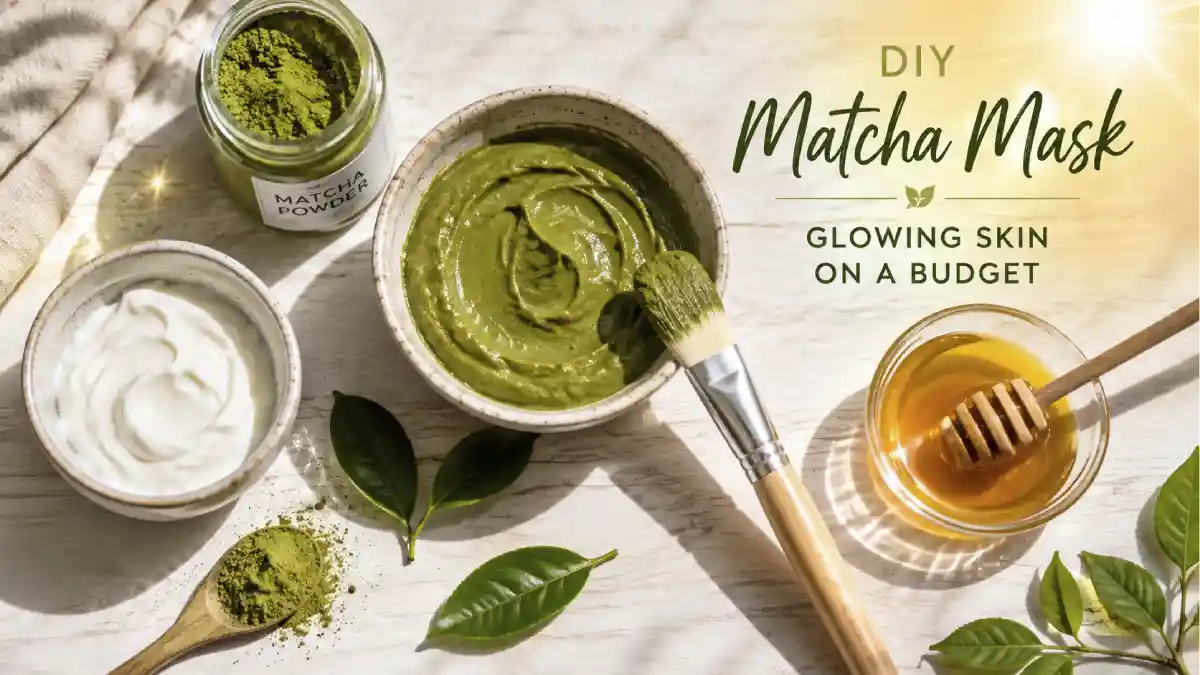
Matcha built its reputation as a trendy latte order long before skincare caught on, but the same compound responsible for matcha’s health buzz — a concentrated antioxidant called EGCG — has a genuinely documented history in dermatology research, well beyond wellness marketing hype. Applied topically as a simple DIY mask, that same antioxidant-rich green tea powder already sitting in your pantry (or costing just a few dollars if it isn’t) becomes a legitimately research-supported skincare treatment, not just a trendy green paste for photos.
This is the full breakdown: the actual science behind matcha’s skin benefits, several budget mask recipes for different skin concerns, and an honest look at what the research does and doesn’t support when it comes to “anti-aging” claims specifically.
Jump Links
- What’s Actually in Matcha That Benefits Skin
- What the Research Actually Shows
- Matcha vs. Regular Green Tea for Skincare
- What You’ll Need
- 5 Budget Matcha Mask Recipes
- Recipe Comparison Table
- Step-by-Step: How to Apply It Correctly
- How Often to Use a Matcha Mask
- Choosing the Right Matcha for Skincare
- Cost Comparison: DIY vs. Commercial Matcha Products
- Common Mistakes to Avoid
- Who Should Be Cautious With This Mask
- FAQ
- The Bottom Line
What’s Actually in Matcha That Benefits Skin
Matcha’s skincare reputation centers almost entirely around one specific compound: epigallocatechin gallate, or EGCG, a type of polyphenol antioxidant found in exceptionally high concentrations in matcha specifically. One frequently cited comparison found matcha contains up to 137 times more EGCG than a standard cup of brewed green tea, largely because matcha is made from the whole, ground tea leaf rather than a steeped and discarded leaf, meaning you’re consuming or applying the entire leaf’s antioxidant content rather than just what leaches into hot water during a brief steep.
EGCG and the broader family of catechins found in matcha work primarily by neutralizing free radicals — unstable molecules generated by UV exposure, pollution, and general environmental stress that damage skin cells over time and contribute to visible signs of aging like fine lines, uneven tone, and lost elasticity. Beyond EGCG specifically, matcha also contains chlorophyll (believed to have mild detoxifying, pore-clarifying properties) and natural caffeine, which some research links to a temporary tightening and mild circulation-boosting effect on skin.
What the Research Actually Shows
It’s worth grounding the “anti-aging” framing in what the actual scientific literature supports, since skincare marketing tends to stretch preliminary findings further than the data itself. A comprehensive scientific review of green tea catechins and skin health, published through the National Center for Biotechnology Information, confirms that these compounds possess genuinely potent antioxidant properties that help neutralize free radicals generated by oxidative stress, mitigating cellular damage while supporting skin’s own natural repair mechanisms. The same review notes that topical formulations in actual clinical and research settings typically use concentrated formulations containing 10 to 15% green tea catechins or purified EGCG — a meaningfully higher concentration than what a simple DIY matcha-and-water mask would deliver.
This distinction matters for setting honest expectations. A DIY matcha mask is genuinely providing real antioxidant compounds to your skin, and the underlying mechanism (neutralizing free radicals, supporting the skin’s natural defenses against UV and environmental damage) is legitimately backed by peer-reviewed research. What it isn’t is a clinically concentrated treatment equivalent to purified topical EGCG formulations used in dermatological studies — a DIY mask is a genuinely beneficial, low-cost addition to a skincare routine, not a guaranteed dramatic anti-aging transformation on its own.
Matcha vs. Regular Green Tea for Skincare
This distinction is genuinely worth understanding before deciding which to use in a DIY mask. Because matcha is made from the entire ground tea leaf rather than a brief water infusion, it delivers dramatically more concentrated catechins and EGCG per serving compared to brewed green tea, where much of the leaf’s antioxidant content simply never makes it into the cup. For a topical mask specifically, this means matcha powder mixed directly into a paste delivers meaningfully more of the active antioxidant compounds directly to skin than a brewed green tea liquid used as a mask base would.
That said, brewed green tea still offers genuine benefits and remains a completely reasonable, even cheaper substitute if matcha isn’t available, just at a lower antioxidant concentration per application.
What You’ll Need
- Culinary-grade matcha powder (doesn’t need to be premium ceremonial-grade for topical use, though quality still matters — see the sourcing section below)
- A small mixing bowl and spoon
- A soft brush or clean fingertips for application
- Base ingredients depending on your chosen recipe (honey, yogurt, aloe vera gel, or water)
- A soft cloth or towel for removal
5 Budget Matcha Mask Recipes
1. Basic Hydrating Honey-Matcha Mask (all skin types)
- 1 teaspoon matcha powder
- 1 tablespoon raw honey
Mix into a smooth, spreadable paste. Honey adds natural humectant hydration alongside its own mild antibacterial properties, making this the most universally suitable starting recipe.
2. Brightening Yogurt-Matcha Mask (dull, uneven tone)
- 1 teaspoon matcha powder
- 1 tablespoon plain, unsweetened yogurt
The lactic acid naturally present in yogurt offers gentle exfoliation, pairing well with matcha’s antioxidant profile for a brightening effect.
3. Soothing Aloe-Matcha Mask (sensitive or irritated skin)
- 1 teaspoon matcha powder
- 1 tablespoon pure aloe vera gel
Aloe’s naturally calming, cooling properties combine well with matcha’s anti-inflammatory catechins for a gentle option on reactive skin.
4. Clarifying Matcha Mask (acne-prone, oily skin)
- 1 teaspoon matcha powder
- 1 teaspoon raw honey
- 1 teaspoon plain yogurt
This combination leans on matcha and honey’s antibacterial properties alongside yogurt’s gentle exfoliation, specifically suited to oilier, breakout-prone skin.
5. Simple Water-Based Matcha Mask (quickest, most basic)
- 1 teaspoon matcha powder
- 1–2 teaspoons water, added gradually until a smooth paste forms
The most minimal version, useful for anyone wanting to test how their skin responds to matcha alone before adding other active ingredients.
Recipe Comparison Table
| Recipe | Key Additional Ingredient | Best For | Approx. Cost Per Use |
|---|---|---|---|
| Basic Honey-Matcha | Raw honey | All skin types | Under $0.30 |
| Brightening Yogurt-Matcha | Plain yogurt | Dull, uneven tone | Under $0.25 |
| Soothing Aloe-Matcha | Aloe vera gel | Sensitive, irritated skin | Under $0.25 |
| Clarifying Matcha | Honey + yogurt | Acne-prone, oily skin | Under $0.35 |
| Simple Water-Based | Water only | Testing sensitivity, minimalists | Under $0.15 |
Step-by-Step: How to Apply It Correctly
- Start with a clean face, removing makeup and any product residue so the mask can make direct contact with skin.
- Mix your chosen recipe into a smooth, even paste, adjusting the liquid ratio slightly if it feels too thick to spread or too runny to hold on skin.
- Apply an even layer using a soft brush or clean fingertips, avoiding the delicate eye area.
- Leave on for 10 to 15 minutes. This is generally enough time for the mask to work without drying to an uncomfortably tight, flaky finish.
- Remove with a warm, damp washcloth, gently wiping in circular motions, which also provides a very mild additional exfoliating effect as you remove the mask.
- Rinse thoroughly with lukewarm water to ensure no residue remains.
- Follow immediately with your regular moisturizer, locking in hydration and completing the routine.
How Often to Use a Matcha Mask
For most skin types, once or twice a week is a reasonable, sustainable frequency, allowing the mask to be a consistent part of a broader skincare routine without over-treating the skin. Because the ingredients in these recipes (matcha, honey, yogurt, aloe) are all relatively gentle, this frequency carries low risk for most people, though anyone with notably sensitive or reactive skin may want to start with once weekly and observe how their skin responds before increasing frequency.
Choosing the Right Matcha for Skincare
You genuinely don’t need to buy the most expensive ceremonial-grade matcha (typically reserved for drinking, where flavor nuance matters most) for a topical mask, since the antioxidant compounds responsible for skin benefits are present across matcha grades. That said, a few sourcing tips are worth keeping in mind:
- Choose a vibrant green color over a dull, olive, or brownish powder, which can indicate age or lower quality, since fresher matcha generally retains more of its antioxidant content.
- Culinary-grade matcha (a lower-cost tier typically marketed for baking and lattes) works perfectly well for topical use and is meaningfully cheaper than ceremonial-grade options.
- Check for a reasonably recent production or best-by date, since matcha’s antioxidant potency does gradually decrease over time, similar to many other plant-based powders.
- Store your matcha in an airtight container away from light and heat to preserve its antioxidant content for both drinking and skincare use over its shelf life.
Cost Comparison: DIY vs. Commercial Matcha Products
| Item | DIY Version | Commercial Equivalent |
|---|---|---|
| Matcha face mask (single use) | Under $0.35 | $5–$15 per single-use sheet or pod |
| Matcha skincare mask (jar, multiple uses) | ~$8–$15 for enough matcha for dozens of masks | $25–$60 for a commercial matcha clay mask jar |
| Matcha-infused serum | Not typically DIY-friendly (requires specific formulation) | $30–$80 |
Even accounting for a modest one-time matcha powder purchase, the cost-per-use of a homemade matcha mask is dramatically lower than nearly any commercial matcha-based skincare product on the market, while still delivering the same core active ingredient responsible for most of those products’ marketed benefits.
Common Mistakes to Avoid
- Using low-quality, old, or improperly stored matcha. Antioxidant potency degrades over time, especially with exposure to light, heat, and air, so a fresh, well-stored powder matters for getting genuine benefit from the mask.
- Leaving the mask on too long. Beyond about 15–20 minutes, many mask formulations (especially honey or yogurt-based ones) can begin to dry out uncomfortably without providing additional benefit.
- Skipping a patch test with a new recipe. Especially with added ingredients like honey or specific essential oils, testing a small area first helps rule out any individual sensitivity before applying to your full face.
- Expecting dramatic, clinical-level anti-aging results. A DIY matcha mask delivers genuine antioxidant benefits, but it’s not equivalent to concentrated topical EGCG formulations used in clinical research; treat it as a beneficial, low-cost addition rather than a guaranteed transformation.
- Not following up with moisturizer. Mask ingredients like honey and yogurt provide some hydration, but a proper moisturizer afterward locks in that benefit rather than letting it evaporate.
Who Should Be Cautious With This Mask
- Anyone with a known allergy to green tea, honey, or other specific recipe ingredients should skip or substitute those ingredients and patch-test any new combination first.
- People with very sensitive or eczema-prone skin should start with the gentlest recipe (the aloe-based version) and monitor for any irritation before trying other combinations.
- Anyone currently using strong topical actives (retinoids, strong acids) should space out mask use from those treatments to avoid over-exfoliating or over-stimulating already-sensitive skin.
📌 YOU MIGHT ALSO LIKE:
The $1 Banana Hair Mask: Deeply Repair Frizzy, Damaged Hair Without the Salon Price Tag
FAQ
Is matcha actually backed by real science for skin benefits, or is it just a trend?
There’s genuine, peer-reviewed research behind the underlying antioxidant compounds in matcha, particularly EGCG, which has documented antioxidant and skin-protective properties. That said, most rigorous clinical studies use concentrated topical formulations, so a simple DIY mask delivers real but more modest benefits compared to those clinical concentrations.
Do I need expensive ceremonial-grade matcha for a face mask?
No. Culinary-grade matcha, which is significantly cheaper than ceremonial-grade, works perfectly well for topical skincare use, since the antioxidant compounds responsible for skin benefits are present across matcha grades.
How often should I use a matcha face mask?
Once or twice a week is a reasonable, sustainable frequency for most skin types, allowing the mask’s antioxidant benefits to build cumulatively as part of a broader skincare routine.
Can a matcha mask actually help with acne?
Matcha’s antibacterial and anti-inflammatory properties, along with its potential to help regulate sebum production, are cited in several sources as supportive for acne-prone skin, though it works best as a complementary addition to an established acne routine rather than a standalone acne treatment.
Is matcha better than regular green tea for a DIY face mask?
Generally yes, since matcha is made from the whole ground tea leaf and delivers significantly more concentrated antioxidants, including up to 137 times more EGCG in some comparisons, than a brewed green tea liquid.
How long does it take to see results from using a matcha mask regularly?
Most sources suggest gradual improvements, such as reduced redness or a subtle glow, become noticeable over roughly four to eight weeks of consistent use, consistent with how antioxidant-based skincare generally works cumulatively rather than instantly.
The Bottom Line
Matcha’s reputation as a skincare “anti-aging hack” holds up better than most trendy DIY ingredients, thanks to genuine, peer-reviewed research behind its concentrated antioxidant content. A simple mask made from matcha powder and a pantry staple like honey, yogurt, or aloe delivers real, research-supported free-radical protection for a fraction of what commercial matcha skincare products charge — a rare case where the trendy version and the evidence-based version are genuinely the same thing.
For more budget beauty guides and evidence-based DIY skincare, check out more posts over at The Frugal Glow.
Sources: