

Canned Tuna vs. Canned Salmon: Which Delivers Better Nutrition Per Dollar?
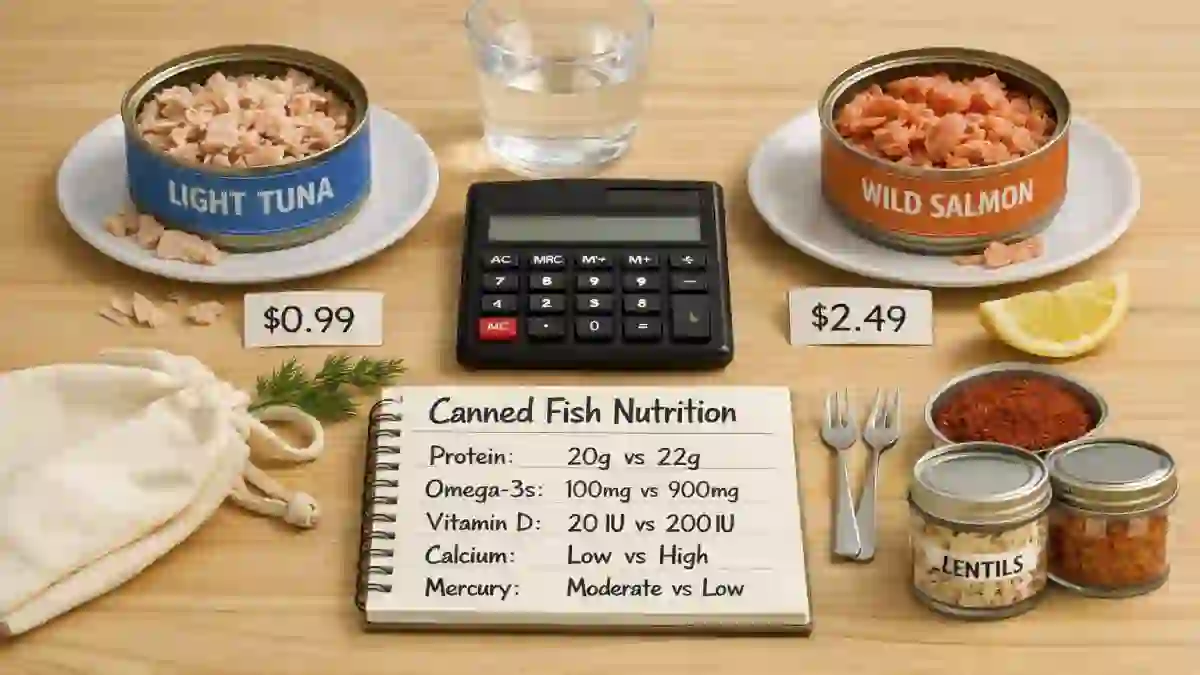
Walk down the canned fish aisle and the price gap is impossible to miss: a can of light tuna typically runs $0.80 to $1.50, while a comparable can of salmon costs $2 to $4 — often two to three times more for what looks like a similar amount of fish. The question worth actually answering with numbers, rather than assumption, is whether that price premium buys you meaningfully more nutrition, or whether tuna’s lower cost makes it the smarter pick regardless of the extra dollars salmon commands.
The honest answer, backed by real USDA nutrition data, is: it depends entirely on which specific nutrient you’re optimizing for. Here’s the full breakdown, dollar by dollar and gram by gram.
Jump Links
- The Core Trade-Off in One Sentence
- Protein: Cost Per Gram Comparison
- Omega-3s: Cost Per Milligram Comparison
- Vitamin D and B12: An Underrated Salmon Advantage
- Calcium: The Bones Actually Matter
- Mercury: A Real Safety Difference
- Full Nutrition Comparison Table
- Full Cost-Per-Nutrient Table
- Does Tuna Type Matter (Light vs. Albacore)?
- Does Salmon Type Matter (Pink vs. Sockeye)?
- Oil-Packed vs. Water-Packed: Does It Change the Math?
- Which One Should You Actually Buy
- FAQ
- The Bottom Line
The Core Trade-Off in One Sentence
Canned tuna delivers more protein per calorie and costs meaningfully less; canned salmon delivers dramatically more omega-3 fatty acids, vitamin D, and calcium (from edible bones), at roughly two to three times the price. Neither fish is objectively “better” in a vacuum — the right choice depends entirely on which specific nutritional gap you’re actually trying to close.
Protein: Cost Per Gram Comparison
This is where tuna pulls ahead, and it’s not particularly close. Canned light tuna delivers roughly 22 to 25.5 grams of protein per 100 grams, compared to roughly 17 to 22 grams for canned salmon depending on the specific type and preparation. Because tuna is also considerably leaner (about 0.8 grams of fat per 100 grams, compared to salmon’s 12+ grams), the protein-to-calorie ratio favors tuna even more dramatically: light canned tuna delivers roughly 0.22 grams of protein per calorie, while salmon delivers closer to 0.11 grams of protein per calorie — tuna is essentially twice as calorie-efficient for pure protein delivery.
Combined with tuna’s lower price per can, this makes canned light tuna the clear winner specifically for cost-per-gram-of-protein, particularly relevant for anyone tracking a daily protein target on a tight food budget.
Omega-3s: Cost Per Milligram Comparison
This is where the comparison flips entirely, and the gap is genuinely dramatic. Farmed Atlantic salmon delivers roughly 2,147 milligrams of combined EPA and DHA (the two omega-3 fatty acids your body actually uses for heart and brain health) per 100 grams, compared to roughly 120 milligrams for canned light tuna — an 18-to-1 ratio in salmon’s favor. Even canned pink salmon, a more budget-friendly salmon variety, delivers roughly 1,077 milligrams per 100 grams, still dramatically outperforming every form of tuna except albacore specifically.
Once you actually run the cost-per-nutrient math rather than just comparing sticker prices, this omega-3 gap is large enough that salmon can come out as the more economical choice specifically for omega-3 intake, despite costing roughly two to three times more per can, according to cost-per-gram-of-omega-3 analysis. Given that most adults following a typical Western diet get less than 100 milligrams of combined EPA and DHA daily — well below the 250 milligram minimum intake associated with cardiovascular benefit in observational research — this is a genuinely significant practical gap, not just a statistic.
Vitamin D and B12: An Underrated Salmon Advantage
Beyond omega-3s, canned salmon holds a substantial advantage in two other specific nutrients. Salmon contains roughly 14 times more vitamin D than canned tuna, with a single serving providing approximately 50% of a full day’s vitamin D requirement — a genuinely significant contribution, given how commonly deficient vitamin D intake is across the general population, particularly for anyone with limited sun exposure. Salmon also delivers somewhat more vitamin B12, along with higher levels of thiamin, riboflavin, and pantothenic acid, compared to canned tuna.
Calcium: The Bones Actually Matter
This is a detail that’s easy to overlook but genuinely changes the nutritional math: canned salmon (and canned sardines) are typically packed with their small, edible bones still intact, which are soft enough from the canning process to eat without noticing, and which significantly boost the calcium content of the final product compared to boneless canned tuna. For anyone specifically trying to increase calcium intake through diet rather than supplements, this is a real, practical advantage canned salmon offers that tuna simply doesn’t.
Mercury: A Real Safety Difference
This is a genuine health consideration, not just a nutritional preference. Canned salmon carries virtually no mercury, while canned tuna — particularly white/albacore tuna — carries meaningfully more, since tuna is a larger predatory fish that accumulates more mercury over its lifespan through the food chain than salmon does. This distinction matters most for specific populations: the FDA specifically advises that people who are pregnant or breastfeeding, along with young children, should avoid high-mercury fish and opt for lower-mercury choices from the agency’s “best choices” list. For these specific groups, canned salmon (or light tuna specifically, which carries less mercury than albacore) represents the meaningfully safer choice, independent of the cost comparison.
Full Nutrition Comparison Table
| Nutrient (per 100g) | Canned Light Tuna | Canned/Farmed Salmon | Winner |
|---|---|---|---|
| Protein | ~22–25.5g | ~17–22g | Tuna |
| Calories | ~99–128 | ~127–206 | Tuna (fewer calories) |
| Fat | ~0.8g | ~12.4g | Tuna (leaner) |
| Omega-3 (EPA+DHA) | ~120mg | ~1,077–2,147mg | Salmon (dramatically) |
| Vitamin D | Low | ~14x higher than tuna | Salmon |
| Vitamin B12 | Present | Slightly higher | Salmon |
| Calcium | Low (no bones) | Higher (edible bones) | Salmon |
| Mercury | Moderate (higher in albacore) | Virtually none | Salmon |
Full Cost-Per-Nutrient Table
| Metric | Canned Tuna | Canned Salmon | Winner |
|---|---|---|---|
| Typical price per can | $0.80–$1.50 (light, 3–5 oz) | $2–$4 (per can) | Tuna (lower upfront cost) |
| Approx. price per pound | $16–$30 | $40–$80 | Tuna |
| Cost per gram of protein | Lower | Higher | Tuna |
| Cost per mg of omega-3 | Higher (despite lower price) | Lower (despite higher price) | Salmon |
| Cost per unit of vitamin D | Much higher (tuna has very little) | Much lower | Salmon |
Does Tuna Type Matter (Light vs. Albacore)?
Yes, significantly. Canned albacore tuna retains considerably more omega-3s than light tuna, delivering roughly 860 milligrams of EPA and DHA per 100 grams compared to light tuna’s roughly 120 milligrams, since albacore is a fattier, oilier fish species than the skipjack typically used for light tuna. Albacore also carries somewhat higher mercury levels than light tuna, though still well below salmon’s negligible mercury content. For anyone specifically choosing tuna for its omega-3 content rather than pure lean protein, albacore is the meaningfully better choice within the tuna category, even though it typically costs a bit more than standard light tuna.
Does Salmon Type Matter (Pink vs. Sockeye)?
Yes, though less dramatically than the tuna comparison above. Pink salmon tends to be milder in flavor and lighter in color, and is generally the more budget-friendly canned salmon option, while sockeye salmon carries a bolder flavor, deeper color, and slightly higher omega-3 content, typically at a somewhat higher price point. Both varieties still substantially outperform any form of tuna on omega-3 content, so the pink-versus-sockeye choice within salmon is more about flavor preference and modest nutrient differences than a dramatic nutritional trade-off.
Oil-Packed vs. Water-Packed: Does It Change the Math?
Yes, in a way worth understanding before you buy. Oil-packed fish generally shows a higher total calorie count (from the oil itself) but may retain more omega-3 content, since some water-soluble and oil-soluble compounds can leach out into the packing liquid, particularly with water-packed products if that liquid is drained and discarded rather than consumed. Water-packed options are lower in total calories, which matters for anyone specifically managing calorie intake. If maximizing your actual omega-3 intake per dollar is the priority, checking whether a product is oil-packed (and whether you’re draining or keeping that liquid) is worth factoring into your final nutrition math, alongside the base tuna-versus-salmon comparison.
Which One Should You Actually Buy
Choose canned tuna if:
- Your primary goal is maximizing protein per dollar and per calorie, particularly relevant for anyone on a calorie-controlled or high-protein budget diet.
- You’re eating fish frequently and want to stretch a tight grocery budget further, since tuna’s lower price allows for more frequent consumption.
- You’re not pregnant, breastfeeding, or feeding young children, and mercury intake isn’t a significant personal concern.
Choose canned salmon if:
- Your primary goal is maximizing omega-3 intake, where the cost-per-nutrient math genuinely favors salmon despite its higher sticker price.
- You want meaningful vitamin D and calcium contributions from a single food source.
- You are pregnant, breastfeeding, or shopping for young children, where minimizing mercury exposure is a genuine safety priority.
The smartest overall strategy: Given that both fish offer real, distinct nutritional advantages, rotating between the two — leaning on tuna for regular, budget-friendly protein and incorporating salmon specifically for its omega-3, vitamin D, and calcium contribution a few times a week — captures the practical benefits of both rather than requiring an exclusive choice between them.
📌 YOU MIGHT ALSO LIKE:
How to Hit 100g of Protein Daily for Under $4
Frozen vs. Canned vs. Fresh Vegetables: The Ultimate Cost-Per-Nutrient Breakdown
FAQ
Is canned salmon really worth two to three times the price of canned tuna?
For omega-3 intake specifically, yes, according to cost-per-gram analysis — salmon’s dramatically higher omega-3 content means it can actually be the more economical choice per milligram of omega-3, despite its higher sticker price. For pure protein-per-dollar, tuna remains the more cost-effective option.
Which one has more protein: canned tuna or canned salmon?
Canned tuna generally edges out canned salmon on protein content, delivering roughly 21 grams per 3-ounce serving compared to about 17 grams for salmon, and tuna delivers roughly double the protein per calorie due to its much lower fat content.
Is canned tuna dangerous because of mercury?
For most healthy adults eaten in moderation, canned tuna is considered safe, though it does carry more mercury than canned salmon, particularly in the case of albacore tuna. The FDA specifically advises pregnant or breastfeeding individuals and young children to limit high-mercury fish and choose lower-mercury options instead.
Why does canned salmon have so much more calcium than canned tuna?
Canned salmon is typically packed with its small, edible bones intact, which soften significantly during the canning process and contribute meaningful calcium to the final product. Canned tuna, by contrast, is boneless and doesn’t offer this same calcium boost.
Does the type of tuna or salmon I buy actually matter nutritionally?
Yes. Albacore tuna retains significantly more omega-3s than standard light tuna, though at a somewhat higher mercury level, and sockeye salmon carries slightly more omega-3 content than pink salmon, though both salmon types substantially outperform any tuna variety on this specific nutrient.
Should I choose oil-packed or water-packed canned fish?
It depends on your priority. Water-packed options are lower in total calories, while oil-packed versions may retain more omega-3 content, since some nutrients can leach into discarded packing liquid with water-packed products specifically.
The Bottom Line
There’s no single winner in the tuna-versus-salmon comparison — there’s only the right choice for what you’re specifically trying to optimize. Tuna wins decisively on cost-per-gram of protein and overall affordability, making it the smarter everyday staple for stretching a food budget. Salmon wins just as decisively on omega-3s, vitamin D, calcium, and mercury safety, and the cost-per-nutrient math means its higher price tag is genuinely justified for anyone prioritizing those specific benefits. The most nutritionally complete, budget-conscious approach isn’t picking a side — it’s rotating both into your routine based on what each one does best.
For more budget-friendly food and nutrition guides, check out more posts over at The Frugal Glow.
Sources: