

Living Room Fitness: How to Transform 6 Square Feet Into a Functional Gym Space
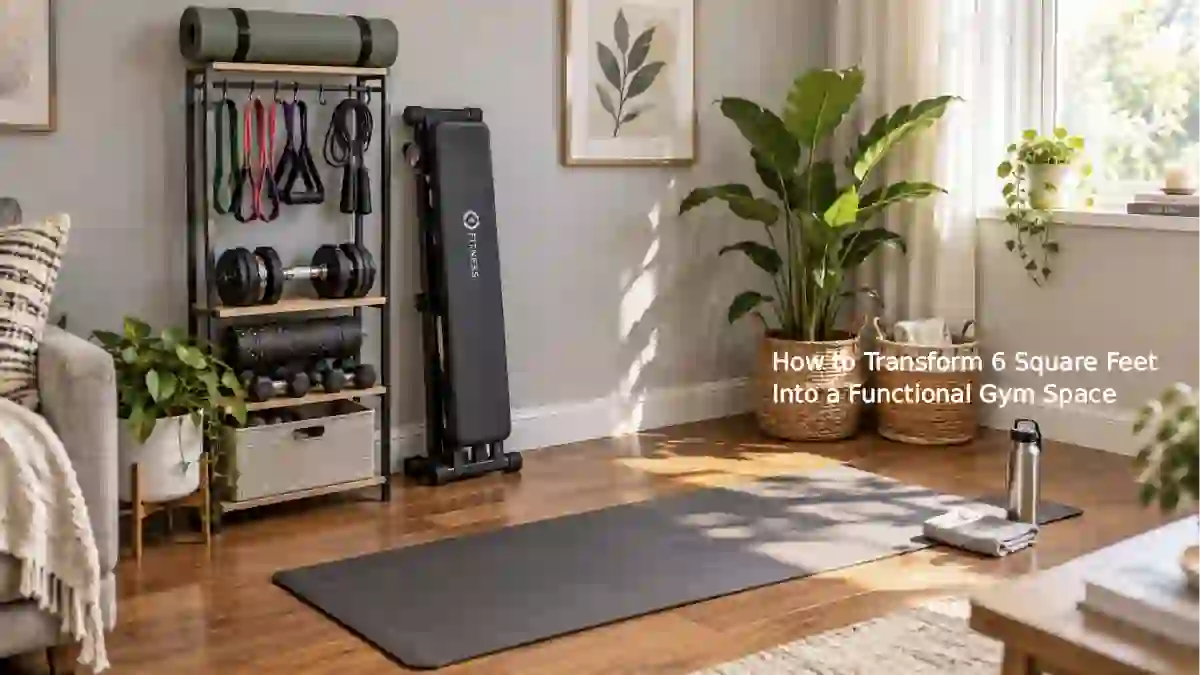
The idea of a “home gym” conjures images most apartment and small-house dwellers immediately dismiss: a dedicated spare room, a rack of dumbbells lining a wall, a treadmill nobody has room for. The reality is genuinely more achievable than that image suggests. A tiny equipment storage footprint — as little as 6 square feet when everything is properly stored — can unfold into a completely functional training zone the moment you actually need to move, using nothing more than a corner of your living room.
This is the honest, practical breakdown: what “6 square feet” really means for equipment storage versus the actual floor space you’ll need while training, which compact equipment genuinely earns its spot, and how to organize it so your living room doesn’t look (or feel) like a gym the other 23 hours of the day.
Jump Links
- Setting Realistic Expectations: Storage vs. Training Space
- The Core Philosophy: Multi-Purpose Over Multiple Pieces
- Equipment That Actually Fits a 6-Square-Foot Footprint
- Vertical Storage: The Real Space-Saving Secret
- Equipment Comparison Table
- How Much Clear Floor Space You Actually Need
- Setting Up the Space Step-by-Step
- Keeping It Neighbor-Friendly
- Making the Space Blend Into Your Living Room
- Sample Layout for a Studio or Small Apartment
- FAQ
- The Bottom Line
Setting Realistic Expectations: Storage vs. Training Space
This distinction matters enough to address directly before anything else: 6 square feet is a genuinely realistic footprint for storing a surprisingly capable set of compact equipment, but it’s not enough space to actually train in. General guidance for bodyweight training, yoga, and resistance band work points to needing at least 36 square feet of open, clear floor space (roughly a 6-by-6-foot area) to move safely and effectively.
The trick that makes small-space fitness genuinely work is that these two numbers don’t need to coexist permanently. Your equipment lives in a tiny, tucked-away 6-square-foot storage zone the vast majority of the day, and you temporarily borrow adjacent living room floor space — pushing a coffee table aside, using the open area in front of a couch — for the 20 to 45 minutes you’re actually training. Open space itself is functionally a piece of equipment in this setup, and protecting your ability to quickly access it matters as much as the gear itself.
The Core Philosophy: Multi-Purpose Over Multiple Pieces
The single most important principle for making a tiny footprint work is choosing versatile, multi-function equipment over a larger collection of single-purpose items. A set of adjustable dumbbells, for example, replaces an entire rack of fixed-weight pairs in one compact tool, while a five-in-one strength station can eliminate the need for multiple separate dumbbell sets entirely. Every piece of equipment you bring into a small space should ideally serve more than one training purpose, since space that’s occupied by a rarely-used single-function item is space you can’t reclaim for something more broadly useful.
Equipment That Actually Fits a 6-Square-Foot Footprint
Resistance bands: A complete resistance band set can cover a genuinely full-body workout while taking up almost no storage space at all, easily fitting in a small drawer, bin, or hanging on a single hook.
A kettlebell (or a small adjustable set): A single kettlebell is one of the most efficient pieces of equipment ever designed, capable of training strength, power, endurance, and mobility all in one session without needing to move more than a few feet from where it’s stored.
Adjustable dumbbells: These consolidate what would otherwise require an entire rack of fixed-weight pairs into a single compact unit, some specifically designed to save 6 or more square feet compared to a traditional dumbbell rack setup.
A doorframe pull-up bar or multi-grip bar: Options like the Iron Gym-style doorway bar or a similar multi-gym attachment require essentially zero floor space at all, mounting directly to an existing doorframe and requiring only about 4 square feet of ceiling clearance to use.
A folding exercise mat or interlocking foam tiles: Either option rolls or stacks into a genuinely tiny storage footprint while providing the padded surface needed for floor-based bodyweight work.
A jump rope: Among the most space-efficient cardio tools available, a good jump rope (some app-connected versions specifically praised for their quality) stores in a small drawer or hook and delivers genuine cardiovascular training in almost no space.
A suspension trainer (like a TRX-style system): Anchoring to a doorframe or an overhead beam, a suspension trainer packs into a small bag when not in use and provides a genuinely comprehensive full-body strength training option.
Vertical Storage: The Real Space-Saving Secret
This is the principle that separates a genuinely functional tiny home gym from a cluttered mess: when it comes to small spaces, every inch counts, and vertical storage is where most of that reclaimed space actually comes from. A few specific, practical approaches:
- Wall-mounted pegboards let you hang resistance bands, jump ropes, and lightweight accessories at eye level, keeping them visible and easy to grab without occupying any floor space.
- Floating shelves hold mats, towels, and small pieces of equipment above the floor, keeping the actual walking space completely clear day to day.
- Hooks are a genuine must-have for hanging bands, ropes, or a suspension trainer directly on the wall.
- Standing cube storage works well for smaller items like weights, mini bands, and yoga blocks, using bins or open cubbies that slide in and out easily.
- Heavy items stay low, light items go high. As a general organizing principle, only the heaviest gear (dumbbells, kettlebells) should live on the floor, while lighter accessories are stored vertically wherever possible.
Equipment Comparison Table
| Equipment | Approx. Storage Footprint | Training Value | Best For |
|---|---|---|---|
| Resistance band set | Under 1 sq ft (drawer/bin) | Full-body strength | Beginners, travel, tiny apartments |
| Single kettlebell | ~1 sq ft | Strength, power, endurance in one tool | Efficient, varied full-body training |
| Adjustable dumbbells | ~2–4 sq ft | Replaces a full weight rack | Progressive strength training |
| Doorframe pull-up bar | ~0 sq ft (mounts to doorframe) | Upper body pulling strength | Apartments with no floor space to spare |
| Folding mat/foam tiles | Under 1 sq ft (rolled/stacked) | Padded surface for floor work | Any bodyweight or floor-based training |
| Jump rope | Negligible (hook/drawer) | Cardio | Quick, space-free cardio sessions |
| Suspension trainer | ~1 sq ft (in a bag) | Full-body strength | Comprehensive training in minimal space |
How Much Clear Floor Space You Actually Need
While your equipment might store in 6 square feet, here’s a more honest breakdown of what different training styles genuinely require once you’re actually moving:
| Activity | Recommended Clear Floor Space |
|---|---|
| Yoga, stretching, resistance bands | ~36 sq ft (roughly 6×6 ft) |
| Bodyweight strength circuits | ~36–50 sq ft |
| Jump rope | ~25–36 sq ft (account for rope swing radius) |
| Kettlebell/dumbbell training | ~20–50 sq ft |
| Cardio machine (if added later) | 10–30 sq ft depending on machine type |
The good news: living rooms, even small ones, typically already have this much open floor space available once furniture is temporarily pushed aside — you’re not usually adding new square footage to your home, just reclaiming existing space for a short daily window.
Setting Up the Space Step-by-Step
- Identify a genuinely underused wall or corner in your living room, ideally one near an outlet if you’ll use any app-connected equipment, and with enough nearby open floor space to expand into during workouts.
- Measure before you buy anything. Sketch a rough layout including equipment dimensions, any door swings, and clearance needed around larger pieces, so you’re not surprised by a poor fit after purchase.
- Install vertical storage first (a pegboard, hooks, or a floating shelf) before acquiring equipment, so every new item has a designated home from day one rather than accumulating in a pile.
- Choose your core equipment based on the multi-purpose principle, prioritizing adjustable or multi-function pieces over several single-purpose items.
- Establish a “workout mode” routine for clearing floor space quickly — knowing exactly which piece of furniture moves where takes the friction out of actually starting a workout.
- Keep your training zone visually separate but not obtrusive, using storage solutions that look intentional (a nice storage bin or a matching shelf) rather than a pile of visible gym clutter in your main living space.
Keeping It Neighbor-Friendly
Even the smallest workout space benefits from attention to a few environmental details that keep both you and anyone nearby comfortable. Placing a mat or interlocking foam tiles under any equipment helps dampen impact noise, particularly important for apartment dwellers with neighbors below. Choosing quieter equipment specifically — resistance bands and kettlebells over anything involving repeated jumping or dropping weights — further reduces noise transfer, and pairing this approach with genuinely low-impact training methods (like the quiet cardio techniques covered in dedicated guides on that topic) rounds out a considerate, apartment-appropriate setup.
Making the Space Blend Into Your Living Room
- Choose equipment in colors and finishes that complement your existing decor rather than stark, obviously “gym equipment” aesthetics, helping the space feel intentional rather than makeshift.
- Use furniture that pulls double duty, like a storage ottoman that holds resistance bands and a mat while also serving as normal living room seating.
- Keep the space tidy between workouts. An organized workout area feels larger, safer, and more inviting, and when your equipment has a genuinely designated home, transitioning from everyday living room use to workout mode takes mere seconds rather than requiring a cleanup first.
- Consider a full-length mirror if space allows, which serves a dual purpose as both a practical training tool (checking form) and a normal piece of living room decor when not being used for exercise.
Sample Layout for a Studio or Small Apartment
Storage zone (approximately 6 sq ft, against one wall):
- Pegboard or wall hooks holding resistance bands, a jump rope, and a suspension trainer
- A small floor bin or cube holding a kettlebell and a folded mat
- A doorframe pull-up bar mounted in a nearby doorway (zero additional floor footprint)
Training zone (borrowed space, roughly 36+ sq ft, activated during workouts):
- Coffee table pushed against a wall or into an adjacent room temporarily
- Mat unrolled in the newly cleared open floor area
- Full workout performed using the stored equipment, then everything returned to its designated storage spot afterward
📌 YOU MIGHT ALSO LIKE:
How to Build Muscle at Home Using Progressive Calisthenics
The 15-Minute Wall Workout: Tone Your Entire Body Using Just a Flat Wall
The $10 ‘Walmart’ Resistance Band: 7 Ways to Get a Full-Body Burn in 15 Minutes
FAQ
Is it really possible to fit a functional home gym in just 6 square feet?
That 6 square feet realistically describes the storage footprint for a genuinely versatile equipment set (bands, a kettlebell, adjustable dumbbells, a doorframe bar), not the space you’ll actually move in while training. Most training styles still require roughly 36 or more square feet of clear floor space, which most living rooms can provide temporarily by pushing furniture aside.
What’s the single most space-efficient piece of equipment to start with?
A set of resistance bands is widely considered one of the most space-efficient choices available, covering a full-body workout while taking up almost no storage space at all, easily fitting in a small drawer or on a single wall hook.
How do I keep my living room from looking like a gym all the time?
Prioritizing vertical, hidden, or decor-matching storage (pegboards, floating shelves, storage ottomans) over piles of visible equipment, along with a quick, established routine for clearing and restoring the space before and after workouts, keeps the area feeling like a normal living room the rest of the time.
Do I need a treadmill or larger cardio machine for a small-space home gym to be effective?
No. A jump rope, resistance bands, and bodyweight cardio circuits can deliver genuine cardiovascular training in a fraction of the space a treadmill or elliptical would require, making them a much more practical starting point for tight spaces.
How much clear floor space do I actually need for a basic workout?
General guidance suggests at least 36 square feet (roughly a 6-by-6-foot area) for most bodyweight, yoga, and resistance band training, though this space can be temporarily borrowed from your living room rather than permanently dedicated to fitness.
What equipment should I avoid if I’m working with a genuinely tiny space?
Bulky, single-purpose items — a full dumbbell rack, a large fixed cardio machine, or multiple redundant pieces covering the same training purpose — are the biggest space drains in a small home gym setup; multi-purpose, foldable, or wall-mounted equipment is almost always the better choice.
The Bottom Line
A genuinely functional home gym doesn’t require a dedicated room — it requires a small, smartly organized storage footprint and a willingness to temporarily reclaim existing living room floor space for the short window you’re actually training. With the right multi-purpose equipment, vertical storage, and a quick before-and-after routine, six square feet of tucked-away gear can unfold into a complete, effective workout space, then disappear back into your living room the moment you’re done.
For more budget-friendly wellness and home gym guides, check out more posts over at The Frugal Glow.
Sources: