

Why Baking Soda Is NOT the Answer for Blackheads: 5 Safer 10-Cent Alternatives
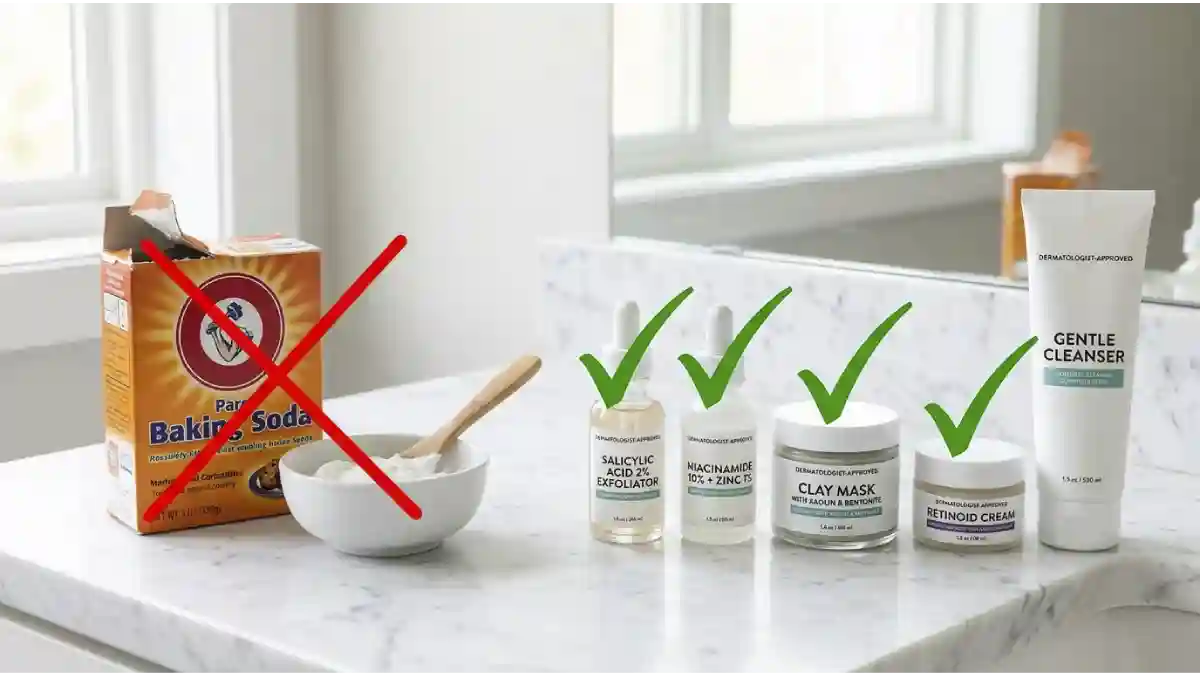
Few DIY skincare tips refuse to die the way this one does: mix baking soda with a little water, scrub it into your nose, and watch the blackheads supposedly vanish. It’s cheap, it’s sitting in nearly every kitchen, and it leaves skin feeling tight and “squeaky clean” right away. It’s also one of the most consistently warned-against ingredients in dermatology.
The frustrating part is that the instinct behind it is completely reasonable. Blackheads are stubborn, skincare can get expensive fast, and an ingredient that costs a few cents per use sounds like a smart way to save money. The good news is that you don’t have to choose between cheap and safe. Several evidence-backed blackhead treatments cost pennies per use, and some of them cost less than a handful of baking soda once you factor in what barrier damage costs to repair.
Here’s exactly why baking soda backfires, what blackheads actually are, and five budget-friendly alternatives that work with your skin’s chemistry instead of against it.
A quick note on the math: “10-cent” in the title is shorthand for “pennies per use.” Prices vary by store and sale, so the table later in this article gives honest estimates. Most options land between about 5 and 30 cents per use, and the one that costs a bit more per use is also the best at preventing blackheads from coming back.
Jump Links
- Why So Many People Reach for Baking Soda
- What Blackheads Actually Are
- The pH Problem Nobody Mentions in the Viral Videos
- What Dermatologists and Major Skincare Brands Say
- Why Baking Soda Seems to Work (For About an Hour)
- The 5 Safer Alternatives
- Cost-Per-Use Comparison Table
- A Simple Beginner Routine Using These Options
- If You’ve Already Used Baking Soda and Your Skin Is Irritated
- Mistakes That Make Blackheads Worse
- How Long Until You See Results
- When to See a Dermatologist
- FAQ
- The Bottom Line
Why So Many People Reach for Baking Soda
The appeal is easy to understand. Baking soda is cheap, familiar, and marketed (by the internet, not by skincare brands) as a “natural” exfoliant. It feels gritty when you rub it between your fingers, so it seems like it should physically scrub out whatever is clogging your pores. And it delivers an instant sensation of cleanliness, which the brain reads as proof that it’s working.
There are really three assumptions packed into the trend. The first is that blackheads are dirt, so scrubbing them away should work. The second is that anything natural and food-grade must be gentle on skin. The third is that a scrub that feels intense must be doing something powerful. All three assumptions are shaky, and understanding why is the key to spending your money, even a few cents at a time, on things that actually help.
What Blackheads Actually Are
Blackheads are a type of non-inflamed acne called open comedones. A pore fills with a mix of sebum (your skin’s natural oil) and dead skin cells, and because the pore opening stays open, the plug is exposed to air. That exposure causes the material at the surface to oxidize and darken, which is where the black color comes from. It’s the same basic chemistry that turns a cut apple brown, not a sign that your pores are full of dirt.
This matters because it changes what a good treatment needs to do. A scrub that only sweeps across the surface can knock off some of the darkened top layer, but it can’t dissolve the oily plug sitting down inside the pore. Ingredients that work well on blackheads are typically oil-soluble (so they can travel into the pore), or they change how quickly skin cells turn over, or they reduce how much oil gets produced in the first place. Baking soda does none of those things.
The pH Problem Nobody Mentions in the Viral Videos
Your skin’s surface is naturally slightly acidic, a protective layer often called the acid mantle. Healthy facial skin generally sits around a pH of 4.5 to 5.5, and that acidity helps keep moisture in, keeps irritants out, and supports the balance of beneficial bacteria living on your skin. Baking soda, by contrast, is alkaline, with a pH of roughly 8.3 to 9 when mixed into a paste.
| Substance | Approximate pH | What it does to the skin barrier |
|---|---|---|
| Healthy facial skin | 4.5–5.5 | The ideal range for barrier function |
| Baking soda paste | ~8.3–9 | Strongly alkaline, disrupts the acid mantle |
| Lemon juice | ~2 | Strongly acidic, also disrupts the barrier |
| Gentle, skin-friendly cleansers | Formulated near skin’s natural range | Designed to clean without stripping |
That gap is not a small technicality. As New Beauty reports, a Dallas dermatologist explained that baking soda is far too alkaline for the face and can throw off the skin’s delicate balance, leading to dryness, irritation, redness, and an impaired barrier that leaves skin more vulnerable to breakouts and flare-ups. In other words, the very thing you’re trying to fix can get worse.
A few other problems are worth knowing about:
- Stripping, not cleaning. Washing with baking soda can remove the skin’s protective oils and disturb the natural bacteria that help defend against infection and acne, according to Healthline.
- Gritty, uneven scrubbing. When baking soda isn’t fully dissolved, it acts like any other physical scrub, and aggressive scrubbing can leave skin irritated and inflamed.
- Burn risk with longer contact. Leaving a baking soda paste on the face for an extended period is associated with significant irritation and redness, and in some cases chemical-burn-type reactions, which is why leave-on “mask” versions of the trend are especially risky.
- Surprise sensitivity. Many people don’t realize they react poorly to baking soda until they’ve already put it on their face.
Natural doesn’t automatically mean gentle. Lemon juice is natural too, and it has the opposite problem: it’s so acidic that it also disrupts the skin barrier. The ingredient’s origin tells you very little about how skin will respond to it.
What Dermatologists and Major Skincare Brands Say
The consensus here is unusually consistent. Dermatologists quoted in major beauty publications describe baking soda on the face as something to skip entirely, and one dermatologist’s blunt verdict was a “hard pass.” They point to the pH mismatch and the real possibility of irritation rather than any proven benefit.
Even a mainstream skincare company’s own educational guide takes the same position. L’Oréal Paris’s guide to baking soda for skin explains that the ingredient isn’t dermatologist approved for the face, that any benefits people claim aren’t clinically proven for facial skin, and that if someone chooses to use it at all, it should be limited to thicker-skinned areas such as the elbows, knees, or feet. The guide also stresses that baking soda can’t replace skincare formulated to respect the skin’s natural pH.
The pattern across sources is clear: no credible dermatology source recommends baking soda as a facial blackhead treatment, and several explicitly say even occasional weekly use isn’t a safe compromise.
Why Baking Soda Seems to Work (For About an Hour)
It would be easier to dismiss the trend if it did nothing at all. The truth is that baking soda can create a short-lived, convincing illusion of improvement. Scrubbing the surface can knock off a bit of the darkened top layer of a blackhead, and the alkaline paste can dry out the oil on the skin’s surface, which makes pores look temporarily smaller and skin look matte.
But it doesn’t dissolve the plug beneath. It doesn’t reduce the underlying oil production. And the very mechanism that creates that tight, clean feeling, stripping the skin’s protective layer, sets up the conditions for more irritation and more breakouts over time. The skin ends up drier, more reactive, and less able to defend itself, which can make blackheads and other breakouts more likely, not less.
That “squeaky clean” feeling is actually a warning sign. Healthy skin that’s been cleaned properly shouldn’t feel tight, dry, or stripped afterward.
The 5 Safer Alternatives
These five options are all widely recommended by dermatologists or supported by mainstream dermatology guidance, they’re easy to find at ordinary drugstores or online, and they’re affordable per use. You don’t need all five, and you definitely shouldn’t start them all at once. Think of this as a menu, with the first two being the most effective and the rest being helpful supporting players.
1. 2% Salicylic Acid (The Best-Studied Starting Point)
What it is: Salicylic acid is a beta hydroxy acid (BHA). Unlike many exfoliating acids that work mostly on the surface, it’s oil-soluble, which means it can travel into the oily environment inside a pore and help break up the plug from within. Dermatologists describe it as a “comedolytic,” meaning it helps break up and resolve blackheads and whiteheads, and a 2026 dermatologist-sourced ingredient guide calls it the most consistently recommended ingredient for blackheads across dermatology guidelines.
What it costs: This is where the “10-cent” idea really shines.
- Over-the-counter 2% salicylic acid face pads can work out to roughly 5 to 6 cents per pad in multi-packs.
- A 2% salicylic acid liquid or serum costs around $7 for a 30 ml bottle, and since you only need a small amount per use, that works out to roughly 7 to 12 cents per application.
- A 2% salicylic acid cleanser is another dermatologist-recommended option that’s gentle enough for twice-daily use, though its contact time on skin is short.
How to use it:
- Start with clean, dry skin.
- Apply a thin layer (or swipe a pad) over the areas where you get blackheads, usually the nose, chin, and forehead.
- Begin about three nights a week, then move to daily if your skin tolerates it.
- Follow with a simple moisturizer.
- Wear sunscreen every morning, since consistent sun protection supports any acne routine.
Cautions: Dryness, peeling, and stinging are the most common side effects, especially if you overdo it. If you’re allergic to aspirin, check with your doctor first, since salicylic acid is chemically related. If you’re pregnant or breastfeeding, ask a healthcare provider which products fit your situation.
Best for: Almost everyone dealing with blackheads. If you only buy one thing from this list, this is it.
2. Adapalene 0.1% Gel (The Prevention Powerhouse)
What it is: Adapalene is a topical retinoid that used to require a prescription and is now sold over the counter in 0.1% strength. Retinoids work differently from acids: they normalize how skin cells turn over inside the pore, so dead cells are less likely to build up and mix with oil to form a plug in the first place. Dermatologists consistently recommend adapalene for acne and blackheads, and sources comparing treatments describe retinoids as the long-term prevention layer that keeps blackheads from returning.
What it costs: A 15-gram tube runs around $13 to $14, and since you only need a pea-sized amount for your whole face, a tube typically lasts a good while. Honestly, that works out to something like 20 to 40 cents per use, which is higher than the other options here but still modest, and it’s usually the most effective choice for stopping blackheads from coming back.
How to use it:
- Apply at night to clean, completely dry skin.
- Use a pea-sized amount for the entire face, not a thick layer.
- Start every second or third night to let skin adjust.
- Moisturize afterward, and consider applying moisturizer first on sensitive skin.
- Use sunscreen every day, because retinoids can make skin more sensitive to the sun.
Cautions: Dryness, flaking, and mild irritation are common in the first few weeks, and some people notice a temporary flare of breakouts as the skin adjusts. Don’t layer it with multiple strong exfoliants right away. If you are pregnant, planning a pregnancy, or breastfeeding, talk to your doctor before using any retinoid.
Best for: People with recurring blackheads who want to prevent new ones, and who are willing to be patient for a couple of months.
3. Niacinamide (The Oil-Control Helper)
What it is: Niacinamide is vitamin B3, and it helps regulate oil production and calm the skin. A 2026 dermatologist-sourced guide notes that it helps blackheads meaningfully, but through a different route than salicylic acid: it reduces how quickly pores refill with oil, rather than dissolving an existing plug. That makes it a great supporting player alongside salicylic acid or a retinoid, but not a replacement for them when you already have stubborn blackheads.
What it costs: Budget niacinamide serums commonly run roughly $6 to $12 for a 30 ml bottle, and since a few drops cover the face, the cost per use typically lands around 10 to 20 cents.
How to use it:
- Apply a few drops after cleansing, before moisturizer.
- Use it morning, evening, or both, depending on how your skin responds.
- If you’re new to it, start with a lower concentration and build up.
Cautions: Some people experience mild flushing or tingling at higher concentrations. It generally pairs well with salicylic acid, retinoids, and other common skincare actives without major conflicts.
Best for: Oily or combination skin, visibly enlarged pores, and anyone who wants a gentle daily layer that supports the heavier-hitting treatments.
4. A Clay Mask, One or Two Times a Week
What it is: Clay masks made with kaolin or bentonite absorb excess surface oil and help draw sebum out of the pore opening before it has a chance to oxidize and darken. Dermatologist-sourced guidance suggests using one once or twice a week, concentrated on the T-zone where blackheads and enlarged pores tend to cluster. A dermatologist-recommended clay mask in mainstream roundups uses both kaolin and bentonite clay.
What it costs: Bentonite clay powder sells for around $7 to $8 for an 8-ounce bag. Since a T-zone mask only needs about a teaspoon, that works out to roughly 15 to 30 cents per mask, and because you’re only using it once or twice a week, the monthly cost is tiny.
How to use it:
- Mix about a teaspoon of clay with enough water (or aloe vera gel) to form a smooth, spreadable paste. Many people prefer non-metal bowls and spoons for mixing clay.
- Apply a thin layer across the T-zone or wherever blackheads are concentrated.
- Leave it on for about 5 to 10 minutes, but rinse it off before it dries completely and starts to crack, since over-dried clay can pull moisture from skin.
- Rinse with lukewarm water and follow with moisturizer.
Cautions: Clay can be drying, so limit it to once or twice a week and skip it if your skin feels tight or irritated from other treatments. It temporarily draws out surface oil but doesn’t dissolve an existing plug the way salicylic acid does, so think of it as support rather than a main treatment.
Best for: Oily and combination skin, and anyone who enjoys a weekly “reset” ritual that’s actually gentle.
5. Warm Compress and Oil Cleansing (The Gentle Loosening Ritual)
What it is: This is the closest thing to a safe replacement for the baking soda ritual, since it still gives you that hands-on, “I’m doing something for my pores” feeling. Oil cleansing relies on the principle that like dissolves like: a small amount of oil massaged into the skin can help loosen hardened sebum sitting in pores, and skincare guidance on blackheads lists oil cleansing as a way to soften stubborn buildup.
What it costs: A teaspoon of a light cooking or cosmetic oil per session works out to roughly 5 to 10 cents, and the warm compress itself is basically free.
How to use it:
- Soak a clean washcloth in comfortably warm (not hot) water and hold it against the nose and chin for one to two minutes to soften the skin.
- Massage a small amount of oil, such as jojoba or sunflower oil, into the area with gentle circular motions for about a minute.
- Rinse the oil off with a warm washcloth.
- Follow up with your regular gentle cleanser so no oily residue is left behind.
- Do this once or twice a week rather than daily.
Cautions: Heavy oils, like coconut oil, can clog pores for some people, so lighter options are generally the safer bet. If you notice more breakouts after trying it, stop. Oil cleansing helps loosen buildup but isn’t a stand-alone fix for stubborn blackheads, so use it alongside salicylic acid or a retinoid rather than instead of one.
Best for: Anyone who misses the physical “scrubbing” ritual and wants a gentler way to get it, and people with dry or sensitive skin who find acids too intense to start with.
Cost-Per-Use Comparison Table
Prices change by store and sale, so treat these as ballpark figures based on typical retail listings.
| Option | Approx. price | Approx. cost per use | What it does |
|---|---|---|---|
| 2% salicylic acid pads | ~$15 for a multi-pack | ~5–6¢ | Dissolves oily plugs inside pores |
| 2% salicylic acid serum | ~$7 for 30 ml | ~7–12¢ | Dissolves oily plugs inside pores |
| Adapalene 0.1% gel | ~$13–14 for 15 g | ~20–40¢ | Prevents new plugs from forming |
| Niacinamide serum | ~$6–12 for 30 ml | ~10–20¢ | Regulates oil, supports other actives |
| Bentonite clay | ~$7–8 for 8 oz | ~15–30¢ per mask | Absorbs surface oil, weekly support |
| Warm compress + light oil | Pennies | ~5–10¢ | Loosens hardened sebum gently |
| Baking soda (for comparison) | Pennies | ~2–5¢ | Strips surface oil, disrupts barrier |
The bottom row is the cheapest on paper and the most expensive in practice, because a damaged skin barrier often means spending extra on soothing and repair products later.
Note: The prices above are estimates based on typical retail listings at the time of writing. Prices vary by store, size, and promotions, and can change at any time, so check the current price before you buy.
A Simple Beginner Routine Using These Options
The biggest mistake people make with active ingredients is starting everything at once. A calmer, more sustainable approach is to add one thing at a time and give your skin a couple of weeks to adjust before adding the next.
Every morning:
- Rinse or cleanse gently with a mild, non-stripping cleanser.
- Apply niacinamide, if you’re using it.
- Moisturize.
- Apply broad-spectrum sunscreen.
Evenings, in the first two weeks (start here):
- Cleanse gently, apply 2% salicylic acid about three nights a week, and moisturize.
Evenings, once your skin is comfortable (weeks 3 and beyond, if you want to add a retinoid):
- Alternate nights: salicylic acid on one night, adapalene on the next, with at least one rest night each week if your skin feels sensitive.
Once a week (optional):
- A T-zone clay mask, or a warm compress and oil cleansing session, but not both on the same night as a strong active.
If at any point your skin feels stinging, tight, or looks red and flaky, scale back to fewer nights per week or take a few days off from actives entirely. A routine you can actually stick with beats an aggressive one you abandon after a week.
If You’ve Already Used Baking Soda and Your Skin Is Irritated
If you’ve been using baking soda on your face and notice burning, redness, tightness, or flaking, the fix is mostly about calming things down rather than adding more treatments:
- Stop using it immediately, including any baking-soda-based scrubs or masks.
- Rinse with cool water if there’s any burning sensation.
- Switch to a fragrance-free moisturizer and use it generously until the irritation clears, which is the same advice commonly given for reactions to baking soda.
- Pause all actives (acids, retinoids, scrubs) until your skin feels normal again.
- See a dermatologist if the burning or redness persists, since persistent irritation after a DIY treatment is worth getting checked.
Once your skin has recovered, you can bring in the options above slowly, starting with a gentle salicylic acid product.
Mistakes That Make Blackheads Worse
- Squeezing or picking. It can push debris deeper, cause inflammation, and lead to scarring or dark marks, especially if done with unwashed hands or sharp tools.
- Over-scrubbing. Physical scrubs used too often or too hard can damage the skin barrier and make breakouts worse, whether they’re homemade or store-bought.
- Using lemon juice or other highly acidic kitchen ingredients. They disrupt the barrier just as baking soda does, from the opposite end of the pH scale.
- Stacking too many actives at once. Starting a retinoid, a salicylic acid, and a clay mask all in the same week is a recipe for irritation.
- Skipping moisturizer. Oily, blackhead-prone skin still needs hydration, and dryness can make skin more reactive.
- Skipping sunscreen. Retinoids and exfoliating acids make consistent sun protection even more important, and sun exposure can darken marks left behind by breakouts.
- Giving up too soon. Real improvement takes weeks, not days.
How Long Until You See Results
Blackhead treatments reward consistency more than intensity. Salicylic acid can start visibly improving texture and clogged pores within a few weeks of regular use, while retinoids typically take longer, often a couple of months, and can look a little worse before they look better as skin adjusts. Dermatology-focused guidance describes salicylic acid and retinoids as the combination that delivers lasting results, which is a good reason to commit to a simple routine for six to twelve weeks before deciding whether it’s working.
Take a photo in the same lighting at the start and every couple of weeks afterward. Slow, steady improvement is easy to miss in the mirror but obvious side by side.
When to See a Dermatologist
Over-the-counter options are enough for many people with mild to moderate blackheads, but it’s worth booking an appointment if:
- Your breakouts are inflamed, painful, or cystic, not just blackheads.
- You’ve used a consistent routine for about three months with little improvement.
- You’re getting scarring or dark marks from breakouts.
- Your skin is persistently irritated, burning, or reacting to products.
- You’re pregnant, planning a pregnancy, or breastfeeding and aren’t sure which products are appropriate.
A dermatologist can offer prescription-strength options and professional extractions that are safer and more effective than anything done at home with a kitchen ingredient.
📌 YOU MIGHT ALSO LIKE:
DIY Matcha Green Tea Face Mask: The Budget Anti-Aging Hack for Glowing Skin
FAQ
Does baking soda remove blackheads at all?
It can temporarily scrape the surface and dry out oil, which may make blackheads look slightly smaller for a short while. But it doesn’t dissolve the oily plug inside the pore, and the irritation and barrier damage it can cause tend to make breakouts worse over time.
Is it okay to use baking soda on my face just once a week?
Dermatology sources don’t recommend it, even occasionally. Because of its high pH, even infrequent use can disrupt the skin’s protective acid mantle, and the potential for irritation outweighs any short-term benefit.
Is there anywhere on the body where baking soda is acceptable?
Skincare guidance from L’Oréal suggests that if you use it at all, it should be limited to thicker-skinned areas like the elbows, knees, or feet, never the face, and it notes the benefits aren’t clinically proven even there.
What’s the cheapest effective blackhead treatment?
Over-the-counter 2% salicylic acid is the best combination of evidence and price. Pads can cost just a few cents each, and serums work out to around 10 cents per application.
Can I use salicylic acid and adapalene together?
Many dermatology-informed routines include both, but together they can be irritating, especially at the start. A safer approach is to introduce one at a time, then alternate nights once your skin has adjusted, and ask a dermatologist if you’re unsure.
How long will it take for my blackheads to improve?
Expect several weeks of consistent use to see changes from salicylic acid, and often a couple of months for a retinoid like adapalene to show its full effect. Stick with a simple routine for at least six to twelve weeks before judging results.
The Bottom Line
Baking soda earns its reputation as a cheap pantry staple, but it doesn’t belong on your face. Its alkaline pH works against your skin’s natural acidity, it can’t dissolve what’s actually clogging your pores, and dermatologists and major skincare brands consistently steer people away from it. The better news is that the genuinely effective options, from 2% salicylic acid to adapalene to a simple weekly clay mask, cost only pennies per use, and they work with your skin instead of against it. Start with one gentle active, be patient, and protect your skin barrier, and you’ll likely save both money and frustration.
For more budget-friendly beauty guides grounded in real evidence, check out more posts over at The Frugal Glow.
This article is for general informational purposes and isn’t a substitute for medical advice. If you have persistent, painful, or severe acne, or if you’re pregnant or breastfeeding, please talk to a dermatologist or healthcare provider before starting new treatments.
Sources: