
The Best Budget Dupes for Luxury Niacinamide Serums (Under $15 Each)
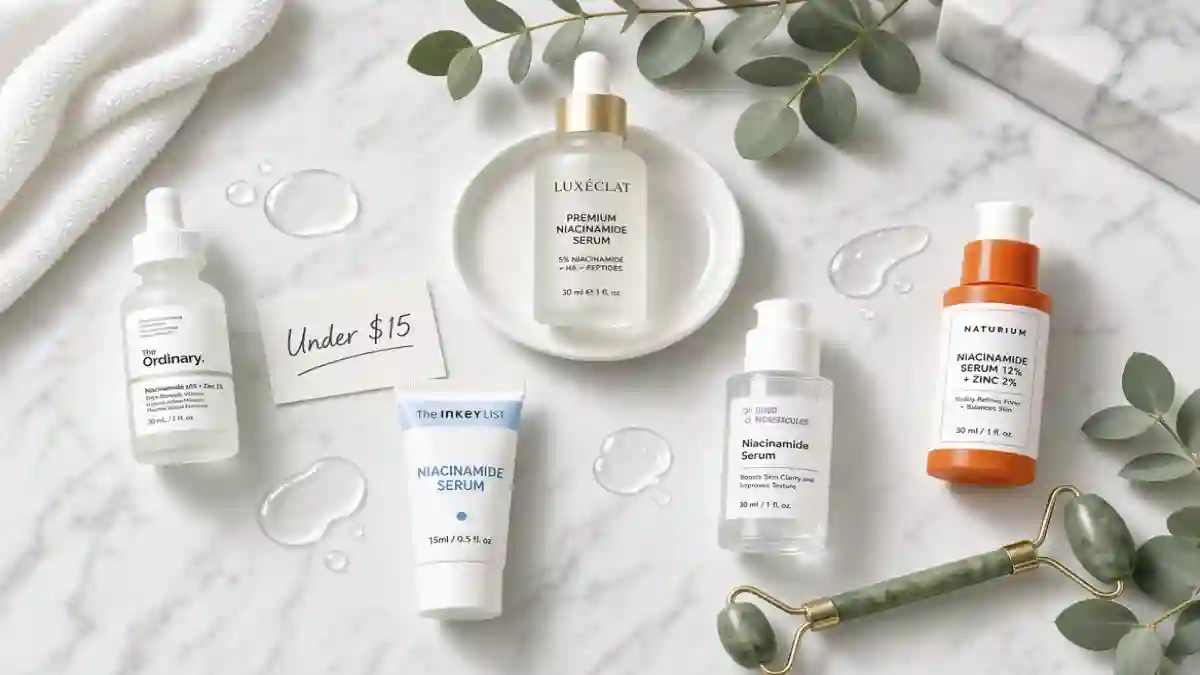
Niacinamide is one of the few skincare ingredients that managed to become both a dermatologist favorite and a social media obsession. It shows up in serums, moisturizers, toners, and even sunscreens, and it’s marketed to everyone from teenagers dealing with oily skin to adults chasing a more even tone. It’s also an ingredient where the price gap between shelves is almost comical. A small bottle of a luxury niacinamide serum can run $50 or more, while a bottle containing the same headline ingredient at the same advertised strength can cost about the price of a coffee.
So what are you actually paying for at the high end? And which of the affordable options are worth buying? This guide breaks down what niacinamide does (and doesn’t do), what separates luxury serums from budget ones, and four affordable picks, The Ordinary, The Inkey List, Good Molecules, and Naturium, with honest notes about where each one shines and where it falls short.
Jump Links
- What Niacinamide Actually Does
- Does a Higher Price Buy a Stronger Serum?
- What “Dupe” Really Means Here (and a Note on Prices)
- 1. The Ordinary Niacinamide 10% + Zinc 1%
- 2. The Inkey List 10% Niacinamide Serum
- 3. Good Molecules Niacinamide Serum 10%
- 4. Naturium Niacinamide Serum 12% + Zinc 2%
- Side-by-Side Comparison Table
- Price-Per-Ounce Table: Budget vs. Luxury
- Which Serum Fits Which Skin Type
- How to Use Niacinamide Properly
- Possible Side Effects and Common Mistakes
- How Long Until You See Results
- When a Luxury Serum Might Be Worth It
- FAQ
- The Bottom Line
What Niacinamide Actually Does
Niacinamide is a form of vitamin B3. In skincare, it’s best known for a handful of modest but genuine benefits: helping regulate oil production, supporting the skin’s moisture barrier, calming the look of redness, and improving the appearance of uneven tone and enlarged-looking pores. Roundups of niacinamide serums consistently describe it as a versatile active that works for pores, oil control, brightening, and barrier health, which is why it fits into almost any routine.
It’s worth setting realistic expectations, though. Niacinamide isn’t a miracle ingredient, and it doesn’t physically shrink pores. What it can do is help reduce the oiliness and congestion that make pores look larger, and over time it can support a smoother, more even-looking complexion. It’s also a gentle, well-tolerated ingredient for most people, which is a big part of its popularity.
One more important point: much of the clinical research on niacinamide has used concentrations in the roughly 2 to 5 percent range, while many consumer serums advertise 10 percent or more. A higher number on the bottle doesn’t automatically mean better results, and stronger formulas can be more likely to cause irritation in sensitive skin. That context matters when you’re deciding whether a more expensive, or a stronger, serum is worth it.
Does a Higher Price Buy a Stronger Serum?
Here’s where the luxury-versus-budget comparison gets interesting. Independent reviewers who compare niacinamide serums have pointed out that a number of high-priced options contain the same 10 percent niacinamide as the cheapest ones. One review site that ranks serums by value described a popular boutique-priced 10 percent serum as essentially the same concentration at a much higher price, and flagged another premium booster as overpriced on a per-ounce basis.
That doesn’t mean luxury serums are bad. The differences usually come from the supporting cast of ingredients, the texture, the packaging, and the brand. Here’s a quick look at what some of the pricier options offer:
| Luxury or premium serum | Niacinamide strength | Reported price | What the extra money tends to buy |
|---|---|---|---|
| Sunday Riley B3 Nice | 10% | Roughly $46 to $65 per ounce | Added soothing and antioxidant ingredients, boutique branding |
| Paula’s Choice 10% Niacinamide Booster | 10% | About $49 for a small 0.67 oz bottle (roughly $73 per ounce) | Acetyl glucosamine, a vitamin C derivative, licorice, panthenol, and hydrating ingredients |
| Medik8 Niacinamide Peptides | Niacinamide plus peptides | About $56 | A peptide complex layered onto niacinamide |
| Dr. Barbara Sturm The Better B | Not specified in our sources | Luxury pricing | Brand positioning and formula extras |
Forbes’ roundup of niacinamide serums, which included input from dermatologists, named The Ordinary’s $6 serum the best value pick while recognizing pricier options for their extras, which is a fair summary of the situation. The expensive serums aren’t scams, but their advantage isn’t a stronger dose of the same active. It’s a more elaborate formula, and for many people the basic active does most of the work.
What “Dupe” Really Means Here (and a Note on Prices)
A quick word on terminology. When we say “dupe” in this article, we mean a budget serum that delivers the same headline active, niacinamide at a similar concentration, at a much lower price. These are not copies of any specific luxury formula, and the supporting ingredients differ from one product to the next. What you’re getting is the same core ingredient, not an identical formula.
A note on prices: skincare prices change constantly and vary by retailer, size, and promotion. The prices below come from recent roundups and can shift. The Ordinary is the only serum here that is consistently priced well below $15. The others typically land in the low-to-mid teens, and depending on the retailer, a couple of them may occasionally creep slightly above $15. If a price is higher than expected where you shop, it’s worth comparing a couple of retailers or waiting for a sale.
Prices are approximate and may change at any time depending on the store, brand, size, and current sales.
1. The Ordinary Niacinamide 10% + Zinc 1%
Typical price: About $6 for 30 mL
Key actives: 10% niacinamide, 1% zinc PCA
This is the budget benchmark that nearly every niacinamide roundup uses as the starting point. It’s a short-ingredient-list, fragrance-free formula with a lightweight, gel-like texture that absorbs quickly and sits comfortably under makeup or other skincare. The zinc PCA is included to help with oil control, which is part of why it’s so popular with people who have oily or acne-prone skin. Forbes described it as dermatologist-approved, which is notable for something so inexpensive.
What’s great:
- The price is hard to beat, especially considering it’s often the same advertised strength as serums that cost many times more.
- It’s simple and fragrance-free, which keeps the risk of fragrance-related irritation low.
- The texture is light enough for oily and combination skin.
What to watch for:
- Some people with sensitive skin report redness or mild irritation, particularly with daily use at 10 percent.
- The formula is fairly minimal, with limited hydration or barrier-supporting extras, so you’ll want a good moisturizer on top.
- Applying too much can lead to a tacky or pilling feel when layered with other products, so use a small amount.
Best for: First-time niacinamide users on a tight budget, and oily or combination skin types.
2. The Inkey List 10% Niacinamide Serum
Typical price: About $13 for 30 mL
Key actives: 10% niacinamide, 1% hyaluronic acid, with squalane in some descriptions
If The Ordinary feels a little drying or stripping on your skin, this is the natural next step. The Inkey List pairs the same 10 percent niacinamide with hyaluronic acid and squalane, which gives it a more hydrating, silkier feel than many serums in this category. One review described it as the friendlier-textured of the two budget 10 percent picks and suggested it for anyone who felt stripped by The Ordinary.
What’s great:
- The added hydration makes it more comfortable for normal, combination, and even drier skin types.
- The texture feels more cushioned and less sticky than a plain gel.
- It’s still very affordable compared to luxury options.
What to watch for:
- It costs roughly twice as much per ounce as The Ordinary, though that’s still inexpensive overall.
- At 10 percent, it can still cause irritation in particularly sensitive skin, so introduce it gradually.
Best for: Combination to normal skin, and anyone who wants niacinamide with a more moisturizing feel.
3. Good Molecules Niacinamide Serum 10%
Typical price: Roughly $10 to $18 for 1 fl oz, depending on retailer and sales
Key actives: 10% niacinamide
Good Molecules is known for straightforward, affordable formulas, and its niacinamide serum is positioned around pore and texture refinement. It’s a simple 10 percent niacinamide serum without a lot of extras, which can be a plus if you prefer to layer your own hydrators and soothing ingredients rather than paying for them bundled into a serum.
What’s great:
- The price is in the budget range, and it’s competitive when found on sale.
- A simple formula makes it easy to fit into a routine alongside other products.
What to watch for:
- The price range reported across sources is wide, so check the current price at your retailer, since it can land at either end of that range.
- Like other 10 percent serums, it can be too strong for some sensitive skin types, so patch-test and build up slowly.
Best for: Anyone who wants a clean, no-frills 10 percent serum and is happy to build the rest of the routine around it.
4. Naturium Niacinamide Serum 12% + Zinc 2%
Typical price: About $12 to $17 for 1 fl oz, depending on the retailer
Key actives: 12% niacinamide, 2% zinc PCA, with glycerin and sodium hyaluronate
Naturium takes a step up in strength, with 12 percent niacinamide and double the zinc of The Ordinary, plus glycerin and sodium hyaluronate for added hydration. Reviewers have pointed to it as a good option for high-strength routines on a budget. It’s worth noting that the brand’s own testing hasn’t been a direct head-to-head comparison on oil control against other serums, so the higher strength is best viewed as an option rather than a guaranteed advantage.
What’s great:
- The higher zinc concentration and added hydrators make it a more complete formula for oily, congested skin.
- It sits in the same budget range as other mid-priced picks.
What to watch for:
- The higher strength increases the chance of irritation, so it’s best for people who already tolerate niacinamide well.
- Pricing varies by retailer and may sit slightly above $15 in some places, so compare before you buy.
Best for: Oily skin that tolerates active ingredients well and wants a slightly stronger, zinc-boosted formula.
Side-by-Side Comparison Table
| Serum | Niacinamide | Other key ingredients | Typical price | Texture and feel | Best for |
|---|---|---|---|---|---|
| The Ordinary Niacinamide 10% + Zinc 1% | 10% | 1% zinc PCA | ~$6 / 30 mL | Lightweight gel, can feel tacky if overapplied | Oily and combination skin, first-timers |
| The Inkey List 10% Niacinamide | 10% | Hyaluronic acid, squalane | ~$13 / 30 mL | Silkier, more hydrating | Normal to combination skin |
| Good Molecules Niacinamide Serum 10% | 10% | Simple formula | ~$10–$18 / 1 fl oz | Lightweight | Minimalist routines |
| Naturium Niacinamide 12% + Zinc 2% | 12% | 2% zinc PCA, glycerin, sodium hyaluronate | ~$12–$17 / 1 fl oz | Hydrating, slightly richer | Oily skin that tolerates actives |
Prices are approximate and may change at any time depending on the store, brand, size, and current sales.
Price-Per-Ounce Table: Budget vs. Luxury
| Serum | Approx. price per ounce |
|---|---|
| The Ordinary Niacinamide 10% + Zinc 1% | ~$6 |
| Good Molecules Niacinamide Serum 10% | ~$10–$18 |
| Naturium Niacinamide 12% + Zinc 2% | ~$12–$17 |
| The Inkey List 10% Niacinamide | ~$13 |
| Sunday Riley B3 Nice | ~$46–$65 |
| Paula’s Choice 10% Niacinamide Booster | ~$73 |
Put another way, the budget picks cost roughly one-third to one-tenth as much per ounce as the premium ones, while sharing the same headline active.
Which Serum Fits Which Skin Type
Oily or acne-prone skin: The Ordinary or Naturium. Both include zinc PCA, which supports oil control, and both are lightweight enough not to feel heavy.
Combination or normal skin: The Inkey List or The Ordinary. The Inkey List’s added hydration makes it more comfortable if your cheeks run dry while your T-zone runs oily.
Dry or dehydrated skin: The Inkey List is the best fit of this group because of its hyaluronic acid and squalane, and it’s still worth pairing with a rich moisturizer.
Sensitive skin: Consider starting with a lower-percentage niacinamide product (many people do better at 5 percent or less) before moving up to a 10 percent serum. If you want to try one on this list, start with The Ordinary or The Inkey List using a tiny amount a few times a week.
Minimalist routines: Good Molecules or The Ordinary, since both keep the formula simple.
How to Use Niacinamide Properly
- Patch-test first. Dab a small amount on your inner forearm or behind your ear and wait 24 hours.
- Apply after cleansing, before moisturizer. A few drops are enough for the whole face. More is not better.
- Start slowly. Begin every other day for a week or two, then move to daily as your skin adjusts. If you use a 12 percent formula, take extra care.
- Use it morning, night, or both. It’s flexible, so choose what fits your routine and how your skin responds.
- Follow with moisturizer and sunscreen in the morning. Niacinamide supports the skin barrier, but it doesn’t replace sunscreen.
- Layer thoughtfully. Niacinamide generally pairs well with most common skincare actives. If you notice irritation when combining it with other strong actives, try using them at different times of day.
Possible Side Effects and Common Mistakes
Niacinamide is widely considered well tolerated, but a few issues come up often:
- Redness, flushing, or tingling. This is more common at higher concentrations and in sensitive skin. If it happens, reduce how often you use it or switch to a lower-strength product.
- Pilling or a tacky feel. Usually caused by using too much product or layering too quickly. Use fewer drops and let each layer absorb.
- Assuming higher is better. A 12 percent serum isn’t necessarily more effective than a 5 or 10 percent one, and it can be harder on your skin.
- Expecting overnight results. Niacinamide works gradually, and impatience often leads people to overuse it.
- Skipping moisturizer. Even oily skin benefits from hydration, especially with a minimalist serum like The Ordinary.
- Skipping sunscreen. Daily sunscreen is the most effective way to protect skin tone and texture, and niacinamide works best alongside it.
How Long Until You See Results
Because niacinamide works gradually, patience matters. Many people notice subtle improvements in oiliness and skin texture within a few weeks, while changes in tone and the look of pores tend to take longer, often around eight to twelve weeks of consistent use. Taking photos in consistent lighting every couple of weeks makes slow changes easier to see.
If your skin hasn’t changed at all after a couple of months of consistent use, it may be that niacinamide isn’t the right tool for your main concern, and that’s worth discussing with a dermatologist.
When a Luxury Serum Might Be Worth It
It would be unfair to say luxury niacinamide serums are never worth the money. A pricier formula can make sense if:
- You have sensitive or reactive skin and have found that a particular premium formula, with soothing extras like panthenol or licorice, is the only one your skin tolerates comfortably.
- You love the texture and experience, and enjoying your routine helps you stick with it.
- You want a combined formula, like niacinamide with peptides or a vitamin C derivative, in a single bottle rather than layering separate products.
Even then, the core active doesn’t need to cost $50. You can often get most of the benefit from a simple budget serum and add other targeted products separately for less.
📌 YOU MIGHT ALSO LIKE:
The 50-Cent Kitchen Miracle: DIY Oatmeal Mask for Instant Sensitive Skin Soothing
Why I Stopped Buying $50 Scrubs and Swapped to a $1 Brown Sugar and Honey Polish
FAQ
Is a $6 niacinamide serum as effective as a $50 one?
For the core benefits of niacinamide, such as oil control, barrier support, and a more even-looking tone, a budget serum with a similar concentration can deliver much of the same effect. The pricier serums generally differ in supporting ingredients, texture, and branding rather than in the strength of the niacinamide itself.
Is 10 percent niacinamide too much?
It can be for some people. Much of the research on niacinamide used lower concentrations, and 10 percent or higher serums are more likely to cause redness or irritation in sensitive skin. If you’re new to niacinamide or have sensitive skin, consider starting with a lower concentration or using a 10 percent serum only a few times a week.
Can I use niacinamide every day?
Most people can use it daily once their skin has adjusted. Start with every other day for the first week or two, and scale back if you notice irritation.
Can I use niacinamide with vitamin C or retinol?
Niacinamide is generally compatible with most skincare actives. If you’re using it alongside other strong actives and notice irritation, try using them at different times of the day, and introduce new products one at a time.
Why does my niacinamide serum pill or feel sticky?
This usually happens when too much product is applied or when layers are applied too quickly. Try using fewer drops and giving the serum a minute to absorb before the next step.
Do I still need sunscreen if I use niacinamide?
Yes. Niacinamide supports the skin barrier and can help with the look of uneven tone, but it doesn’t replace sunscreen, which is the most important step for protecting skin from sun damage.
The Bottom Line
Niacinamide is one of the best examples of a skincare ingredient where the price tag tells you very little about the core benefit. The Ordinary, The Inkey List, Good Molecules, and Naturium all deliver 10 to 12 percent niacinamide for roughly the price of lunch, and each one has a slightly different texture, supporting cast, and ideal skin type. Start with the lightest, simplest option that fits your skin, introduce it slowly, use sunscreen every morning, and give it a couple of months before judging. For most people, the extra $40 that a luxury bottle costs buys more elegance than efficacy.
For more budget-friendly beauty guides and honest ingredient comparisons, check out more posts over at The Frugal Glow.
This article is for general informational purposes and isn’t a substitute for medical advice. If you have a skin condition such as acne, rosacea, or eczema, please check with a dermatologist before adding new active ingredients to your routine.
Sources: