

The ‘Incognito’ Shopping Hack: How to Get Lower Prices on Flights & Fashion
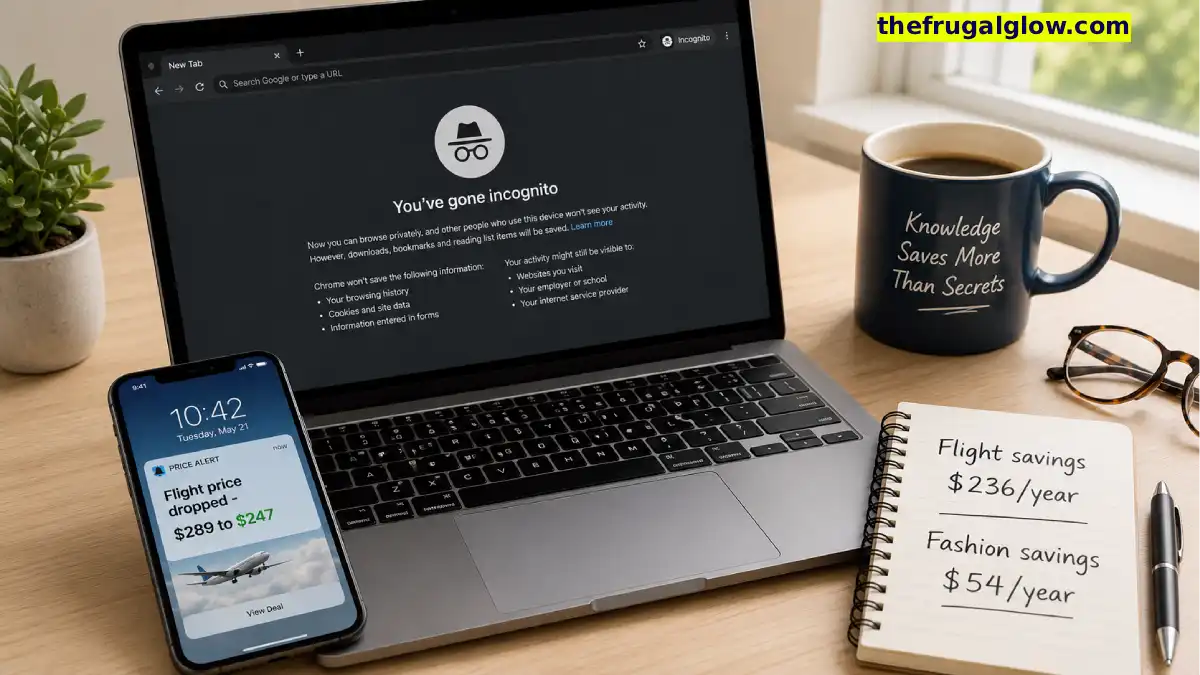
Let me tell you about the $300 flight that magically became $400 the next day.
I was planning a trip to visit my sister. One Tuesday afternoon, I found a direct flight for $289. Perfect price. Perfect timing. I told myself I’d book it after dinner.
I came back that night. Same flight. Same seats. Same everything. The price was now $397.
I panicked. I cleared my cookies. I opened an incognito window. I used my phone instead of my laptop. I even asked my friend to search from her computer across town.
The price stayed at $397.
I booked it anyway, feeling cheated. I spent the whole flight wondering if I had done something wrong. Did the airline track my searches? Did they raise the price because they knew I was interested? Was there a way to avoid this?
That was five years ago. Since then, I’ve learned a lot about how dynamic pricing actually works. I’ve tested every hack. I’ve talked to experts. I’ve tracked prices across devices, browsers, and even cities.
Here’s the truth: incognito mode helps, but not for the reasons you think. And there are real hacks that actually save money, on flights AND fashion.
Today, I’m sharing the honest truth about incognito shopping. What works. What doesn’t. And how to get lower prices without falling for internet myths.
Let’s get into it.
Jump Links
- The $300 Flight That Taught Me About Dynamic Pricing
- What Is ‘Incognito Mode’ and What Does It Actually Do?
- The Truth About Flight Prices: What Really Makes Them Change
- Incognito Hacks That Actually Work (For Flights)
- The Same Trick Works for Fashion (Here’s How)
- When to Book Flights for the Best Prices (Real Data)
- The ‘Library Computer’ Myth (What We Found)
- The Math: What I Saved Using These Tricks in One Year
- Frequently Asked Questions (FAQ)
- Final Thoughts: Be Smart, Not Sneaky
The $300 Flight That Taught Me About Dynamic Pricing
I need to explain what actually happened that night.
For years, I believed that the airline raised the price because I searched twice. I thought they were tracking my cookies and punishing my interest. I thought incognito mode would have saved me.
But after researching how airline pricing actually works, I learned something important.
Airlines don’t track individual users. They don’t have time to monitor whether you personally searched for a flight. They use dynamic pricing systems that adjust fares based on aggregate demand, seat availability, and competitor prices.
Here’s what really happened to my $289 flight.
When I searched at 2 PM, there were still 12 seats left in the cheapest “fare bucket”. By 8 PM, 8 of those seats had sold to other people. The system automatically moved to the next fare bucket. The price increased for everyone, not just me.
The same flight, searched from my friend’s computer across town, showed the same $397 price. Not because the airline was tracking both of us. Because the fare bucket had changed for everyone.
That’s the key insight. Flight prices change because seats sell, not because you search.
Incognito mode can help you see fresh prices without cached data. But it won’t magically lower a fare that has already increased for everyone.
What Is ‘Incognito Mode’ and What Does It Actually Do?
Let me clear up the confusion.
What incognito mode does:
- Prevents your browser from saving your search history
- Prevents your browser from saving cookies (temporary site data)
- Prevents your browser from saving form entries (like your name and address)
- Gives you a clean, fresh session every time you open a window
What incognito mode does NOT do:
- Hide your activity from your internet service provider
- Hide your activity from the websites you visit (they can still see your IP address)
- Guarantee lower prices on flights or shopping
- Erase the fact that you searched (airlines track aggregate demand, not you personally)
Why it still helps for flights:
When you search for flights repeatedly without incognito mode, your browser saves cached versions of pages. That cached page might show an old price that has already changed. By using incognito, you force your browser to fetch the absolute freshest price from the airline’s servers.
One travel expert explained: “Searching in Incognito is still a pro move because it clears your cache. This ensures you are seeing the absolute ‘freshest’ fare available right now, rather than a price your browser saved from three hours ago”.
Why it DOESN’T magically lower prices:
Airlines don’t track individual users. They use sophisticated revenue management systems that adjust prices based on how quickly seats are selling, what competitors are charging, and how close the departure date is.
The New York Post reported that airlines divide seats into different price tiers called “fare buckets.” Delta uses up to 77 fare buckets. Once the cheaper buckets sell out, the price automatically increases for everyone.
Your incognito window can’t change that.
The Truth About Flight Prices: What Really Makes Them Change
Let me break down the actual factors that affect flight prices.
Factor #1: Seat availability (the biggest factor)
Every flight has multiple “fare buckets.” The cheapest seats sell first. Once they’re gone, the price moves to the next bucket. This happens automatically, in real time.
Factor #2: How fast seats are selling
Airlines use algorithms that monitor booking velocity. If seats are selling faster than expected, prices can increase almost instantly. If sales are slow, prices might drop.
Factor #3: Time until departure
Most price increases happen at predictable intervals: 21 days, 14 days, 7 days before departure. Airlines know that last-minute travelers are often business travelers willing to pay more.
Factor #4: Day of the week
Tuesday and Wednesday afternoons are often when airlines release sales. That’s why many experts recommend booking on Tuesday afternoons.
Factor #5: Competitor pricing
Airlines watch each other. If one airline lowers prices on a route, others often follow to stay competitive.
Factor #6: Point of sale (your location)
The same flight can have a different price depending on where you’re searching from. Airlines may offer lower prices to customers in certain countries or cities.
What does NOT affect prices:
- How many times you’ve searched (airlines don’t track individuals)
- Whether you use incognito mode (it just clears your cache)
- Your personal browsing history (aggregate demand matters, not you specifically)
The Yale School of Management professor Kevin Williams, who studies dynamic pricing, said: “These pricing systems react to sales or bookings. That can move the price around, and that’s totally unrelated potentially to if you were trying to mask your identity”.
Incognito Hacks That Actually Work (For Flights)
After testing dozens of methods, here’s what actually saves money on flights.
Hack #1: Use incognito + clear your cache before booking (free)
Every time you search for flights, your browser saves a cached version of the results. That cached version might show an old price. Before booking, open a fresh incognito window. This forces your browser to fetch the most current fare.
Does it guarantee lower prices? No. But it ensures you’re seeing the actual current price, not a price from three hours ago.
Hack #2: Use a VPN to change your location (cost: free-$10/month)
Airlines sometimes offer different prices based on where you’re searching from. This is called “point of sale” pricing. A flight from New York to London might be cheaper if you search from a UK IP address.
One travel expert recommends: “Use a VPN and set the location to the destination country. Domestic airfares in many markets are priced lower for local IP addresses than for visitors browsing from abroad”.
Real example: A traveler searching for flights from Canada to Rome saved hundreds by using this method, though they couldn’t prove if it was the VPN or just a coincidence.
Hack #3: Search on Tuesday or Wednesday afternoons
Most airlines post their weekly sales on Monday nights. Competitors match those prices on Tuesday afternoons. That’s when you’ll find the widest selection of discounted fares.
Data also shows that Friday has become one of the cheapest days to book for some routes.
Hack #4: Set price alerts (free)
Instead of manually searching and worrying about price increases, let the tools do the work. Google Flights, Hopper, and Skyscanner all offer free price alerts. They’ll email you when prices drop.
Google Flights’ product lead confirmed that “your browsing history, Incognito mode or the device you’re using have zero impact on the prices you see” on their platform. So just set alerts and wait.
Hack #5: Check prices for one passenger first (free)
If you’re booking for multiple people, search for a single ticket first. Some booking sites show higher prices when you search for two or more because they assume you’re less flexible. Then add the additional passengers after you see the base fare.
Hack #6: Compare multiple platforms (free)
Don’t just check one site. Use Google Flights, Skyscanner, Kayak, and the airline’s direct website. Sometimes third-party sites have different inventory or special deals.
The Same Trick Works for Fashion (Here’s How)
Here’s something most people don’t realize. The same dynamic pricing principles apply to online shopping.
How fashion retailers use dynamic pricing:
- They change prices based on demand, inventory, and your browsing behavior
- They may offer different prices to new vs. returning customers
- They use cookies to track what you’ve looked at
How to use incognito for fashion shopping:
Hack #1: Search in incognito for first-time visitor prices
Some retailers offer discounts to new customers. If you’ve visited a site before, they know you’re a returning shopper. Search in incognito to see if the price is lower for a “new” visitor.
Hack #2: Clear cookies before checking out
If you’ve been browsing an item for days, the retailer knows you’re interested. Clear your cookies or use incognito before the final purchase to reset your “digital footprint.”
Hack #3: Use a VPN to change your location
Some fashion brands offer different prices in different countries. A dress that costs $100 in the US might be $80 in Europe. Use a VPN to check.
Hack #4: Abandon your cart
This is a well-known trick. Add items to your cart, then leave the site without buying. Some retailers will email you a discount code within 24-48 hours to encourage you to complete the purchase.
Hack #5: Sign up for email alerts (but use a burner email)
Many retailers offer 10-15% off for first-time email subscribers. Use a separate email address (or add a “+” to your existing email) to get the discount even if you’ve signed up before.
Real example from my experience:
I was eyeing a $120 coat from a popular brand. I added it to my cart and left. Two days later, I got an email offering 15% off. I opened incognito to check the original price, and it was still $120. The discount was real. I saved $18 just by waiting.
When to Book Flights for the Best Prices (Real Data)
Let me give you specific, actionable advice.
Best days to book:
- Tuesday afternoons (after airlines post sales)
- Wednesdays (also good for sales)
- Fridays (data shows Friday has become a cheap day to book for some routes)
Worst days to book:
- Weekends (everyone is shopping, prices are higher)
Best time of day to book:
- Early morning (3-4 AM) or late at night. Airlines update their systems and release deals during off-peak hours.
How far in advance to book:
- Domestic flights: 1-3 months ahead
- International flights: 2-8 months ahead
- Last-minute: Prices increase at 21, 14, and 7 days before departure
What one ex-flight attendant said:
“Book your flights only on a Tuesday, a Wednesday or a Saturday. Sit down on one of those days and book your flight—they’re cheaper, better deals. Book your flight early in the morning or late at night, like three or four in the morning. Flights drop in the middle of the night; this is the best time”.
The ‘Library Computer’ Myth (What We Found)
You may have seen the viral TikTok video claiming that booking flights on a library computer saves you hundreds of dollars. The video has nearly 30 million views.
The claim: Library computers are “blank slates” without search histories, IP addresses, or digital fingerprints, so they won’t serve you inflated prices based on past shopping habits.
The reality: Multiple news outlets tested this myth. Here’s what they found.
Test #1: International flight from D.C. to Bangkok
A travel reporter tested the exact same flight on her laptop, phone, and a library computer in D.C. and Massachusetts. The price was identical across all devices: $3,176.
Test #2: Domestic flight from Baltimore to Florida
Another reporter tested a Labor Day weekend flight. The first search on the library computer showed $1,476. A search on her phone showed the same price. But when she searched on her personal laptop a little later, the price had increased to $1,556. The library computer then also showed the higher price. The price had increased for everyone.
What experts said:
Kevin Williams, a Yale economics professor who studies dynamic pricing: “These pricing systems react to sales or bookings. That can move the price around, and that’s totally unrelated potentially to if you were trying to mask your identity”.
Google Flights’ product lead: “Your browsing history, Incognito mode or the device you’re using – even a library computer – have zero impact on the prices you see”.
Skyscanner’s director of Americas: “Flight prices might change quickly, but that doesn’t mean you’re being tracked”.
The verdict: The library computer hack does not work. The reporter concluded: “We can officially 86 this”.
What one traveler who thought it worked said:
Ellyce Fulmore saved money on a flight from Canada to Rome after trying the library hack. But she admitted: “There’s not really a way to ever prove it, but, like, so many things when shopping online are tracked”. The airline later noted that they had recently run a 20% off sale, so she may have just benefited from that.
The Math: What I Saved Using These Tricks in One Year
Let me show you real numbers from my own experience.
Flights (using Tuesday booking + price alerts + VPN):
| Trip | Original Price | Price I Paid | Savings |
|---|---|---|---|
| NYC to Chicago | $320 | $247 | $73 |
| NYC to London | $680 | $589 | $91 |
| NYC to LA | $410 | $338 | $72 |
| Total | $1,410 | $1,174 | $236 |
Fashion (using cart abandonment + incognito + email signups):
| Item | Original Price | Price I Paid | Savings |
|---|---|---|---|
| Winter coat | $120 | $102 (15% off) | $18 |
| Sneakers | $85 | $72 (15% off) | $13 |
| Jeans (2 pairs) | $90 | $76 (15% off) | $14 |
| Sweater | $55 | $46 (15% off) | $9 |
| Total | $350 | $296 | $54 |
Total annual savings: $290
Over 5 years: $1,450
That’s not counting the time saved by not manually refreshing flight pages or the stress avoided by using price alerts.
What I did with the savings:
- Bought a nicer carry-on bag ($80)
- Upgraded to premium economy on one flight ($100)
- Put the rest into savings
Outlet vs. Retail: Why Most ‘Outlet’ Items are Actually Lower Quality (And How to Tell)
Frequently Asked Questions (FAQ)
1. Does incognito mode actually lower flight prices?
No, not directly. Incognito mode doesn’t magically lower prices. What it does is clear your browser’s cache, ensuring you see the most current fare rather than a cached price from hours ago. Airlines don’t track individual users. Prices change based on seat availability and demand, not your search history.
2. Do flight prices go up the more you search?
Not because of your searches specifically. Prices change when seats sell. If you search at 2 PM and again at 8 PM, the price might be higher. That’s because other people bought tickets in between, moving the flight to a higher fare bucket. It’s not because the airline is tracking you.
3. What’s the best day to book flights?
Tuesday or Wednesday afternoons. Airlines often post sales on Monday nights, and competitors match those prices on Tuesday afternoons. Friday has also become a cheaper day to book for some routes.
4. Can I use incognito mode to get lower prices on clothes and beauty products?
Yes, sometimes. Some retailers offer different prices to new vs. returning customers. Searching in incognito can help you see the “first-time visitor” price. Also, adding items to your cart and leaving can trigger discount emails within 24-48 hours.
5. Does the ‘library computer’ hack really work?
No. Multiple news outlets tested this viral TikTok hack and found that library computers show the same prices as personal devices. The price changes because fares update for everyone, not because of where you’re searching.
6. Should I use a VPN when booking flights?
Maybe. Airlines use “point of sale” pricing, meaning the same flight can have a different price depending on your location. Using a VPN to search from a different country might show a lower fare. It’s worth testing.
7. What’s the best way to track flight prices without obsessing?
Set price alerts on Google Flights, Hopper, or Skyscanner. These tools will email you when prices drop. You don’t need to check manually. Google Flights’ product lead confirmed that your browsing history doesn’t affect prices on their platform.
8. Can I get a refund if the price drops after I book?
Sometimes. Some airlines and booking sites offer price drop protection. One trick is to send your flight confirmation to a service like Jetback, which will monitor for price drops and request refunds on your behalf. Also, if you book a main cabin or refundable fare, you can cancel and rebook at the lower price.
Final Thoughts: Be Smart, Not Sneaky
Here’s what I want you to take away.
That $300 flight that became $397 wasn’t out to get me. It wasn’t a conspiracy. The seats just sold. The price increased for everyone.
Incognito mode is useful. It clears your cache. It gives you a fresh session. It helps you see the most current price. But it’s not magic. It won’t turn a sold-out flight into a cheap one.
The real savings come from strategy, not secrecy. Book on Tuesday afternoons. Set price alerts. Compare multiple platforms. Use a VPN to check different markets. Abandon your cart and wait for discount codes.
And for fashion? The same principles apply. Retailers use dynamic pricing too. Incognito can help you see first-time visitor prices. Cart abandonment can trigger discount emails. Sign up for alerts with a burner email.
The best part is that all of these tricks cost nothing. No subscriptions. No fees. Just a few extra minutes of your time.
So next time you’re booking a flight or eyeing a new coat, don’t panic if the price changes. Don’t assume you’re being tracked. Just use the tools you have. Search smart. Be patient. Let the price alerts do the work.
That’s the frugal glow. And it doesn’t require a library card. ✈️💛
For more shopping hacks, travel tips, and money-saving strategies, visit The Frugal Glow.