
The $11 L’Oreal Color Correcting Primer: Does It Really Erase Redness Instantly?
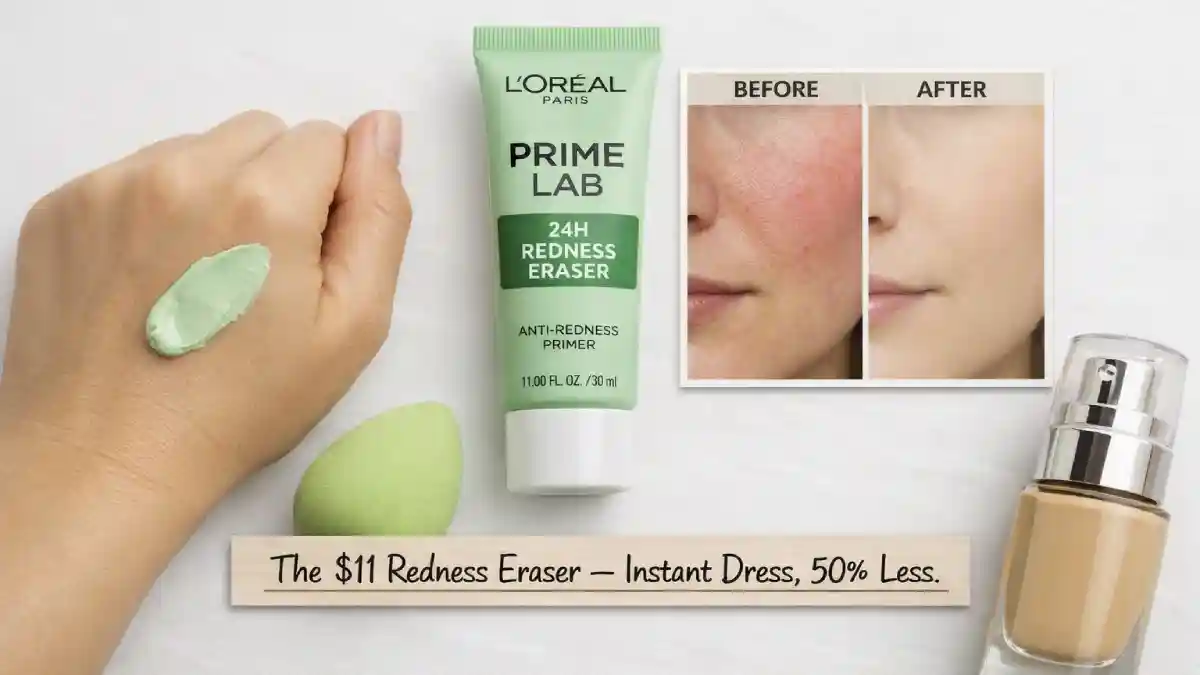
The $11 L’Oreal primer was sitting on the shelf at CVS. The tube was small, bright green, and promised to “instantly relieve face redness for 24H” . I had tried color-correcting primers before. Most of them were disappointing. They either did nothing, turned my face into a green-tinted mess, or wore off within an hour.
But I had been dealing with redness for years. Rosacea-prone cheeks. Redness around my nose. Flare-ups that made me self-conscious. I had tried everything: expensive green concealers, color-correcting serums, prescription creams. Nothing worked the way I wanted it to.
So I bought the $11 tube. I took it home. I applied it. And I watched my redness disappear in under a minute.
Today, I’m sharing everything you need to know about the L’Oreal Paris Prime Lab 24H Redness Eraser. The science behind why it works. The ingredients. The results. And why you should never, ever spend $40 on a color-correcting primer again.
Jump Links
- The $11 Primer That Promises to Erase Redness
- What This Primer Actually Claims (And What It Really Does)
- The Science of Green Color Correction (Why It Works)
- The Ingredient Breakdown: What’s Actually Inside
- The Results: What Real Users Are Saying
- How to Apply It Without Looking Like Shrek
- The Math: What I Saved by Switching
- Frequently Asked Questions (FAQ)
- Final Thoughts: The Best Redness Corrector Is the One That Actually Works
The $11 Primer That Promises to Erase Redness
Let me describe the product first. The L’Oreal Paris Prime Lab 24H Redness Eraser is a color-correcting foundation primer with a green tint. It comes in a 30 mL tube (1.01 fl oz). It costs around $11 at drugstores, Target, and Amazon .
What it claims:
- Instantly relieves face redness for 24H
- Neutralizes face redness with a green color-correcting formula
- Evens skin tone over time with 4% niacinamide
- Extends makeup wear
What it actually is: A lightweight, green-tinted primer that uses color theory to cancel out red tones on the skin. The green pigment neutralizes the red, creating a more even, neutral canvas for foundation or tinted moisturizer .
The price: Around $11-15 depending on where you buy it. Compare that to the Smashbox Photo Finish Anti-Redness Primer, which costs $42, or the Make Up For Ever Step 1 Primer Color Corrector, which costs $39 . The L’Oreal version is a fraction of the price.
The packaging: A simple squeeze tube. No fancy glass bottle. No gold accents. Just a basic tube that does the job. But the formula inside is what matters.
What This Primer Actually Claims (And What It Really Does)
Let me separate the marketing from the reality.
The claim: “Instantly relieves face redness for 24H”
What it really does: It instantly neutralizes the appearance of redness using green pigment. The “24H” claim is about how long the color correction lasts under foundation, not about a lasting skincare benefit. The primer creates a green-tinted layer on the skin that cancels red tones. Once you apply foundation over it, the green disappears, and you’re left with an even, neutral base .
The claim: “4% niacinamide”
What it really does: Niacinamide is a skincare ingredient that can help even skin tone over time. At 4%, it’s a meaningful concentration. But the primer is a makeup product, not a skincare product. The niacinamide is a bonus, not the main event. Over weeks of consistent use, it might help reduce your baseline redness, but the instant effect comes from the green pigment .
The claim: “Extends makeup wear”
What it really does: Like any primer, it creates a smoother base that helps foundation last longer. The formula dries down quickly, which helps lock makeup in place . Users report that their makeup stays put through a 12-hour shift .
The reality: This is a color-correcting primer. Its job is to neutralize redness before you apply foundation. It does that job well. It doesn’t “erase” redness permanently. It doesn’t cure rosacea. It doesn’t replace skincare. It’s a makeup tool that makes your makeup look better.
The Science of Green Color Correction (Why It Works)
This isn’t magic. It’s color theory.
The principle: Green is the complementary color of red on the color wheel. When you place green next to red, they cancel each other out, resulting in a neutral brown or gray tone .
How it applies to skin: When you apply a green-tinted primer to red areas of your skin, the green pigment neutralizes the red. The result is a more even, neutral skin tone. Then, when you apply foundation, the foundation sits on a neutral base, which means you need less coverage to achieve an even complexion .
Why it’s better than full-coverage foundation: If you have significant redness, you can either pile on heavy foundation to cover it, or you can neutralize the redness first with a green primer and then use a lighter foundation. The second approach looks more natural and feels less heavy on the skin .
The rule: Green corrector is for redness. Peach corrector is for blue/purple dark circles. Yellow corrector is for dullness. Lavender corrector is for sallowness. The L’Oreal primer is green, so it’s specifically for redness .
What dermatologists say: “Green concealer is all about color correction—and, since green is the complementary color of red, it helps neutralize reddish skin tones. It makes a great make-up base” .
The Ingredient Breakdown: What’s Actually Inside
Let me break down what’s actually in this primer.
The key ingredients:
| Ingredient | What It Does |
|---|---|
| Niacinamide (4%) | Evens skin tone over time, reduces redness, strengthens barrier |
| Green pigments (Chromium Oxide Greens) | Neutralizes red tones instantly |
| Dimethicone | Creates a smooth, silky texture that helps makeup apply evenly |
| Glycerin | Hydrates and prevents the primer from drying out the skin |
| Silica | Blurs pores and creates a matte finish |
What’s not in it: No fragrance is listed as a primary ingredient in some versions, but the European formula includes fragrance (parfum). If you’re sensitive to fragrance, check the label before buying .
The texture: Lightweight, silky, and fast-drying. It spreads easily but dries quickly, so you need to work fast .
The finish: Matte. It doesn’t add shine or glow. It creates a neutral, slightly matte base that’s perfect for foundation .
The Results: What Real Users Are Saying
Let me give you the honest picture. This primer works for most people, but not for everyone.
The positive reviews:
One user said: “I put this on, and it took barely a minute for my redness to go away” . Another wrote: “L’Oreal redness eraser really does tone down the redness of my face” . A third user said: “I often have areas of my face that are more red than others. This colour correcting primer is perfect at neutralizing the red areas and prepping my skin for foundation” .
One reviewer with rosacea-prone skin said: “My blotchy red, flushed rosacea-prone cheeks were smoothed out, even-toned and matte” .
A professional review noted: “The green pigment is dense enough that a single pea-sized dab on each cheek cancels about 40 percent of visible redness without needing to layer” .
The negative reviews:
One user said: “Doesn’t cover a lot of redness” . Another wrote: “I found this product slightly irritated my skin when I applied it. It also did not stay matte. My skin/makeup looked oily within a couple hours” . A third said: “Product went into my pores, and made them more noticeable” .
One user complained: “So hard to blend in! Makes face green!” .
The pattern: The primer works well for people with mild to moderate redness. For severe redness or rosacea, it helps but doesn’t fully neutralize everything. The green tint can be too strong if you use too much product, and it can emphasize texture if you have dry or flaky skin .
The consensus: It’s an effective, affordable color-correcting primer. It works best when applied sparingly and blended well. It’s not a miracle product, but it does what it promises for most users.
How to Apply It Without Looking Like Shrek
The biggest complaint about this primer is that it can make you look green if you use too much. Here’s how to apply it correctly.
Step 1: Start with moisturized skin. The primer dries quickly and can emphasize dry patches. Apply your moisturizer first and let it absorb completely .
Step 2: Use a tiny amount. A pea-sized amount is enough for each area of redness. “A little goes a long way—if you’re too heavy handed, you may feel a bit like Shrek” .
Step 3: Apply only where needed. Don’t apply it all over your face. Focus on the areas where redness is most visible: cheeks, nose, chin, and anywhere else that’s red .
Step 4: Work in sections. The primer dries fast. Apply it to one area, blend it, then move to the next. Don’t apply it all over your face at once .
Step 5: Blend, blend, blend. Use a damp beauty sponge or your fingers. Tap and press the product into the skin rather than rubbing it. The goal is to fuse it with your skin so the green disappears .
Step 6: Follow with foundation. The green tint is meant to be covered. Apply your foundation or tinted moisturizer on top. The green will disappear, and you’ll be left with an even, neutral base .
Step 7: Set with powder. If you have oily skin, set your makeup with a translucent powder to prevent the primer from shifting throughout the day .
The “Shrek” warning: If you apply too much, your face will look green. The green is meant to be neutralized by your foundation. If you’re not wearing foundation, use a very small amount and blend thoroughly. Or use a tinted moisturizer on top to balance the green .
The Math: What I Saved by Switching
Let me break down the actual dollars.
If I bought a luxury color-correcting primer:
| Item | Cost | How Often | Annual Cost |
|---|---|---|---|
| Smashbox Anti-Redness Primer | $42 | Every 3 months | $168 |
| Total | $168 |
What I actually spend (L’Oreal Redness Eraser):
| Item | Cost | How Often | Annual Cost |
|---|---|---|---|
| L’Oreal Prime Lab Redness Eraser | $11 | Every 3 months | $44 |
| Total | $44 |
Annual savings: $124
Over 5 years: $620
And the L’Oreal version works just as well as the luxury alternatives for most users. The Smashbox version has a slightly more elegant texture and includes skincare ingredients like algae extract and hyaluronic acid, but the core function—neutralizing redness with green pigment—is the same .
📌 YOU MIGHT ALSO LIKE:
The $15 ‘Amazon’ Stanley Cup Alternative: We Tested the New 2026 Version for 24 Hours
The $11 ‘Physicians Formula’ Sun Tint: My Secret for a ‘Post-Vacation’ Glow in March
Frequently Asked Questions (FAQ)
1. Does the L’Oreal Redness Eraser really work instantly?
Yes. The green pigment neutralizes red tones immediately upon application. Most users report seeing a visible difference within a minute . The “instant” effect comes from color theory, not from a skincare ingredient.
2. How long does the redness correction last?
The primer is designed to last up to 24 hours under foundation . In real-world use, most users report it lasting through a full workday . It may need touching up if you have very oily skin or if you’re sweating heavily.
3. Will it make my face look green?
Not if you use it correctly. The green tint is meant to be covered by foundation. Apply a small amount to red areas, blend well, and follow with foundation. The green will disappear, and you’ll be left with an even base . If you use too much, you may look green .
4. Can I wear it alone without foundation?
You can, but you need to use a very small amount and blend thoroughly. The green may still be slightly visible if you don’t cover it. For best results, use it under a tinted moisturizer or foundation .
5. Is it good for rosacea-prone skin?
It can help neutralize the redness associated with rosacea, but it’s not a treatment for rosacea. It’s a cosmetic product that camouflages redness. If you have rosacea, consult a dermatologist for treatment options. The primer can be used as a makeup tool alongside your skincare routine .
6. Does it contain niacinamide? What does that do?
Yes, it contains 4% niacinamide . Niacinamide is a skincare ingredient that can help even skin tone, reduce redness, and strengthen the skin barrier over time. In this primer, it’s a bonus skincare ingredient, but the instant redness correction comes from the green pigment.
7. What’s the difference between this primer and a green concealer?
A green concealer is typically thicker and more pigmented. It’s designed to be used on specific spots or blemishes. A green primer is thinner and designed to be used over larger areas of redness as a base for foundation. The L’Oreal primer is a primer, not a concealer .
Final Thoughts: The Best Redness Corrector Is the One That Actually Works
The $11 L’Oreal primer is sitting on my bathroom counter. My redness is neutralized. My foundation applies smoothly. And I didn’t spend $42 on a luxury alternative.
The honest verdict: This primer works. It doesn’t “erase” redness permanently. It doesn’t cure rosacea. It doesn’t replace skincare. But it does exactly what it promises: it neutralizes the appearance of redness instantly, creating a more even base for makeup. And it costs $11.
The key tips:
- Use a tiny amount
- Apply only where needed
- Work in sections (it dries fast)
- Blend well
- Follow with foundation
- Set with powder if you have oily skin
The math: You save $124 a year compared to luxury alternatives. The results are comparable for most users. The formula includes 4% niacinamide, which is a genuine skincare bonus.
I’ve been using this primer for months. My redness is neutralized. My makeup looks better. And I’ve saved over $100 compared to the luxury version I used to buy.
That’s not cheap. That’s smart.
That’s the frugal glow. And it’s waiting for you at the drugstore. 💚
*For more budget beauty reviews, product comparisons, and money-saving skincare tips, visit The Frugal Glow.*