

Quiet Cardio: 8 High-Energy Workouts That Won’t Annoy Your Downstairs Neighbors
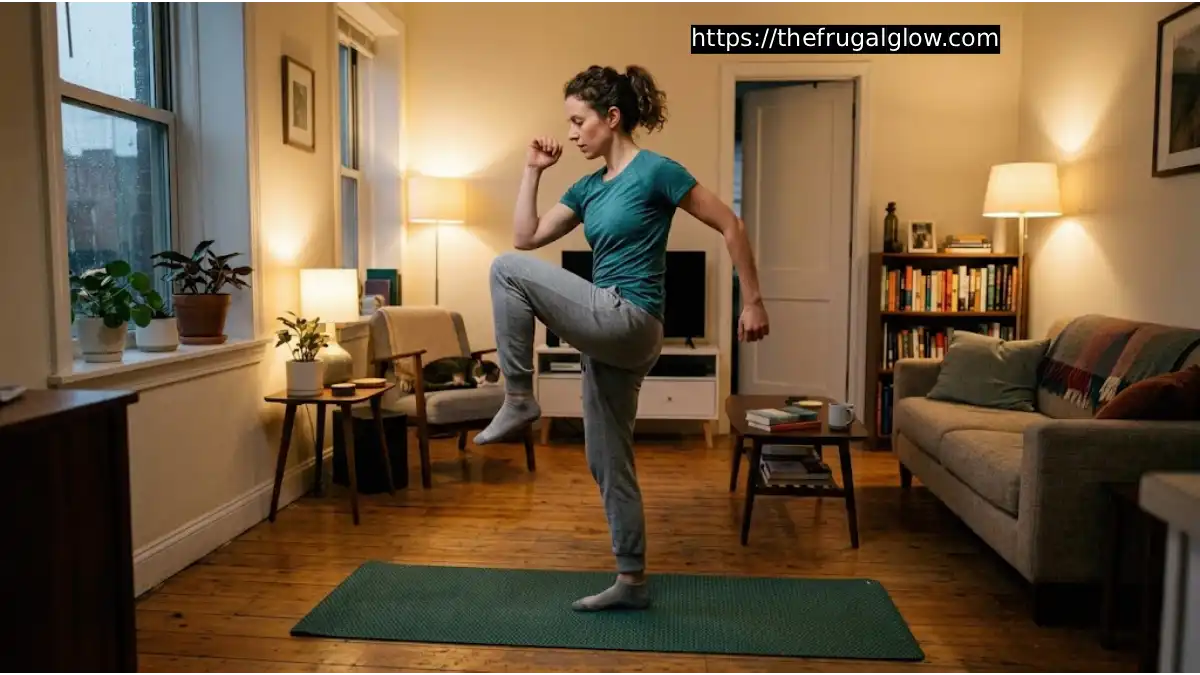
There’s a very specific kind of workout guilt that comes with apartment living: you want to get your heart rate up, but every jumping jack, burpee, and mountain climber sends a very audible message straight through the floor to whoever lives below you. Enough of that and you start associating cardio with a passive-aggressive note taped to your door.
The good news is that jumping was never actually the thing raising your heart rate — effort was. Once you understand that distinction, an entire category of genuinely intense, sweat-inducing cardio opens up that never once requires your feet to leave the ground with force. These eight workouts prove it, all built specifically to keep your heart rate up and your floor (and your neighbors) completely undisturbed.
Jump Links
- Why “Quiet” Doesn’t Mean “Easy”
- Workout 1: Low-Impact HIIT (HILIT)
- Workout 2: Shadowboxing
- Workout 3: Step Touches and Step Jacks
- Workout 4: Slow-Tempo Strength-Cardio Hybrid
- Workout 5: Quiet Burpees
- Workout 6: Stationary Cycling
- Workout 7: Dance Cardio
- Workout 8: Walking Lunges and March-in-Place Circuits
- Full Workout Comparison Table
- Sample 25-Minute Quiet Cardio Circuit
- Extra Noise-Reduction Tips
- FAQ
- The Bottom Line
Why “Quiet” Doesn’t Mean “Easy”
The instinct to assume low-impact automatically means low-intensity is one of the biggest misconceptions in home fitness. Research comparing low-impact training with high-impact routines has found that heart rate and muscular engagement can genuinely be achieved through controlled tempo movements and sustained tension, without needing repetitive jumping at all. The mechanism driving intensity isn’t the jump itself — it’s how much muscular effort, tempo control, and continuous movement you’re putting into an exercise.
This actually opens up a real advantage beyond noise control. Low-impact cardio is also considerably gentler on joints, since it eliminates the repetitive pounding that jumping-based workouts place on the knees, ankles, and hips. For anyone managing joint sensitivity, recovering from injury, or simply looking to reduce daily wear and tear while still training hard, quiet cardio isn’t a compromise — it’s often the smarter long-term choice regardless of your living situation.
Workout 1: Low-Impact HIIT (HILIT)
What it is: Often called HILIT (high-intensity, low-impact training), this style mirrors traditional HIIT’s structure — short, intense work intervals followed by brief rest — but swaps every jumping movement for a grounded alternative performed with equal intensity and speed.
How it works: Instead of jump squats, you perform fast bodyweight squats without leaving the ground. Instead of high knees, you drive your knees up rapidly while keeping at least one foot in light contact with the floor at all times. The intensity comes from speed and muscular effort rather than impact.
Why it’s quiet: Every movement keeps both feet either on the ground or in soft, controlled contact rather than landing with force, eliminating the floor-pounding noise that traditional HIIT is known for.
Sample interval structure: 40 seconds of work, 20 seconds of rest, repeated across 6–8 different exercises for a full circuit.
Workout 2: Shadowboxing
What it is: A boxing-inspired cardio workout using punches, footwork, and rotational movement, performed against imaginary resistance rather than a bag or opponent.
How it works: Combine jabs, crosses, hooks, and uppercuts with light, shuffling footwork, keeping your core engaged and your feet moving continuously without ever stomping or jumping.
Why it’s quiet: All the movement happens through the upper body and light foot shuffling, both of which produce essentially zero floor impact, even at a fast pace.
Bonus benefit: Shadowboxing doubles as a genuine full-body and coordination workout, engaging the shoulders, core, and legs simultaneously while elevating heart rate significantly within just a few minutes.
Workout 3: Step Touches and Step Jacks
What it is: A low-impact aerobics staple that mimics the lateral movement pattern of a jumping jack, but replaces the jump with a simple, grounded step.
How it works: Step one foot out to the side while raising your arms overhead, then step back to center and repeat on the other side, maintaining a steady, continuous rhythm.
Why it’s quiet: Since your feet stay in contact with the floor throughout the entire movement pattern, there’s no jump landing to create noise, even at a fast tempo.
Added benefit: This exercise specifically works the muscles in the hands, legs, back, and core, while supporting cardiovascular health and coordination through its continuous lateral movement pattern.
Workout 4: Slow-Tempo Strength-Cardio Hybrid
What it is: A hybrid approach that combines bodyweight strength movements (squats, lunges, glute bridges) performed at a deliberately slow, controlled tempo, which increases muscular time-under-tension and elevates heart rate without any explosive or jumping movement.
How it works: Take a standard bodyweight exercise, like a squat, and slow the tempo dramatically — a 4-second lowering phase, a 2-second pause at the bottom, and a 4-second rise back up. The increased time under tension raises heart rate and burns real energy despite the complete absence of speed or impact.
Why it’s quiet: Slow, controlled movement inherently eliminates the noise created by fast, explosive, or jumping-based exercises, while genuinely increasing muscle engagement compared to a standard-tempo version of the same move.
Best for: Anyone specifically looking to combine strength-building with cardio benefits in a single quiet session.
Workout 5: Quiet Burpees
What it is: A modified version of the traditional burpee that keeps the squat-to-plank-to-push-up sequence but removes the explosive jump at the top of the movement.
How it works: From standing, squat down and place your hands on the floor, step (rather than jump) your feet back into a plank position, perform a push-up, step your feet back to your hands, and stand back up without a jumping finish.
Why it’s quiet: Replacing the jump with a controlled step at both the beginning and end of the movement eliminates the loudest part of a traditional burpee while keeping the full-body, high-effort nature of the exercise intact.
Why it’s still intense: Burpees remain one of the most metabolically demanding bodyweight exercises available, engaging nearly every major muscle group in a single continuous movement, jump or no jump.
Workout 6: Stationary Cycling
What it is: Indoor cycling on a stationary bike, whether a dedicated exercise bike or a budget-friendly folding model.
How it works: Cycling at a moderate-to-vigorous pace elevates heart rate significantly while remaining seated and essentially silent, aside from the quiet mechanical hum of the pedals.
Why it’s quiet: There’s zero floor impact involved at all, since your body weight stays supported by the seat throughout the entire workout.
Best for: Anyone wanting a genuinely intense cardio option that requires zero coordination or choreography, and works well for longer, steady-state sessions in addition to interval-based training.
Workout 7: Dance Cardio
What it is: Following along with dance-based cardio routines, focusing on rhythmic, flowing movement rather than sharp, high-impact steps.
How it works: Choose (or freestyle) choreography built around grounded footwork, arm movement, and hip motion rather than jumps or leaps, keeping the intensity high through continuous movement and tempo rather than impact.
Why it’s quiet: Movement staying low to the ground with controlled, rhythmic steps naturally produces far less noise than jump-based aerobics, even at a genuinely vigorous pace.
Bonus benefit: Dance cardio tends to feel less like “exercise” and more like an enjoyable activity for a lot of people, which can meaningfully improve workout consistency over time.
Workout 8: Walking Lunges and March-in-Place Circuits
What it is: A combination of walking lunges and high-effort in-place marching, both of which keep at least one foot grounded at all times while still driving heart rate up significantly.
How it works: Perform walking lunges across the length of your space (or in place if space is limited), alternating with fast, high-knee marching in place, driving your arms and knees with real effort and speed.
Why it’s quiet: Both movements involve controlled, deliberate foot placement rather than any jumping or landing impact, even when performed at a fast pace.
Why it works as cardio: Marching in place vigorously, combined with the added muscular demand of walking lunges, genuinely elevates heart rate into a real cardio training zone despite the complete absence of jumping.
Full Workout Comparison Table
| Workout | Equipment Needed | Space Needed | Intensity Level | Best For |
|---|---|---|---|---|
| Low-Impact HIIT (HILIT) | None | Small | High | Fast, structured interval training |
| Shadowboxing | None (gloves optional) | Small | Moderate–High | Coordination, stress relief, upper body |
| Step Touches/Step Jacks | None | Small | Moderate | Beginners, warm-ups, steady cardio |
| Slow-Tempo Strength-Cardio | None (light weights optional) | Small | Moderate–High | Combining strength and cardio |
| Quiet Burpees | None | Small | High | Full-body intensity |
| Stationary Cycling | Exercise bike | Small–Moderate | Moderate–High | Longer steady-state sessions |
| Dance Cardio | None (music helpful) | Moderate | Moderate–High | Enjoyment, consistency |
| Walking Lunges/Marching | None | Small–Moderate | Moderate–High | Legs, glutes, sustained cardio |
Sample 25-Minute Quiet Cardio Circuit
Here’s how several of these workouts can combine into a single, complete session:
- Warm-up (3 minutes): March in place, gradually increasing pace, plus a few rounds of arm circles and torso twists.
- Round 1 (8 minutes): Alternate 40 seconds of low-impact HIIT squats with 20 seconds of rest, cycling through 6 different grounded HIIT movements.
- Round 2 (6 minutes): 3 minutes of shadowboxing at a steady, continuous pace, followed by 3 minutes of quiet burpees performed at a controlled but challenging tempo.
- Round 3 (5 minutes): Walking lunges and step touches, alternating every minute to keep the legs working from different angles.
- Cool-down (3 minutes): Slow marching in place, gradually decreasing pace, followed by gentle stretching.
This structure hits a genuine mix of intensity levels, muscle groups, and movement patterns within a single session, all while staying completely floor-impact-free from start to finish.
Extra Noise-Reduction Tips
- Use a thick exercise mat or rug underneath your workout space, which absorbs additional sound even from grounded, low-impact movements.
- Wear supportive, cushioned shoes rather than going barefoot on hard flooring, since shoes provide additional sound dampening on hardwood or tile.
- Avoid dropping equipment, since even light dumbbells or resistance bands with clips can create noise if set down carelessly rather than placed down deliberately.
- Work out during reasonable hours when possible, since even genuinely quiet workouts still involve some ambient movement noise that’s more considerate during typical waking hours.
- Consider a small vibration-dampening exercise mat specifically designed for apartment use, which further reduces any residual impact sound during grounded movements.
📌 YOU MIGHT ALSO LIKE:
The 15-Minute Wall Workout: Tone Your Entire Body Using Just a Flat Wall
FAQ
Can low-impact, quiet cardio actually burn as many calories as jumping-based workouts?
Yes, when intensity is maintained through speed, tempo, and continuous effort rather than impact. Research comparing low-impact and high-impact training has found meaningful cardiovascular and metabolic benefits achievable through controlled, sustained movement without jumping.
Is quiet cardio only for people in apartments, or does it have other benefits too?
It genuinely benefits anyone, apartment or not. Low-impact training reduces repetitive joint stress compared to high-impact jumping exercises, making it a solid option for injury recovery, joint health, or simply reducing daily wear and tear on the body over time.
How intense can a quiet workout actually get compared to a traditional HIIT routine?
Genuinely very intense. HILIT-style training specifically mirrors traditional HIIT’s structure and effort level, just without the jumping component, and can raise heart rate significantly through speed and muscular engagement alone.
Do I need any special equipment for these workouts?
Most of these workouts require no equipment at all beyond comfortable shoes and enough floor space to move. Stationary cycling is the one exception, requiring access to an exercise bike.
Will these workouts still help with weight loss?
Consistent cardio exercise, low-impact or otherwise, supports weight management as part of a broader approach that includes nutrition and overall activity level. The specific exercise style matters less than consistency and effort over time.
How often should I do quiet cardio workouts?
Most people can safely incorporate cardio like this 3 to 5 times per week, allowing for rest or lighter activity days as needed, similar to general cardio training guidelines regardless of impact level.
The Bottom Line
Jumping was never actually the ingredient making a workout effective — effort, tempo, and consistency were doing that job all along. These eight quiet cardio workouts prove that a genuinely challenging, heart-pumping session is completely possible without a single stomp, hop, or landing, which means your downstairs neighbors never have to know you worked out at all.
For more budget-friendly wellness and home workout guides, check out more posts over at The Frugal Glow.