

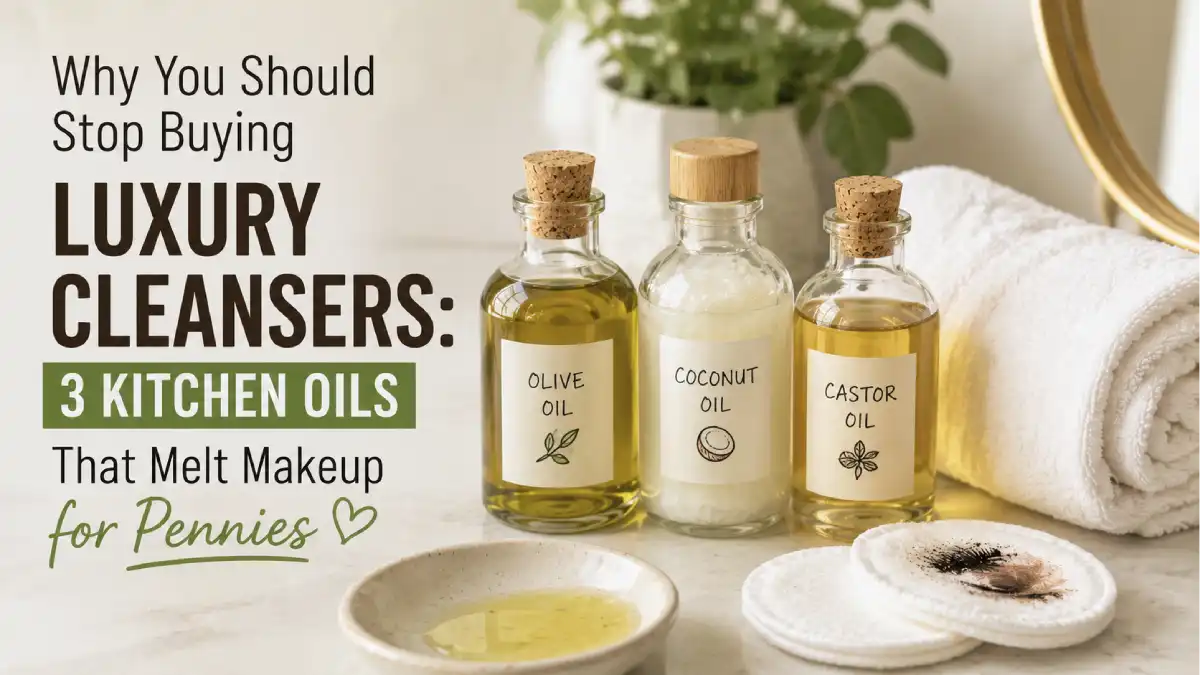
Why You Should Stop Buying Luxury Cleansers: 3 Kitchen Oils That Melt Makeup for Pennies
Jump Links
- Okay, But Does Oil Cleansing Actually Work?
- The 3 Kitchen Oils Worth Trying (And Why)
- How to Actually Oil Cleanse (Step by Step)
- The Real Cost Breakdown: Luxury Cleanser vs. Kitchen Oil
- Mistakes That’ll Make You Hate Oil Cleansing
- Which Oil Fits Your Skin Type?
- FAQ
Okay, real talk: when’s the last time you actually looked at the ingredient list on your $42 “luxury” cleansing balm? Go check. I’ll wait.
Nine times out of ten, the first or second ingredient is some form of plant oil — usually sunflower, jojoba, or grapeseed — dressed up with a fancy name, a minimalist font, and a price tag that makes your wallet flinch. You’re not paying for magic. You’re paying for marketing, packaging, and a brand story.
Meanwhile, there’s a bottle of olive oil sitting in your kitchen cabinet right now that will do the exact same job — melt your makeup, break down sunscreen, dissolve waterproof mascara — for about four cents per use.
I know what you’re thinking: “Oil on my face? Won’t that make me break out?” I had the same panic the first time someone told me about this. But once you understand the actual chemistry of why oil cleansing works (it’s not some TikTok myth, it’s basic science), you’ll never look at your bathroom cabinet the same way again. Let’s get into it.
Okay, But Does Oil Cleansing Actually Work?
Here’s the science in plain English: oil dissolves oil. Your makeup, sunscreen, and the natural sebum your skin produces are all oil-based. Most face washes use surfactants (soap-like molecules) to strip that oil away, which is why your skin can feel tight and squeaky-clean afterward — that’s not a good sign, by the way, that’s your skin’s natural barrier getting stripped.
Oil cleansing works on a “like dissolves like” principle. When you massage oil onto dry skin, it binds to the oil-based grime sitting on top — makeup pigments, SPF, excess sebum, pollution particles — and lifts it away without yanking out moisture your skin actually needs. You wipe it off (or rinse it, depending on your method), and what’s left is clean, soft skin that doesn’t feel like it just survived a desert.
This isn’t a new trend, either. Cleansing with oils dates back centuries across multiple cultures, long before “double cleansing” became a buzzword in skincare marketing. The K-beauty world popularized the modern version, but the concept itself is ancient and dead simple.
The catch? Not all oils are created equal, and picking the wrong one for your skin type is how people end up with clogged pores and a bad first impression of the method. So let’s break down the three that actually deserve a spot on your counter.
The 3 Kitchen Oils Worth Trying (And Why)
You don’t need a 12-step Korean skincare routine or a $60 cleansing oil from Sephora. You need three things you probably already own, or can grab for under $10 at any grocery store.
Olive Oil: The All-Purpose Workhorse
Olive oil is the friend who shows up for everything. It’s rich in oleic acid, which makes it incredibly effective at breaking down stubborn, long-wear makeup — think waterproof mascara, liquid lipstick, and full-coverage foundation that laughs at micellar water.
Why it works: Olive oil’s molecular structure is heavier and more emollient than lighter oils, which means it clings to makeup particles and lifts them off in one pass instead of you scrubbing for five minutes.
Best for: Normal to dry skin, anyone wearing heavy or long-wear makeup, and people who want one oil that does it all.
Heads up: Olive oil sits a little higher on the comedogenic scale than some lighter options, so if you’re acne-prone, you’ll want to be diligent about fully rinsing it off rather than leaving residue behind.
How to use it: Pour about a nickel-sized amount into your palm, rub your hands together to warm it up, then massage it into dry skin in circular motions for 60 seconds before wiping or rinsing.
Coconut Oil: The Heavy-Duty Makeup Dissolver
Coconut oil is the overachiever of this trio. Solid at room temperature but melting the second it hits your warm skin, it’s particularly good at dissolving cream products and SPF — the kind of stubborn stuff that survives a regular face wash and leaves your skin looking dull by the next morning.
Why it works: Coconut oil has a high lauric acid content, which gives it antibacterial properties on top of its makeup-melting power. It’s also incredibly cheap and shelf-stable, so a single jar lasts forever.
Best for: Normal to oily skin in terms of cleansing power, though it’s genuinely one of the more comedogenic oils out there — meaning it’s more likely to clog pores if it’s left sitting on the skin.
Heads up: This is the oil with the most mixed reputation in skincare circles. Some people swear by it, others break out within days. The difference usually comes down to two things: whether you’re doing a proper double-cleanse afterward (oil cleanse, then a gentle second cleanse to remove residue), and your individual pore size and oil production.
How to use it: Scoop a small amount (it’ll melt instantly in your palm), and use it the same way as olive oil — circular massage, focus on areas with the most makeup buildup, then follow with a gentle cleanser to rinse away any leftover residue.
Castor Oil: The Lightweight Detox Pick
Castor oil is the quiet one nobody talks about enough. It’s thick in the bottle but behaves differently on skin than people expect — many cleansing oil brands actually use castor oil as a base specifically because of its pulling power on impurities.
Why it works: Castor oil contains a high concentration of ricinoleic acid, which has natural anti-inflammatory properties. It’s also excellent at drawing out deep-set grime from pores, which is why it’s a popular ingredient in spot treatments and detox masks, not just cleansers.
Best for: Combination and acne-prone skin, since it tends to be less pore-clogging than coconut oil despite its thick texture.
Heads up: Used alone, straight castor oil can feel a little drying or tacky on the skin because it’s so concentrated. Most people get the best results blending it with a lighter carrier oil rather than using it solo.
How to use it: Mix one part castor oil with two parts olive oil (or sunflower oil if you have it) for a balanced cleansing blend. Massage onto dry skin for a full minute, focusing on the T-zone, then wipe away with a warm washcloth.
How to Actually Oil Cleanse (Step by Step)
This is where most people mess it up. Oil cleansing isn’t just “rub oil on face, hope for the best.” Here’s the actual method:
- Start with completely dry skin and dry hands. Water and oil don’t mix well at the start of this process — adding water too early just makes everything slide around without actually breaking down makeup.
- Warm the oil in your palms for a few seconds. Warm oil spreads more evenly and penetrates makeup faster than cold oil straight from the bottle.
- Massage in slow, circular motions for 60 to 90 seconds. This isn’t a quick wipe — the massage time is what actually gives the oil a chance to bind with makeup and sebum.
- Add a small splash of warm water and continue massaging. This is the moment the oil starts to “emulsify,” turning slightly milky as it lifts the makeup it just broke down.
- Remove with a warm, damp washcloth in gentle downward strokes, or rinse thoroughly if you prefer.
- Follow with a gentle second cleanser if your skin is oily or acne-prone. This is the “double cleanse” step, and it’s what separates a glowing result from a clogged-pore disaster.
- Pat dry and moisturize as usual. Your skin should feel soft, not tight or stripped.
The Real Cost Breakdown: Luxury Cleanser vs. Kitchen Oil
Let’s do the math, because this is the whole point.
A popular luxury cleansing balm runs around $38 for 3.5 ounces, and most people go through a jar in roughly two months with daily use. That works out to about $0.63 per use.
A bottle of plain olive oil costs roughly $6 to $8 for 17 ounces at most grocery stores. Using a nickel-sized amount per cleanse, that bottle lasts well over six months of daily use — bringing your per-use cost down to roughly 4 cents.
Coconut oil and castor oil land in a similar range, usually between 3 and 6 cents per application depending on the brand and size you buy.
Over the course of a year, that’s the difference between spending close to $230 on luxury cleansing balms versus under $15 on kitchen oils that do the same job. That’s not a small saving — that’s a flight, a new pair of boots, or three months of your streaming subscriptions, just from switching what’s in your cleansing routine.
If you’re the kind of person who likes tracking exactly where your beauty budget goes (and if you’re reading this, you probably are), swaps like this are where the real savings add up. We dig into a lot more of these kinds of beauty-budget swaps over at The Frugal Glow, if you want more ideas like this one.
Mistakes That’ll Make You Hate Oil Cleansing
A lot of people try oil cleansing once, break out, and swear it’s a scam. Usually, it’s one of these mistakes:
- Skipping the double cleanse. If you’re prone to oily skin or breakouts, leaving oil residue on your face overnight is asking for trouble. Always follow up with a gentle second cleanser if you go this route.
- Using too much oil. More is not better here. A nickel-sized amount is plenty for your whole face. Drowning your skin in oil just means more residue to remove later.
- Not massaging long enough. If you wipe the oil off after 10 seconds, it hasn’t had time to actually bind with your makeup. You’re just smearing things around.
- Picking the wrong oil for your skin type. This is the big one. Coconut oil on already-oily, acne-prone skin is a recipe for frustration. Match the oil to your skin, not just whatever’s cheapest at the store.
- Expecting overnight miracles. Give your skin one to two weeks of consistent use before deciding whether a particular oil works for you. Skin needs time to adjust to any new routine, oil cleansing included.
Which Oil Fits Your Skin Type?
| Skin Type | Best Pick | Why |
|---|---|---|
| Dry / Normal | Olive Oil | Deeply emollient, won’t strip moisture |
| Oily / Acne-Prone | Castor Oil (blended) | Lighter feel, anti-inflammatory properties |
| Combination | Castor + Olive Blend | Balances richness with lighter texture |
| Heavy Makeup Wearers | Coconut Oil | Strongest dissolving power for cream products |
| Sensitive Skin | Olive Oil (patch test first) | Gentle, fewer irritation reports |
This isn’t a rigid rulebook — skin is personal, and what works for your sister might not work for you. But if you’re not sure where to start, this table is a solid jumping-off point.
The $2 Avocado Face Mask: High-End Deep Hydration for Dry Winter Skin
FAQ
Will oil cleansing make my skin oilier over time?
No — this is one of the most common myths out there. When you strip skin with harsh, drying cleansers, your skin often overcompensates by producing more oil to protect itself. Oil cleansing, done correctly with a proper double-cleanse follow-up, tends to balance oil production over time rather than spike it.
Can I use these oils if I have acne-prone skin?
Yes, but be selective. Castor oil blended with a lighter carrier oil is generally the safest starting point for acne-prone skin. Coconut oil is the riskiest of the three for breakout-prone skin due to its higher comedogenic rating, so introduce it slowly and watch how your skin responds.
How long does a bottle of kitchen oil actually last for cleansing?
A standard 17-ounce bottle of olive oil, used daily at a nickel-sized amount per application, typically lasts six to eight months. That’s a fraction of the cost of replacing a luxury cleanser every one to two months.
Do I need to do a second cleanse every single time?
If you have dry or normal skin, you can sometimes skip it without issues. If you have oily or acne-prone skin, a gentle second cleanse is strongly recommended to avoid residue buildup and clogged pores.
Is it safe to use kitchen oils on the eye area to remove eye makeup?
Yes, this is actually one of the best uses for oil cleansing. Olive oil in particular is excellent for dissolving waterproof mascara and eyeliner gently, without the harsh tugging that some eye makeup removers require.
Can I mix essential oils into my cleansing oil for fragrance?
You can, but go very light — one or two drops per tablespoon of carrier oil at most. Essential oils are potent and can irritate skin, especially around the eyes, if overused.
The Bottom Line
At the end of the day, your skin doesn’t know the difference between a $40 jar with a minimalist label and a $7 bottle sitting next to your olive oil on the kitchen shelf. What it actually responds to is the ingredients doing the work — and in this case, those ingredients are oils you probably already own.
That doesn’t mean luxury cleansers are a total scam, or that every “clean girl” skincare brand is out to get your wallet. Some people genuinely love the texture, the scent, the ritual of it. But if you’re cutting costs without cutting corners on your skin, oil cleansing is one of the easiest, lowest-risk swaps you can make this month.
Start with one oil. Give it two weeks. Pay attention to how your skin actually feels — not how you think it’s supposed to feel based on what you read online. Adjust from there. That’s it. No 10-step routine, no $200 starter kit, just a little patience and a bottle you already had in your cabinet.