

The $2 ‘Pantry’ Hack for Removing Stubborn Stains from Your Favorite Designer Bags
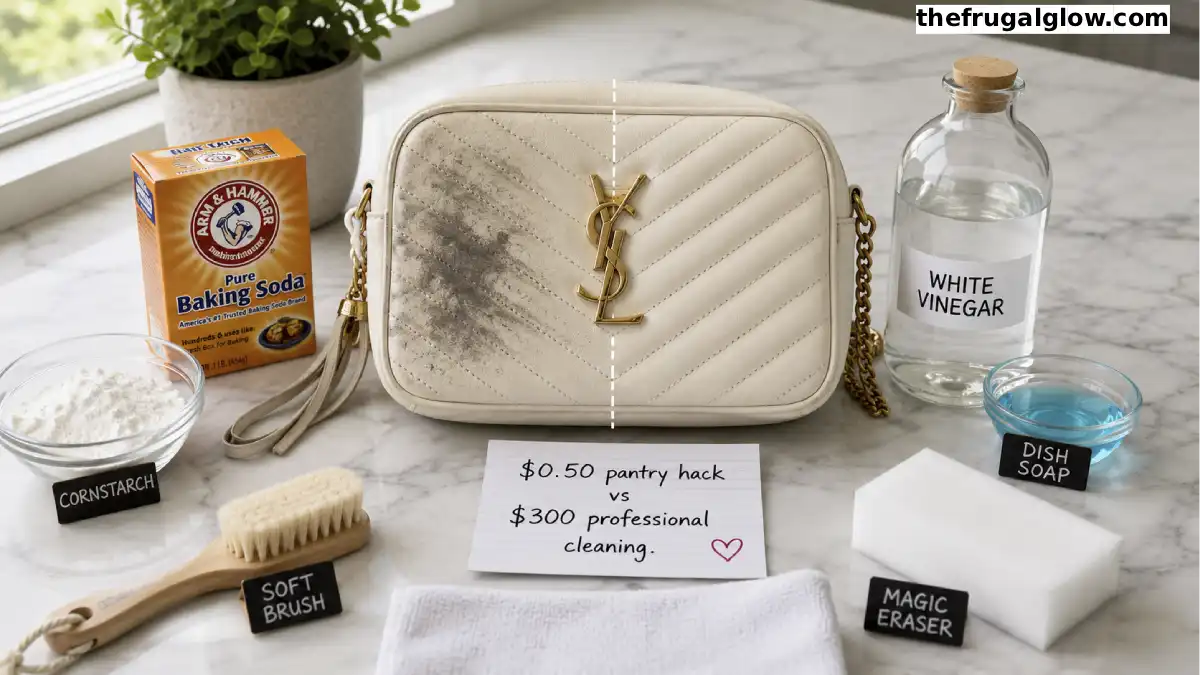
Let me tell you about the $1,200 handbag I almost ruined.
It was a gift. A beautiful leather tote in cream. I carried it everywhere. Then one day, I set it down on a restaurant floor. When I picked it up, there was a dark, greasy stain on the bottom corner. I have no idea what it was. Oil? Sauce? Something from under the table.
I panicked. I grabbed a wet wipe and scrubbed. The stain spread. It got worse. Now it was a dark, greasy, smeared mess.
I looked up professional cleaning services. The quotes were $150–300. I almost paid it. I was about to hand over my credit card when my mother walked in.
“Did you try cornstarch?” she asked.
I stared at her. Cornstarch? Like the stuff in my pantry for thickening gravy?
“Put cornstarch on the stain,” she said. “Let it sit overnight. It will absorb the oil.”
I didn’t believe her. But I was desperate. I went to my kitchen. I grabbed the cornstarch. I poured it onto the stain, completely covering it. I let it sit for 12 hours.
The next morning, I brushed off the powder. The stain was gone. Not faded. Not lighter. Gone.
That $0.50 worth of cornstarch saved me $300 in professional cleaning.
That was five years ago. I’ve used that same cornstarch hack on ink stains, oil stains, water stains, and even color transfer from denim. It doesn’t always work 100%, but it almost always helps.
Today, I’m sharing the $2 pantry hacks for removing stubborn stains from leather, canvas, and suede bags. No expensive cleaners. No professional services. Just stuff you already have in your kitchen.
Let’s get into it.
Jump Links
- The Restaurant Floor That Almost Cost Me $300
- Why Pantry Ingredients Work on Leather (The Science)
- The Cornstarch Hack: For Oil and Grease Stains
- The Baking Soda Hack: For Ink and Dye Transfer
- The White Vinegar Hack: For Water Stains and Salt Residue
- The Dish Soap Hack: For General Grime and Dirt
- The Magic Eraser Hack: For Scuffs and Marks (Use with Caution)
- What NOT to Use (The Stain Removers That Ruin Leather)
- How to Condition Your Bag After Cleaning (The Crucial Step)
- The Math: What I Saved in Five Years
- Frequently Asked Questions (FAQ)
- Final Thoughts: Your Pantry Is a Leather-Saving Toolbox
The Restaurant Floor That Almost Cost Me $300
I need to describe that moment of panic.
I was at a work dinner. Nice restaurant. Dim lighting. I set my cream leather tote on the floor next to my chair. When I picked it up to leave, I saw it. A dark, greasy stain on the bottom corner. It looked like oil or sauce.
I made it worse. I grabbed a napkin and wiped it. The stain spread. I tried a wet wipe. The stain smeared. Now it was bigger, darker, and more noticeable.
I went home and Googled “how to remove oil stain from leather bag.” The first results were professional cleaning services. $150–300. I almost booked one.
Then my mother walked in. She saw the bag and asked what happened. I told her. She laughed.
“Cornstarch,” she said.
“What?”
“Cornstarch. Put it on the stain. Let it sit overnight. It will absorb the oil.”
I thought she was joking. I thought she was giving me old-fashioned advice that wouldn’t work on a modern leather bag. But I was desperate. I went to the kitchen. I grabbed the cornstarch. I poured it onto the stain, covering it completely. I left it overnight.
The next morning, I brushed off the powder. The stain was gone. Not a trace. Not a shadow. Gone.
I couldn’t believe it. Cornstarch cost me $0.50 for a box that I already had. The professional cleaning would have cost me $300. And it only took 30 seconds to apply.
Since then, I’ve used cornstarch on dozens of stains. On my bags. On my shoes. On my couch. On my car seats. It works almost every time.
Why Pantry Ingredients Work on Leather (The Science)
Let me explain the chemistry. Understanding why these work will help you choose the right one.
Leather is skin.
It’s porous. It absorbs liquids. That’s why stains set in quickly. But it’s also why absorbent powders can pull stains out.
Cornstarch absorbs oil.
Cornstarch is a fine powder with a large surface area. It draws oil out of leather through capillary action. The longer it sits, the more oil it absorbs .
Baking soda is alkaline.
Baking soda neutralizes acids. It works on acidic stains like coffee, wine, and some inks. It also absorbs moisture and odors .
White vinegar is acidic.
Vinegar dissolves mineral deposits. It’s perfect for water stains and salt residue (like winter salt on boots). It also removes soap scum and some dye transfer .
Dish soap breaks down grease.
Dish soap is designed to cut through oil and grease on dishes. It works the same way on leather – but you must use it sparingly and wipe it off completely .
The magic eraser is fine sandpaper.
Melamine foam (Magic Eraser) works by gently abrading the surface. It can remove scuffs and marks by sanding away the top layer of leather. Use with extreme caution. Test in an inconspicuous spot first.
The key is matching the stain to the correct ingredient. Oil stain? Cornstarch. Ink stain? Baking soda. Water stain? Vinegar. Scuff? Magic Eraser (but careful).
The Cornstarch Hack: For Oil and Grease Stains
This is the hack that saved my $1,200 bag. It’s my most-used stain remover.
Best for:
- Oil stains (cooking oil, salad dressing, face oil)
- Grease stains (butter, lotion, hand cream)
- Dark, smudged marks with no clear source (probably oil)
What you need:
- Cornstarch (baby powder or arrowroot powder also work)
- Soft brush (clean toothbrush or makeup brush)
- Paper towel
Step-by-step:
- Blot the stain immediately with a paper towel. Don’t rub. Rubbing spreads the oil.
- Pour cornstarch directly onto the stain. Cover it completely. Don’t be shy.
- Gently press the powder into the stain with your finger. Don’t rub. Just press.
- Let it sit. For light stains: 1-2 hours. For heavy stains: 8-12 hours (overnight).
- Brush off the powder with a soft brush. If the stain is still visible, repeat.
- Once the stain is gone, wipe the area with a damp cloth to remove any residue.
Why it works:
Cornstarch absorbs oil like a sponge. The fine particles pull oil out of the leather’s pores. Because it’s a powder, it won’t damage the leather or change its color (unwise to use baby powder with fragrances or additives).
Pro tip: If you don’t have cornstarch, arrowroot powder works just as well. Baby powder works too, but avoid scented versions – the fragrance can transfer to the leather.
What to expect:
For fresh stains, one treatment usually works. For old, set-in stains, you may need 2-3 treatments. Be patient. Don’t scrub.
The Baking Soda Hack: For Ink and Dye Transfer
Ink stains are terrifying. But baking soda can help.
Best for:
- Pen ink
- Dye transfer from denim (blue marks on light bags)
- Coffee and tea stains
- Red wine (act fast)
What you need:
- Baking soda
- Water
- Small bowl
- Soft cloth
- Cotton swab
Step-by-step:
- Make a paste. Mix 2 parts baking soda with 1 part water. The consistency should be thick but spreadable.
- Test in an inconspicuous spot. Apply a tiny amount of paste to the bottom of the bag or inside a pocket. Wait 10 minutes. Check for discoloration.
- Apply the paste to the stain. Use a cotton swab for small spots. Use a soft cloth for larger areas.
- Let it sit. For light stains: 15-30 minutes. For heavy stains: 1-2 hours. Don’t let it dry completely.
- Wipe off with a damp cloth. Use gentle pressure. Don’t scrub.
- Repeat if needed. Some stains may require 2-3 applications.
For blue jean dye transfer (the most common bag stain):
This is the one stain everyone deals with. You wore your dark wash jeans with your light bag, and now there’s blue on the back. A paste of baking soda and water can lighten or remove it.
Important: Baking soda is alkaline. It can dry out leather. After using baking soda, always condition the leather (see section below).
What NOT to do:
Don’t leave baking soda paste on for too long. It can lighten the leather itself, not just the stain. Check every 15-20 minutes.
The White Vinegar Hack: For Water Stains and Salt Residue
Water stains are ugly. They leave dark rings. Vinegar fixes them.
Best for:
- Water rings (from rain, spills, or wet glasses)
- Salt residue (winter salt on boots and bags)
- Hard water deposits
- Soap scum
What you need:
- White vinegar (not apple cider vinegar – it can stain)
- Water
- Soft cloth
- Cotton balls
Step-by-step:
- Mix equal parts white vinegar and water (1:1 ratio).
- Dip a soft cloth in the solution. Wring it out so it’s damp, not wet.
- Gently blot the water stain. Don’t rub. Rubbing can damage the leather.
- Let it air dry. The stain should disappear as it dries.
- If the stain remains, repeat. Some water stains need 2-3 applications.
For stubborn water stains:
If the 1:1 ratio doesn’t work, try straight white vinegar. Test in an inconspicuous spot first. Vinegar is acidic, so don’t leave it on for more than a few minutes.
For salt stains on boots and bags:
Winter salt leaves white residue. Vinegar neutralizes the salt. Apply with a damp cloth, then wipe clean. After the stain is gone, wipe with a clean damp cloth to remove any vinegar residue.
Pro tip: After using vinegar on leather, the area may smell slightly. The smell will dissipate as it dries. If it bothers you, wipe with a cloth dampened with plain water.
The Dish Soap Hack: For General Grime and Dirt
Sometimes your bag isn’t stained. It’s just dirty. Dish soap is the answer.
Best for:
- General dirt and grime
- Makeup residue
- Hand oils (darkening on handles and straps)
- Food spills (non-oily)
What you need:
- Mild dish soap (Dawn or any grease-cutting formula)
- Warm water
- Soft cloth
- Soft brush (toothbrush)
Step-by-step:
- Mix a few drops of dish soap with warm water. Use a small amount. Too much soap is hard to rinse off.
- Dip a soft cloth in the solution. Wring it out so it’s damp, not wet.
- Gently wipe the dirty areas. Use circular motions.
- For crevices and stitching, use a soft toothbrush dipped in the solution.
- Wipe with a clean, damp cloth to remove soap residue.
- Pat dry with a towel. Let air dry completely.
Important: Don’t soak the leather. Too much water can damage it. Use a damp cloth, not a wet one.
Pro tip: If your bag has a fabric lining, turn it inside out and wash it with the same soap solution. Rinse with a damp cloth. Let air dry.
The Magic Eraser Hack: For Scuffs and Marks (Use with Caution)
This hack is controversial. Magic Erasers are abrasive. They remove scuffs by sanding away the top layer of leather. Use only as a last resort.
Best for:
- Scuff marks on smooth leather
- Pencil marks
- Light stains that won’t come out otherwise
What you need:
- Magic Eraser (melamine foam)
- Water
- Soft cloth
Step-by-step:
- Dampen the Magic Eraser with water. Don’t soak it. Just damp.
- Test in an inconspicuous spot. Rub a small area on the bottom of the bag. Check for color removal or damage.
- Gently rub the scuff mark. Use light pressure. Don’t scrub hard.
- Wipe the area with a damp cloth to remove any residue.
- Condition the leather immediately (see next section).
The warning:
Magic Erasers work by abrasion. They remove the top layer of leather. Over time, repeated use will wear down the surface and remove the color. Use sparingly. Never use on delicate leather (patent, suede, nubuck). Never use on vintage leather.
Alternatives to Magic Eraser:
For scuffs on white or light leather, a white eraser (the kind you use on paper) sometimes works without damaging the surface. Try that first.
What NOT to Use (The Stain Removers That Ruin Leather)
I’ve made these mistakes. Learn from me.
Never use these on leather:
| Product | Why It’s Bad | What It Does |
|---|---|---|
| Nail polish remover (acetone) | Dissolves leather finish | Removes color permanently, leaves dull spots |
| Rubbing alcohol | Strips natural oils | Dries out leather, causes cracking |
| Bleach | Destroys leather fibers | Irreversible damage, color removal |
| Hydrogen peroxide | Oxidizes leather | Lightens color unevenly, weakens fibers |
| Baby wipes | Contain chemicals and alcohol | Can dry out leather, leave residue |
| Hairspray | Contains alcohol | Same as rubbing alcohol |
| WD-40 | Oil-based | Leaves greasy residue that attracts dirt |
| Vinegar on dry leather (undiluted) | Too acidic | Can dry out and stiffen leather |
The rule: If it’s harsh enough to remove nail polish or disinfect wounds, it’s too harsh for leather.
What to use instead:
Cornstarch for oil. Baking soda paste for ink. Diluted vinegar for water stains. Dish soap for dirt. That’s it.
How to Condition Your Bag After Cleaning (The Crucial Step)
After you remove a stain, the leather may be dry. Conditioning restores moisture and protects the leather.
Why conditioning matters:
- Replaces natural oils lost during cleaning
- Prevents cracking and peeling
- Restores color and shine
- Adds a protective layer against future stains
What you need:
- Leather conditioner (Leather Honey, Bick 4, Cadillac, or Lexol)
- Soft cloth (old t-shirt or microfiber)
- Optional: leather cleaner (for heavy conditioning)
Step-by-step:
- After cleaning and drying, apply a small amount of conditioner to a soft cloth.
- Rub it into the leather in circular motions. Use a thin layer. Too much can make the leather greasy.
- Let it absorb for 15-30 minutes.
- Buff with a clean, dry cloth.
How often to condition:
- Bags you use daily: every 3-4 months
- Bags you use weekly: every 6-8 months
- Vintage or dry bags: as needed
What if you don’t have leather conditioner?
In a pinch, a tiny amount of coconut oil works. Use sparingly. Too much oil can darken the leather. Test first.
The Math: What I Saved in Five Years
Let me break down the actual dollars.
Professional cleaning costs (if I had paid):
| Year | Stains | Professional Cost | What I Paid |
|---|---|---|---|
| Year 1 | Oil stain on cream tote | $150 | $0 (cornstarch) |
| Year 2 | Ink stain on work bag | $200 | $0 (baking soda) |
| Year 2 | Water stains on leather shoes (multiple) | $75 | $0 (vinegar) |
| Year 3 | Dye transfer on light bag | $120 | $0 (baking soda) |
| Year 3 | Scuffs on favorite crossbody | $60 | $0 (Magic Eraser) |
| Year 4 | General cleaning (2 bags) | $100 | $0 (dish soap) |
| Year 5 | Red wine spill on tote | $180 | $0 (baking soda) |
| Total | $885 | $0 |
Cost of pantry ingredients used over 5 years:
- Cornstarch: $1 (already had)
- Baking soda: $1 (already had)
- White vinegar: $1 (already had)
- Dish soap: $1 (already had)
- Magic Eraser: $2 (one eraser)
- Leather conditioner: $15 (one bottle, still not empty)
Total spent: $21
Total saved: $864
What I did with the savings:
- Bought a leather cleaning kit (for the future – $25)
- Got my bag professionally conditioned once (a treat, not a necessity – $40)
- Put the rest into savings
And I learned how to care for my bags myself. That knowledge is priceless.
The $5 ‘Rit Dye’ Challenge: How to Give Your Faded Black Jeans a Luxury Makeover
Frequently Asked Questions (FAQ)
1. Does cornstarch work on all types of leather?
Cornstarch works on smooth finished leather, semi-aniline leather, and most treated leathers. Do not use on untreated suede or nubuck – the powder will be difficult to remove and can clog the pores. For suede, use a specialized suede eraser and brush instead.
2. How long should I leave cornstarch on an oil stain?
For light stains: 1-2 hours. For heavy stains: 8-12 hours (overnight). The longer it sits, the more oil it absorbs. But if you leave it for more than 24 hours, the cornstarch can start to dry out the leather.
3. Can I use baby powder instead of cornstarch?
Yes. Baby powder is often made from cornstarch or talc. It works the same way. Avoid scented baby powder – the fragrance can transfer to your bag and leave a smell that’s hard to remove.
4. Will baking soda damage the color of my bag?
Baking soda can lighten leather if left on too long or used in high concentration. Always test in an inconspicuous spot first (inside a pocket or on the bottom). For light stains, try a shorter application time (15-20 minutes). If the stain is on dark leather, proceed with extra caution.
5. Is the Magic Eraser safe for all bags?
No. Magic Erasers are abrasive. They remove scuffs by sanding away the top layer of leather. Use only on smooth leather as a last resort. Never use on patent leather, suede, nubuck, or vintage leather. Always test in an inconspicuous spot first.
Final Thoughts: Your Pantry Is a Leather-Saving Toolbox
Here’s what I want you to take away.
I almost spent $300 to remove an oil stain from my bag. Instead, I spent $0.50 worth of cornstarch and one night of patience. The stain disappeared.
That moment changed how I think about “professional” services. Not everything needs a professional. Not every problem requires an expensive solution. Sometimes the answer is already in your kitchen.
Cornstarch for oil. Baking soda for ink. White vinegar for water spots. Dish soap for dirt. Magic Eraser for scuffs (with caution). These aren’t just old wives’ tales. They’re chemistry. And they work.
So next time you spill coffee on your favorite tote, or your pen explodes in your work bag, or you see blue dye on your cream purse from your new jeans, don’t panic. Don’t rush to a professional. Don’t spend $300.
Go to your pantry. Grab the cornstarch. Or the baking soda. Or the vinegar.
Apply it. Wait. Wipe it off.
Watch the stain disappear.
Then smile at the money you just saved.
That’s the frugal glow. And it’s hiding in your kitchen cabinet. 👜💛
For more cleaning hacks, bag care tips, and money-saving strategies, visit The Frugal Glow.