

How to Hit 100g of Protein Daily for Under $4
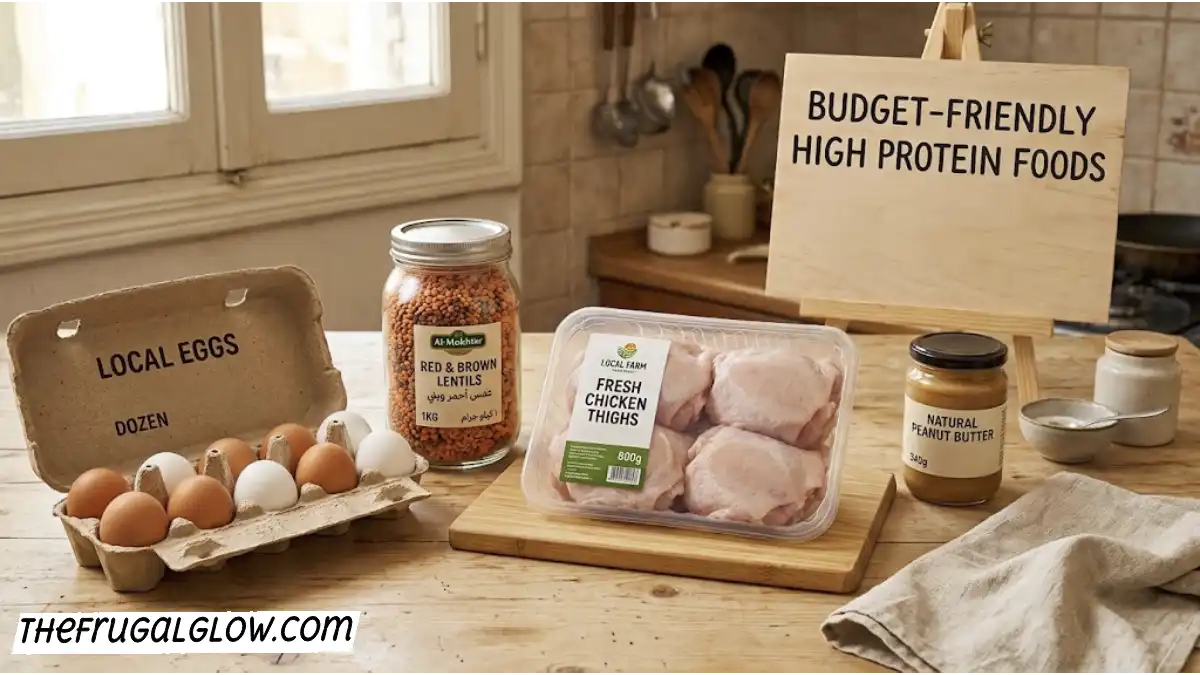
Protein has a reputation for being the expensive part of eating well. Scroll through any fitness or nutrition corner of the internet and it’s grilled chicken breast, wild-caught salmon, and $60 tubs of whey protein isolate everywhere you look. That reputation is genuinely misleading. The actual cheapest sources of protein — eggs, dried lentils, chicken thighs, peanut butter — aren’t a compromise version of “real” protein. They deliver the exact same amino acids your body uses, just without the premium price tag attached to fancier cuts and trendier packaging.
This breaks down exactly how to hit a genuinely solid 100 grams of daily protein for under $4, using real 2026 grocery prices, real serving sizes, and a full sample day so you can see precisely how the math works.
Jump Links
- Does Protein Source Actually Matter for Your Body
- The Cheapest Protein Sources, Ranked
- Protein-Per-Dollar Comparison Table
- The Full $4 Sample Day
- Sample Day Cost Breakdown Table
- Why Lentils and Beans Deserve More Credit
- Making Chicken Thighs Work Instead of Chicken Breast
- Batch Cooking and Storage Tips That Keep Costs Down
- What to Skip If You’re Optimizing for Cost
- Adjusting the Plan for Your Actual Protein Needs
- FAQ
- The Bottom Line
Does Protein Source Actually Matter for Your Body
This is the question worth settling before diving into prices, because it’s the entire foundation of why budget protein isn’t a downgrade. Once broken down into amino acids during digestion, your body doesn’t distinguish between protein from a $15 piece of salmon and protein from a $2 can of tuna — it processes and uses both the same way, according to nutrition analysis that specifically compared cost-tiered protein sources. The differences between expensive and cheap protein sources come down to taste, variety, and some differences in micronutrient profiles, not the fundamental protein quality itself.
According to USDA FoodData Central, the federal government’s official nutrient database, foods like eggs, lentils, and chicken thighs are documented as complete or near-complete protein sources containing meaningful amounts of essential amino acids — the same nutritional category premium protein sources fall into, just without the price premium attached.
The Cheapest Protein Sources, Ranked
Based on current grocery pricing data, a handful of foods consistently dominate the “most protein per dollar” rankings, and they’re almost all foods you’d already recognize as budget staples:
- Dried lentils and beans — the undisputed cost leaders, typically delivering protein at roughly $0.01 to $0.04 per gram depending on the specific legume and whether you buy dried versus canned.
- Whole eggs — consistently ranked as the cheapest complete animal protein, generally landing around $0.02 to $0.05 per gram of protein depending on current egg prices.
- Bone-in chicken thighs — significantly cheaper per gram of protein than boneless chicken breast, often by a wide margin.
- Peanut butter (store brand) — an efficient plant protein source, especially when bought in bulk rather than smaller “natural” jars that carry a price premium without meaningfully more protein.
- Canned tuna in water — shelf-stable, zero-prep, and reliably affordable, especially when stocked up on during sales.
- Cottage cheese and Greek yogurt (store brand, plain) — concentrated protein in a ready-to-eat form, as long as you skip the flavored versions that add sugar and cost without adding protein.
- Whole milk — an often-overlooked source that ranks surprisingly high on protein-per-dollar comparisons.
- Tofu (firm, store brand) — a solid plant-based option, though it typically costs somewhat more per gram of protein than legumes or eggs.
Protein-Per-Dollar Comparison Table
| Food | Approx. Cost Per 10g Protein | Notes |
|---|---|---|
| Dried lentils | $0.10–$0.15 | Cheapest overall; no soaking required, cooks in 20–25 minutes |
| Dried/canned beans | $0.10–$0.20 | Similar value to lentils; canned costs slightly more than dried |
| Whole eggs | $0.20–$0.30 | Cheapest complete animal protein; versatile across meals |
| Bone-in chicken thighs | $0.40–$0.60 | Far cheaper per gram than boneless, skinless breast |
| Peanut butter (store brand) | $0.40–$0.50 | Buy store-brand over “natural” versions for better value |
| Canned tuna (in water) | $0.30–$0.50 | Zero prep, shelf-stable for years; watch for sale prices |
| Greek yogurt (store brand, plain) | $0.35–$0.50 | Buy large containers, skip flavored versions |
| Cottage cheese (store brand) | $0.30–$0.50 | Concentrated protein, ready to eat |
| Firm tofu (store brand) | $0.60–$0.80 | Higher cost than legumes, but versatile for cooking |
| Whole milk | $0.20–$0.40 | Often overlooked, but genuinely cost-efficient |
The Full $4 Sample Day
Here’s exactly how these foods combine into a realistic, full day of eating that clears 100 grams of protein while staying under a $4 total food cost for that day’s protein sources specifically (not counting non-protein staples like rice, bread, or vegetables you’d likely already have on hand).
Breakfast: 4 scrambled eggs
Roughly 24 grams of protein, using about a third of a standard dozen-egg carton.
Lunch: 1 cup cooked lentils (stirred into rice, a wrap, or a simple bowl)
Roughly 18 grams of protein, made from a small portion of a much larger, inexpensive dried lentil bag.
Snack: 2 tablespoons peanut butter
Roughly 8 grams of protein, whether spread on toast, eaten with fruit, or straight off the spoon.
Dinner: 2 bone-in chicken thighs (roasted or pan-seared)
Roughly 40 grams of protein, from a bulk-purchased pack of chicken thighs.
Evening: 1 cup whole milk
Roughly 8 grams of protein, added to coffee, cereal, or simply on its own.
Running total: approximately 98 grams of protein — comfortably in range of the 100g target, with room to add a small extra egg or a spoonful more peanut butter to close the final gap if needed.
Sample Day Cost Breakdown Table
| Meal | Food | Protein (approx.) | Estimated Cost |
|---|---|---|---|
| Breakfast | 4 eggs | 24g | $1.20–$1.35 |
| Lunch | 1 cup cooked lentils | 18g | $0.25–$0.35 |
| Snack | 2 tbsp peanut butter | 8g | $0.20–$0.25 |
| Dinner | 2 bone-in chicken thighs | 40g | $0.90–$1.10 |
| Evening | 1 cup whole milk | 8g | $0.25–$0.35 |
| Total | ~98g | ~$2.80–$3.40 |
This lands the full day comfortably under the $4 target, with some budget room left over for seasonings, cooking oil, or a slightly larger portion if your specific protein target runs a bit higher than 100 grams.
Why Lentils and Beans Deserve More Credit
Dried lentils and beans consistently rank as the single cheapest source of protein available, and part of why they don’t get enough credit is that they’re often mentally filed under “side dish” rather than “main protein source.” A pound of dried lentils, costing somewhere between $1.50 and $2.50, delivers roughly 100 grams of protein once cooked — meaning a single, inexpensive bag can realistically cover multiple full days of protein needs on its own.
They also come with practical advantages beyond just price: dried lentils don’t require soaking (unlike many dried beans), cook in about 20 to 25 minutes, have a shelf life measured in years rather than days, and hold their texture well in soups, grain bowls, and wraps. Pairing lentils or beans with a grain like rice also creates a more complete amino acid profile, which is a useful detail for anyone eating primarily plant-based.
Making Chicken Thighs Work Instead of Chicken Breast
Chicken breast gets treated as the default “healthy protein” in a lot of fitness content, but it’s genuinely one of the more expensive cuts per gram of protein compared to bone-in, skin-on thighs. Whole chickens and bone-in thighs consistently rank far higher on cost-per-gram protein comparisons than boneless breast, largely because breast meat carries a premium for convenience and perceived leanness rather than for a meaningful nutritional advantage.
A few practical tips for leaning on thighs instead:
- Buy in bulk family packs, which typically bring the per-pound cost down further than smaller portions.
- Roast a full tray at once and portion it out across several days’ worth of meals rather than cooking a small amount each night.
- Remove the skin before eating if you’re trying to reduce fat intake specifically, while still keeping the cost advantage of the bone-in cut.
- Save the bones for homemade stock, which stretches the value of the purchase even further.
Batch Cooking and Storage Tips That Keep Costs Down
- Cook a big pot of lentils or beans once a week and portion into containers for grab-and-go meals across several days.
- Hard-boil a full dozen eggs at once for easy grab-and-go protein throughout the week, rather than cooking eggs fresh every single day.
- Freeze cooked chicken thighs in individual portions so you’re not committed to eating an entire tray before it goes bad.
- Buy peanut butter and canned tuna in bulk when on sale, since both have long shelf lives and don’t lose value sitting in the pantry.
- Track your actual per-meal cost for a week using simple math (total spent ÷ total protein grams) to see exactly where your money is going and where there’s room to swap in a cheaper option.
What to Skip If You’re Optimizing for Cost
- “Natural” or organic peanut butter, which typically costs 60–100% more than standard store-brand peanut butter for essentially the same protein content.
- Flavored Greek yogurt and cottage cheese, which add sugar and cost without adding meaningful extra protein compared to the plain versions.
- Boneless, skinless chicken breast as a default, when bone-in thighs deliver protein at a noticeably lower cost per gram.
- Fresh, out-of-season specialty proteins like wild-caught salmon or grass-fed steak purchased specifically to “hit protein goals” rather than for genuine enjoyment — these are excellent foods, but they’re not the efficient choice if cost-per-gram is the priority.
- Pre-portioned protein snack packs (individual peanut butter cups, single-serve yogurt cups), which typically carry a real convenience markup compared to buying the same food in bulk and portioning it yourself.
Adjusting the Plan for Your Actual Protein Needs
Protein needs vary by body weight, activity level, and individual goals, so 100 grams isn’t a universal target for everyone. A commonly cited baseline is roughly 0.36 grams of protein per pound of body weight for general health, which works out to about 54 grams daily for a 150-pound person, while more active individuals, athletes, or those specifically focused on muscle building often aim higher, sometimes up to 0.7 to 1 gram per pound of body weight.
If your personal target is lower than 100 grams, simply scale back proportionally — smaller portions of the same foods, or fewer meals containing a dedicated protein source. If your target runs higher, the same core foods in this plan (eggs, lentils, chicken thighs, peanut butter) can be scaled up while still staying remarkably budget-friendly, since these ingredients maintain their strong cost-per-gram value even at larger quantities.
📌 YOU MIGHT ALSO LIKE:
$100 Whole Foods vs. $40 Aldi Haul: Is Organic Really Worth the Extra $60?
FAQ
Is it really true that cheap protein sources are just as good as expensive ones?
Yes, in terms of the actual amino acids your body uses. Once digested, protein from a budget source like canned tuna or eggs is processed the same way as protein from a much pricier source like fresh salmon or steak. The main differences are taste, variety, and some differences in accompanying micronutrients, not protein quality itself.
Do I need to eat all these foods every single day to hit 100g of protein for under $4?
No, this specific combination is just one example. As long as you’re combining a few of the cheapest protein sources (eggs, legumes, chicken thighs, peanut butter, canned tuna), you can mix and match to fit your own taste preferences while keeping the same general cost structure.
Why are chicken thighs cheaper than chicken breast if they’re the same animal?
Chicken breast carries a price premium largely due to consumer demand and perceived “leanness,” while bone-in thighs are priced lower despite offering a comparable or even better protein-per-dollar value once cooked.
Are canned beans just as good as dried beans for this purpose?
Yes, nutritionally they’re very similar. Dried beans and lentils are typically slightly cheaper per gram of protein than canned versions, but canned beans offer more convenience with no soaking or long cook time required, which is a reasonable trade-off for many people.
Can I hit 100g of protein a day on a plant-based diet for under $4?
Yes, largely by leaning more heavily on lentils, beans, peanut butter, and tofu, which together can realistically cover a full day’s protein target at a similarly low cost, especially if legumes make up the bulk of the plan.
Does this budget approach work for people with higher protein needs, like athletes?
The same core foods scale up well in terms of cost efficiency, though hitting significantly higher protein targets (150g+) will naturally cost more than $4 simply due to larger portion sizes, even while maintaining a strong overall cost-per-gram value.
The Bottom Line
Hitting a real, meaningful protein target doesn’t require an expensive grocery cart full of specialty meats and premium supplements. Eggs, lentils, bone-in chicken thighs, and a jar of peanut butter can realistically deliver 100 grams of quality protein a day for under $4, using the exact same amino acids your body would get from a far pricier plate. A little batch cooking and a few smart swaps are all it takes to make high-protein eating genuinely affordable.
For more budget-friendly food and wellness guides, check out more posts over at The Frugal Glow.
Sources: