

The Ultimate Cheap Muscle-Building Grocery List
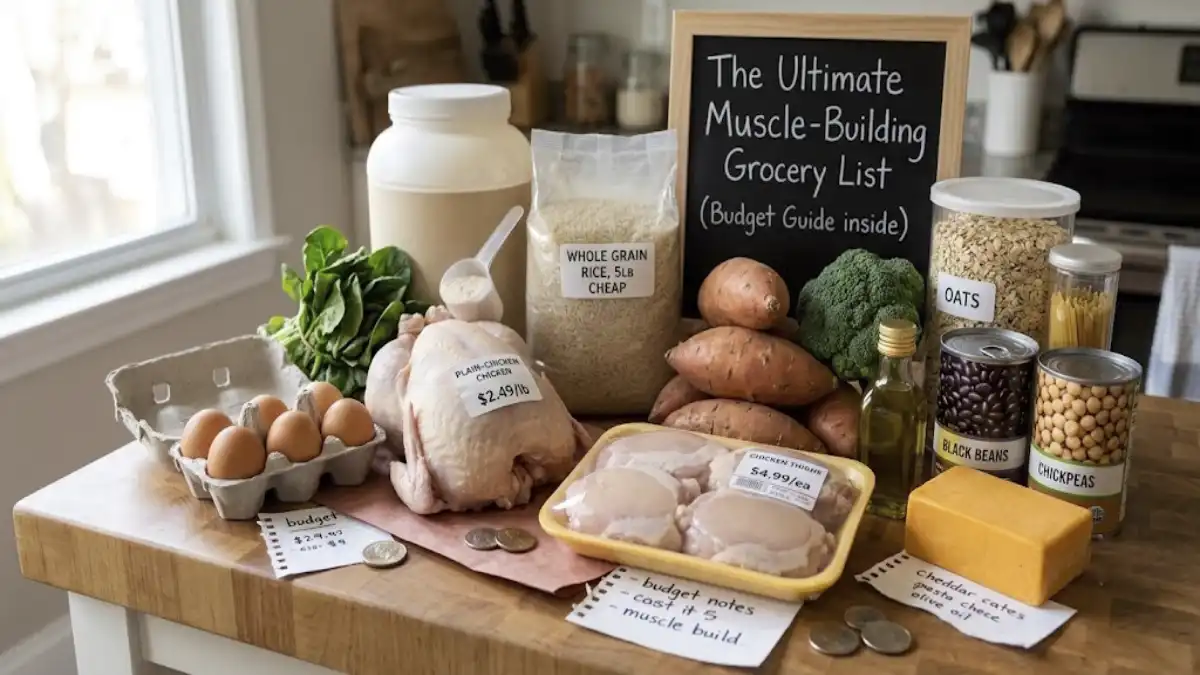
Building muscle comes with a reputation for being expensive, and it’s not entirely undeserved — between gym memberships, supplements, and the sheer volume of food a caloric surplus requires, costs add up fast. But the actual grocery list behind an effective muscle-building diet doesn’t need to be the expensive part. The foods that genuinely support muscle growth — enough protein, enough calories, enough micronutrients — overlap almost entirely with the cheapest, most accessible items in any grocery store.
This is the full breakdown: protein, carbohydrates, and fats, all built around foods that are affordable, easy to find, and genuinely effective for anyone in a muscle-building phase, along with a full sample weekly list and budget guide to put it all together.
Jump Links
- What Muscle Growth Actually Requires From Food
- Cheap Protein Sources for Muscle Building
- Cheap Carbohydrate Sources for Muscle Building
- Cheap Fat Sources for Muscle Building
- The Full Grocery List Table
- Sample Weekly Budget Breakdown
- Why Chicken Thighs Beat Chicken Breast for This Goal
- Bulk Buying and Batch Cooking Strategy
- Where Protein Powder Actually Fits In
- Common Budget Bulking Mistakes
- FAQ
- The Bottom Line
What Muscle Growth Actually Requires From Food
Before getting into specific foods, it’s worth grounding the whole list in what actually drives muscle growth nutritionally, since that’s what determines which cheap foods genuinely belong on this list and which ones are just cheap calories.
Muscle growth requires a caloric surplus (eating more energy than you burn) combined with adequate protein intake, since dietary protein supplies the amino acids muscle tissue is rebuilt from after training. Research on protein needs for athletes and strength trainers has generally supported intakes in the range of roughly 1 to 2 grams of protein per pound of body weight for individuals actively working to build muscle, a notably higher target than general population recommendations, which is exactly why protein-dense, affordable foods matter so much for anyone bulking on a budget specifically.
The practical challenge, as fitness and nutrition resources have pointed out, is that protein- and nutrient-rich foods are often pricier than energy-dense, low-nutrient options, which makes it tempting to hit calorie targets with cheap, low-value foods that don’t actually support the muscle-building goal. The entire point of a genuinely good cheap grocery list is threading that needle: real nutritional value, without the premium price tag.
Cheap Protein Sources for Muscle Building
- Eggs — a genuine nutritional powerhouse and one of the most consistently affordable complete proteins available, versatile across every meal of the day.
- Bone-in chicken thighs — significantly cheaper per pound than boneless chicken breast, while still delivering strong protein content.
- Ground turkey — a versatile, budget-friendly option that works in tacos, burgers, chili, or on its own, with lean or extra-lean versions available depending on fat preference.
- Canned tuna — shelf-stable, zero-prep, and dependable, especially useful for hitting protein targets without additional cooking.
- Greek yogurt (plain, store brand) — a concentrated protein source that also works as a snack or smoothie base.
- Lentils and beans — among the cheapest protein sources available per gram, and genuinely useful for stretching meals further without inflating cost.
- Cottage cheese — another concentrated, ready-to-eat protein option that pairs well with both sweet and savory additions.
- Protein powder (bulk-purchased) — while not a whole food, bulk whey protein remains a cost-efficient way to top off daily protein totals, especially when bought in larger tubs rather than single-serve packets.
Cheap Carbohydrate Sources for Muscle Building
Carbohydrates are just as important as protein for a muscle-building phase, since they fuel training performance and help create the caloric surplus muscle growth depends on.
- Rice (white or brown, bought in bulk) — one of the cheapest, most calorie-dense carbohydrate sources available, and a staple across nearly every budget bulking list.
- Oats — inexpensive, versatile, and useful for breakfast, baking, or blending into shakes for extra calories.
- Potatoes — a genuinely underrated bulking carb, cheap, filling, and nutrient-dense, especially when bought in bulk bags.
- Bananas — a cheap, easy source of quick-digesting carbohydrates, useful around workouts specifically.
- Whole wheat bread or tortillas — an affordable, calorie-dense carb base for sandwiches and wraps built around the protein sources above.
- Pasta (bulk, store brand) — inexpensive, calorie-dense, and easy to pair with protein and vegetables for a complete, filling meal.
Cheap Fat Sources for Muscle Building
Dietary fat matters for hormone production and overall calorie intake, and a few affordable sources cover this category efficiently.
- Peanut butter (store brand) — inexpensive, calorie-dense, and a genuinely efficient way to add both fat and some protein to a bulking diet.
- Eggs (whole, not just whites) — beyond the protein contribution, whole eggs provide useful dietary fat as part of a balanced bulking approach.
- Olive oil or vegetable oil (bulk) — a cheap way to add calorie density to cooked meals without much additional effort.
- Almonds or mixed nuts (bought in bulk) — while not the cheapest option on this list, buying in bulk brings the per-serving cost down significantly, and their high calorie density means smaller amounts go a long way.
- Whole milk — beyond its protein contribution, whole milk adds useful fat and overall calorie density, making it a favorite “cheap calories” tool among budget bulkers historically.
The Full Grocery List Table
| Category | Foods | Why They’re on the List |
|---|---|---|
| Protein | Eggs, chicken thighs, ground turkey, canned tuna, Greek yogurt, lentils/beans, cottage cheese | High protein-per-dollar value |
| Carbohydrates | Rice, oats, potatoes, bananas, whole wheat bread, pasta | Cheap, calorie-dense, supports training performance |
| Fats | Peanut butter, whole eggs, cooking oil, bulk nuts, whole milk | Adds calorie density and supports overall nutrition |
| Bonus/Convenience | Bulk protein powder, frozen vegetables | Fills gaps efficiently without inflating cost significantly |
Sample Weekly Budget Breakdown
Based on current grocery pricing patterns for these food categories, a full week of muscle-building groceries for one person can realistically be built across a range of budget tiers:
| Budget Tier | What It Typically Covers | Notes |
|---|---|---|
| ~$50–$60/week | Core protein (eggs, chicken thighs, lentils), basic carbs (rice, oats, potatoes), one fat source | Lean, no-frills bulking list; requires more batch cooking |
| ~$75–$90/week | Adds ground turkey or tuna, Greek yogurt, more variety in carbs, bulk nuts | More variety without a major cost jump |
| ~$100–$120/week | Adds protein powder, more produce variety, occasional higher-cost protein (like salmon or lean beef) for variety | Still budget-conscious but allows more flexibility and less repetition |
Club and warehouse stores like Costco, Sam’s Club, and BJ’s are worth considering specifically for muscle-building grocery runs, since their bulk pricing structure is particularly well-suited to the exact staples this list relies on — bulk rice, bulk oats, bulk chicken, and bulk cooking oils in particular.
Why Chicken Thighs Beat Chicken Breast for This Goal
This deserves its own section because it’s one of the single highest-impact swaps on this entire list. Bone-in, skin-on chicken thighs are consistently cheaper per pound than boneless, skinless chicken breast, while still delivering solid protein content, making them one of the most cost-efficient animal protein sources available for a muscle-building diet specifically.
A few practical tips for leaning on thighs:
- Buy family-size bulk packs, which typically bring the per-pound price down further than smaller portions.
- Batch roast or grill a full tray at once, portioning the cooked meat across several days’ worth of meals.
- Remove the skin post-cooking if you’re managing overall fat intake, while still benefiting from the lower base cost of the cut.
- Save bones for homemade stock, which adds extra value to the same purchase.
Bulk Buying and Batch Cooking Strategy
- Cook a large batch of rice or oats once at the start of the week, portioning it into containers for grab-and-go meals across several days.
- Hard-boil a full dozen (or two) eggs at once, giving you a ready protein source without daily cooking.
- Roast a full tray of chicken thighs or a batch of ground turkey, then freeze individual portions for later in the week.
- Buy bulk bags of rice, oats, and potatoes rather than smaller packaged portions, since the per-pound cost drops significantly at larger quantities.
- Prep protein shakes in advance if using protein powder regularly, storing pre-measured scoops in individual bags for quick use.
- Shop sales strategically for perishables like ground turkey and Greek yogurt, buying extra when prices drop and freezing what you can.
Where Protein Powder Actually Fits In
Whole foods should form the foundation of any budget muscle-building grocery list, but bulk protein powder still earns a legitimate spot for a lot of people, specifically as an efficient way to close any remaining gap between whole-food protein intake and a higher daily target. To maximize protein powder’s cost efficiency specifically, buying in bulk (larger tubs rather than single-serve packets), taking advantage of subscribe-and-save discounts, and shopping during traditional sale periods (like the January fitness resolution season, when protein powder and fitness gear are frequently discounted) all meaningfully reduce the per-serving cost.
It’s worth treating protein powder as a supplement to the grocery list above, not a replacement for it — whole foods provide a broader range of micronutrients that a protein shake alone doesn’t cover.
Common Budget Bulking Mistakes
- Filling calorie targets with low-nutrient junk food. It’s tempting to hit a caloric surplus with cheap, easy convenience food, but this undermines the actual muscle-building goal by shortchanging protein and micronutrients.
- Defaulting to chicken breast out of habit. Bone-in thighs deliver comparable or better value for a muscle-building budget specifically.
- Buying small package sizes repeatedly instead of bulk. Smaller packages almost always carry a higher per-unit cost than bulk purchasing the same staple.
- Skipping meal prep entirely. Without batch cooking, it’s far easier to fall back on more expensive, less nutrient-dense convenience options out of simple time pressure.
- Overspending on “clean bulking” branded products. Plenty of specialty, premium-branded “bulking” foods and supplements simply repackage the same basic nutrition available in generic, budget-friendly staples at a markup.
📌 YOU MIGHT ALSO LIKE:
The ‘Dollar Tree’ Superfoods: 5 Pantry Staples That Are Actually Healthy
FAQ
Can I actually build muscle eating mostly cheap foods like eggs, rice, and chicken thighs?
Yes. What drives muscle growth is a consistent caloric surplus combined with adequate protein and training stimulus, all of which these affordable staples support just as effectively as pricier alternatives.
How much protein do I actually need for muscle building?
Research generally supports intakes in the range of roughly 1 to 2 grams of protein per pound of body weight for individuals actively working to build muscle, notably higher than general population protein recommendations.
Is bulk protein powder worth the cost for a budget muscle-building plan?
It can be, particularly when purchased in larger tubs rather than single-serve packets and bought during sale periods. It works best as a supplement filling gaps in whole-food protein intake, rather than replacing whole foods entirely.
Are bone-in chicken thighs really better than chicken breast for a budget diet?
For cost-efficiency specifically, yes. Thighs are typically cheaper per pound than boneless, skinless breast while still delivering strong protein content, making them a smarter default for a muscle-building budget.
How much should I expect to spend weekly on a cheap muscle-building grocery list?
A lean, no-frills version can realistically run around $50 to $60 per week for one person, with more variety and flexibility available in the $75 to $120 range depending on how much repetition and batch cooking you’re comfortable with.
Do I need fresh vegetables on this list, or can I skip them to save money?
Vegetables remain important for overall micronutrient intake, but frozen vegetables are typically much cheaper than fresh while retaining most of their nutritional value, making them a smart budget-friendly addition to this core grocery list.
The Bottom Line
A genuinely effective muscle-building diet doesn’t require premium cuts of meat, boutique supplements, or a grocery bill that rivals a car payment. Eggs, chicken thighs, rice, oats, peanut butter, and a handful of other affordable staples cover every nutritional base — protein, carbohydrates, and fat — that muscle growth actually depends on, all while keeping the weekly grocery bill genuinely manageable.
For more budget-friendly food and wellness guides, check out more posts over at The Frugal Glow.
Sources: