

The ‘Dollar Tree’ Superfoods: 5 Pantry Staples That Are Actually Healthy
Let me be real with you. When most people think of Dollar Tree, they think of plastic toys that break in five minutes, off-brand cleaning supplies that smell like chemicals, and candy that’s been sitting on the shelf since last election. They don’t think of healthy food. And honestly? For years, neither did I.
I assumed that anything costing $1.25 was probably bad for me. Processed. Full of sodium. Packed with preservatives. So I walked right past the food aisles on my way to the party supplies and greeting cards.
Then inflation hit. And my grocery bill doubled. And I got desperate.
One Tuesday afternoon, with $20 in my pocket and a week until payday, I walked into Dollar Tree out of necessity, not curiosity. I needed to feed myself for seven days on almost nothing. I expected to leave with ramen noodles and canned beans.
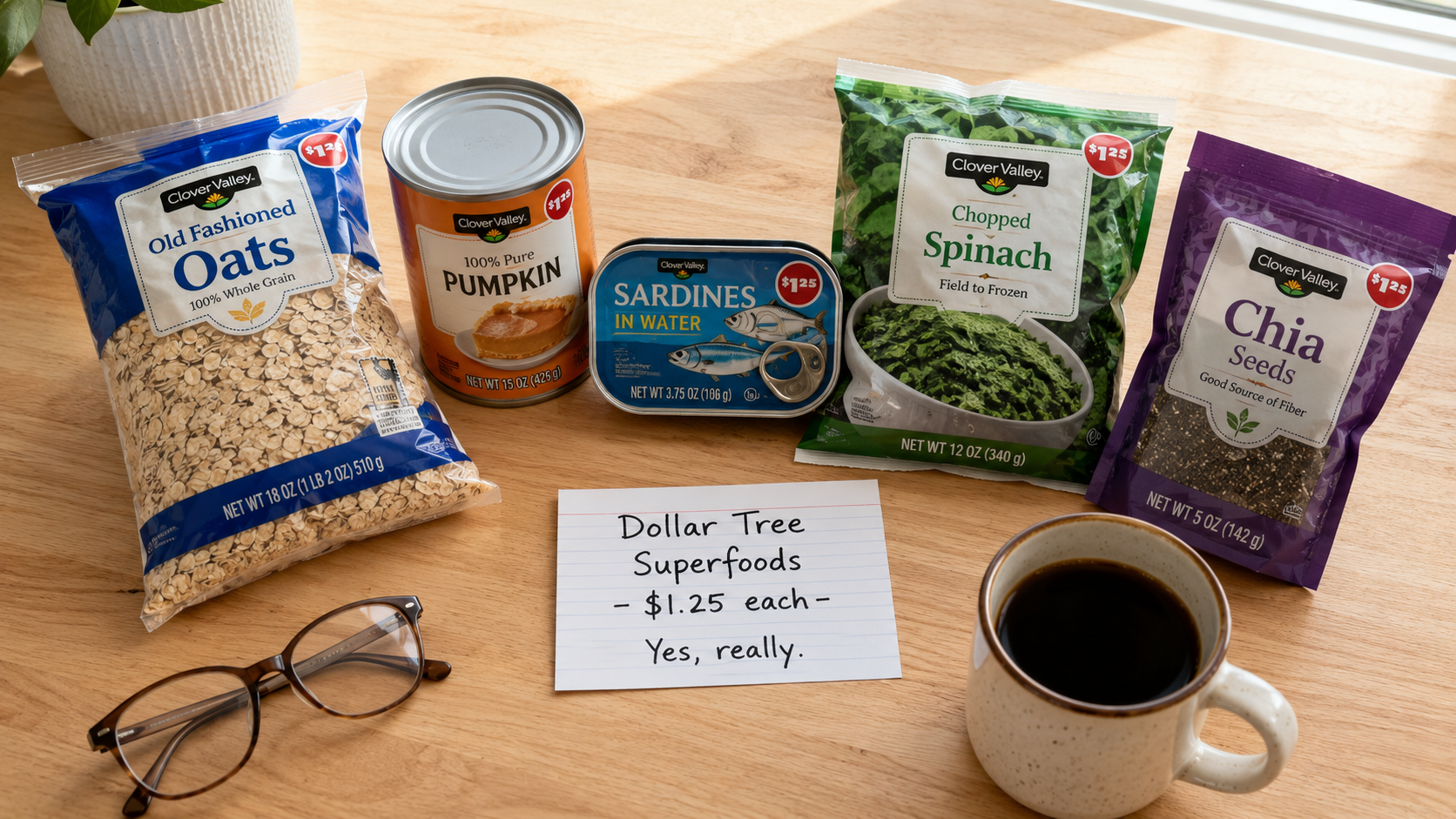
What I found instead shocked me. Old-fashioned oats. Canned pumpkin. Sardines. Frozen spinach. Chia seeds. Real, whole, nutrient-dense foods that cost $1.25 each. The same exact foods that Whole Foods sells for $5-8.
That was eighteen months ago. I’ve been shopping at Dollar Tree for groceries ever since. Not for everything – I still go to regular grocery stores for fresh produce and meat. But for pantry staples? I’m a Dollar Tree convert.
Today, I’m sharing the five superfoods I buy every single time I go. These are real foods. Not “dollar store junk dressed up as health food.” Actual, nutrient-dense, dietitian-approved staples that cost $1.25 or less.
Let me show you what you’ve been walking past.
Jump Links
- The Day I Stopped Being a Grocery Snob
- Why Dollar Tree Food Isn’t What You Think
- Superfood #1: Old-Fashioned Rolled Oats
- Superfood #2: Canned Pumpkin (100% Pure)
- Superfood #3: Sardines or Mackerel in Water
- Superfood #4: Frozen Spinach or Mixed Vegetables
- Superfood #5: Chia Seeds or Flax Seeds
- How to Use These Staples Together (Sample Meals Under $2)
- What to Skip at Dollar Tree (Even at $1.25)
- The Math: What I Save in a Year
- Frequently Asked Questions (FAQ)
- Final Thoughts: Healthy Doesn’t Have to Be Expensive
The Day I Stopped Being a Grocery Snob
I need to be honest about something embarrassing.
Before that desperate Tuesday, I was a grocery snob. I shopped at Whole Foods and Sprouts. I bought organic everything. I believed that if it was cheap, it was probably bad for me. I looked down on people who shopped at discount stores for food.
Then I lost my freelance client. Then my emergency fund ran out. Then I had to choose between buying groceries and paying my electric bill.
That’s when I walked into Dollar Tree with $20 and a whole lot of humility.
I spent an hour walking up and down the food aisles, reading labels, doing math on my phone. And I realized that my assumptions were wrong. Dollar Tree doesn’t only sell junk. They sell real food. You just have to know what to look for.
The oats were 100% whole grain rolled oats. No sugar. No additives. Just oats. The same oats at Whole Foods cost $5.99.
The canned pumpkin was 100% pure pumpkin. Not pumpkin pie mix with sugar and spices. Just pumpkin. The same can at Safeway costs $3.49.
The frozen spinach was just spinach. No sauce. No seasoning. Just frozen vegetables. The same bag at Kroger costs $2.99.
I bought a week’s worth of food for $18.37. Oats for breakfast. Bean and spinach burritos for lunch. Pumpkin oatmeal for dessert. Sardines on crackers for protein snacks.
I didn’t starve. I didn’t get sick. And I wasn’t miserable.
I was just wrong about Dollar Tree.
Why Dollar Tree Food Isn’t What You Think
Let me clear up some myths.
Myth #1: “Dollar Tree food is expired or about to expire.”
Not true. Dollar Tree has a strict inventory turnover policy. Their food moves fast because it’s cheap. I’ve never bought anything expired. Always check dates, just like you would at any store, but I’ve never found an expired product.
Myth #2: “It’s all processed junk.”
Some of it is. They sell candy, chips, and soda. But they also sell real ingredients. Oats. Beans. Vegetables. Seeds. Canned fish. Tomatoes. Broth. Spices. You have to look for the real food. It’s there.
Myth #3: “The quality is worse than regular grocery stores.”
For shelf-stable and frozen items? No. Oats are oats. Canned pumpkin is canned pumpkin. Chia seeds are chia seeds. These are commodity products. The brand doesn’t matter. The ingredients matter. Dollar Tree sells the same products as other stores, just in smaller portions and plain packaging.
Myth #4: “You can’t cook real meals with Dollar Tree food.”
You absolutely can. Oatmeal. Soups. Burritos. Smoothies. Grain bowls. Salad jars. Chili. Curry. I’ve made all of these with Dollar Tree staples. You need fresh produce and protein from elsewhere, but for pantry building? Dollar Tree is a goldmine.
The key is knowing what to buy and what to skip. I’ll show you both.
Superfood #1: Old-Fashioned Rolled Oats
Price: $1.25 for 16-18 oz
Compare to grocery store: $3.50-6.00 for same size
Savings: $2-5 per bag
Why it’s a superfood:
Oats are packed with beta-glucan, a type of soluble fiber that lowers cholesterol, stabilizes blood sugar, and keeps you full for hours. They’re also a good source of magnesium, iron, and B vitamins. Eating oats regularly is linked to lower risk of heart disease and better gut health.
What to look for:
Old-fashioned rolled oats. Not instant oatmeal packets (those have added sugar and salt). Not steel-cut (Dollar Tree doesn’t usually carry them). Just the plain, rolled kind. The ingredient list should say: “100% whole grain rolled oats.” Nothing else.
How I use them:
- Breakfast: Overnight oats with chia seeds and canned pumpkin (see recipe below)
- Savory oats: Cook with broth instead of water, top with a fried egg and frozen spinach
- Oat flour: Blend into powder, use for pancakes or banana bread
- Oatmeal cookies: Mash a banana, mix with oats, bake at 350 for 12 minutes
Pro tip: Buy two bags at a time. A bag lasts me about 10-14 days of daily breakfast.
Superfood #2: Canned Pumpkin (100% Pure)
Price: $1.25 for 15 oz can
Compare to grocery store: $2.50-4.00 for same size
Savings: $1-3 per can
Why it’s a superfood:
Pumpkin is loaded with vitamin A (one serving has over 200% of your daily needs), fiber, vitamin C, potassium, and antioxidants. It’s low in calories and naturally sweet without added sugar. The fiber keeps you full. The vitamins support your immune system and skin health.
What to look for:
100% pure pumpkin. Not pumpkin pie mix. Read the label. Pie mix has added sugar, spices, and sometimes corn syrup. Pure pumpkin has one ingredient: pumpkin.
How I use it:
- Pumpkin oatmeal: Stir 2-3 tablespoons into cooked oats with cinnamon
- Pumpkin smoothie: Blend with banana, oats, milk, and cinnamon
- Pumpkin soup: Sauté onion, add pumpkin, vegetable broth, and curry powder
- Pumpkin “hummus”: Blend pumpkin with chickpeas, garlic, lemon, and tahini
- Pumpkin pancakes: Add to pancake batter for extra moisture and nutrients
Pro tip: After opening, transfer unused pumpkin to a container and refrigerate. Use within 5-7 days. Or freeze in ice cube trays for single portions.
Superfood #3: Sardines or Mackerel in Water
Price: $1.25 for 3.75 oz tin
Compare to grocery store: $2.50-4.00 for same size
Savings: $1-3 per tin
Why it’s a superfood:
Sardines and mackerel are among the most nutrient-dense foods on the planet. They’re packed with omega-3 fatty acids (good for brain health and reducing inflammation), vitamin B12, vitamin D, calcium (from the soft bones, which are edible), and selenium. They’re also low in mercury because they’re small fish at the bottom of the food chain.
What to look for:
Sardines or mackerel packed in water, not oil. Avoid the ones in soybean oil or with added sauces. The ingredient list should say: “sardines, water, salt.” That’s it.
How I use them:
- On crackers: Mash with a fork, spread on whole grain crackers
- In salads: Flake over a bed of spinach with lemon juice and pepper
- On toast: Mash with avocado, spread on whole grain toast
- In pasta: Flake into tomato sauce with olives and capers
- Straight from the tin: Honestly, I do this when I’m lazy
Pro tip: If you’re new to sardines, start with mackerel. It’s milder and less fishy. Also, don’t drain all the liquid – it’s flavorful and nutrient-rich.
Superfood #4: Frozen Spinach or Mixed Vegetables
Price: $1.25 for 10-12 oz bag
Compare to grocery store: $2.50-4.00 for same size
Savings: $1-3 per bag
Why it’s a superfood:
Frozen spinach is one of the best bargains in nutrition. Spinach is loaded with vitamin K, vitamin A, folate, iron, and magnesium. Freezing locks in nutrients – sometimes frozen vegetables are more nutritious than fresh because they’re frozen at peak ripeness.
What to look for:
Plain frozen spinach or mixed vegetables. No sauces. No seasoning. Just vegetables. The ingredient list should be one item: “spinach” or “carrots, peas, corn, green beans.”
How I use it:
- Add to eggs: Stir frozen spinach into scrambled eggs or omelets
- Add to soups: Toss a handful into any soup or stew
- Add to pasta: Mix into tomato sauce or pesto
- Smoothies: Blend frozen spinach with banana and oats – you won’t taste it
- Rice bowls: Stir into cooked rice with a little soy sauce
Pro tip: You don’t need to thaw frozen spinach before cooking. Just break off a chunk and toss it into whatever you’re making. It wilts in minutes.
Superfood #5: Chia Seeds or Flax Seeds
Price: $1.25 for 4-5 oz bag
Compare to grocery store: $4.00-8.00 for same size
Savings: $3-7 per bag
Why it’s a superfood:
Chia seeds and flax seeds are tiny nutritional powerhouses. They’re packed with omega-3 fatty acids, fiber (both soluble and insoluble), protein, calcium, magnesium, and phosphorus. When soaked, chia seeds form a gel that keeps you full for hours. Flax seeds need to be ground to access the nutrients.
What to look for:
Chia seeds (black or white) or ground flax seeds (sometimes called flax meal). Whole flax seeds will pass through your digestive system undigested – you won’t get the nutrients. If you find whole flax seeds, you can grind them at home in a coffee grinder.
How I use them:
- Overnight oats: Add 1 tablespoon chia seeds to oats and milk, let sit overnight
- Smoothies: Add 1 tablespoon to any smoothie
- Egg substitute: Mix 1 tablespoon chia seeds with 3 tablespoons water, let sit for 5 minutes – replaces one egg in baking
- Pudding: Mix 3 tablespoons chia seeds with 1 cup milk, refrigerate for 4 hours, top with fruit
- Coatings: Use ground flax seeds as breading for chicken or fish
Pro tip: Chia seeds don’t need to be ground. Flax seeds do. If you buy whole flax seeds, grind them in a clean coffee grinder and store in the fridge. Ground flax seeds go rancid faster than whole.
How to Use These Staples Together (Sample Meals Under $2)
Here are complete meals using only Dollar Tree staples (plus tap water and basic spices).
Breakfast: Pumpkin Oatmeal ($0.60 per serving)
- 1/2 cup rolled oats ($0.20)
- 1/4 cup canned pumpkin ($0.15)
- 1 tablespoon chia seeds ($0.10)
- 1 cup water (free)
- Cinnamon and nutmeg (pennies)
Cook oats with water, stir in pumpkin and chia seeds, sprinkle with cinnamon.
Lunch: Sardine & Spinach Rice Bowl ($1.85)
- 1 can sardines in water ($1.25)
- 1 cup frozen spinach ($0.25)
- 1 cup cooked rice ($0.25)
- Squeeze of lemon juice (pennies)
Cook spinach, flake sardines over rice, top with spinach and lemon.
Dinner: Pumpkin & Chickpea Curry ($2.00)
- 1 can chickpeas ($1.25? Check – some Dollar Trees have them)
- 1/2 can pumpkin ($0.60)
- 1 cup frozen mixed vegetables ($0.15)
- Curry powder, garlic powder, onion powder (pennies)
Sauté vegetables, add chickpeas, pumpkin, and spices. Simmer. Serve over rice.
Snack: Chia Pudding ($0.40)
- 2 tablespoons chia seeds ($0.30)
- 1/2 cup water or milk ($0.10)
- Dash of vanilla or cinnamon
Mix, refrigerate for 4 hours or overnight.
What to Skip at Dollar Tree (Even at $1.25)
Not everything at Dollar Tree is a good deal or healthy. Here’s what I never buy.
Skip: Canned vegetables (except tomatoes)
Most are packed with salt. Some have added sugar. A can of green beans might have 500mg+ of sodium. Buy frozen vegetables instead (no added salt).
Skip: Boxed mac and cheese
It’s mostly refined pasta and artificial cheese powder. No nutrients. High sodium. You can make real mac and cheese for the same price with pasta and cheese powder? No, just skip.
Skip: “Pancake syrup”
It’s corn syrup with artificial maple flavor. No maple. No nutrients. Spend your $1.25 on something else.
Skip: Ramen noodles
The seasoning packet is pure salt and MSG. The noodles are refined flour and palm oil. You can buy real pasta for the same price.
Skip: Soda and energy drinks
Empty calories. No nutrients. Bad for teeth. Bad for your wallet even at $1.25.
Skip: Canned tuna (sometimes)
Check the label. Some Dollar Tree tuna is “chunk light” packed in oil. Fine. But it’s often not a better deal than grocery stores. Compare price per ounce.
Skip: Spices (for health)
They’re fine for flavor, but check for added salt and anti-caking agents. The quality is low. For $1.25, you can buy better spices at an international market.
My rule: If it comes in a box with a cartoon character, skip it. If it comes in a can or bag with a simple label and short ingredient list, consider it.
The Math: What I Save in a Year
Let me show you what switching to Dollar Tree for pantry staples saved me in one year.
Before (grocery store prices):
- Old-fashioned oats (18 oz): $4.50
- Canned pumpkin (15 oz): $3.50
- Sardines (3.75 oz tin): $3.00
- Frozen spinach (12 oz): $3.00
- Chia seeds (5 oz): $6.00
Monthly total (buying each once): $20.00
Annual total: $240
After (Dollar Tree prices):
- Old-fashioned oats (18 oz): $1.25
- Canned pumpkin (15 oz): $1.25
- Sardines (3.75 oz tin): $1.25
- Frozen spinach (12 oz): $1.25
- Chia seeds (5 oz): $1.25
Monthly total: $6.25
Annual total: $75
Annual savings on just these five items: $165
Now multiply that across all pantry staples. Beans. Tomatoes. Broth. Rice. Pasta. Frozen vegetables. I easily save $500-700 per year shopping at Dollar Tree for shelf-stable and frozen goods.
That’s not nothing. That’s a plane ticket. That’s several car payments. That’s a year of gym membership.
Frequently Asked Questions (FAQ)
1. Is Dollar Tree food safe to eat? Isn’t it low quality?
Yes, it’s safe. Dollar Tree follows the same FDA regulations as any other grocery store. The food isn’t “lower quality” – it’s often the same brands you’d find elsewhere, just in smaller packaging. Oats are oats. Canned pumpkin is canned pumpkin. The main difference is selection, not safety.
2. How can Dollar Tree sell food so cheaply?
Smaller package sizes (18 oz of oats instead of 42 oz), plain packaging (no brand marketing costs), buying in massive bulk, and selling overstock or seasonal items. They also accept slightly imperfect packaging that other stores reject. The food inside is fine.
3. Does Dollar Tree accept EBT/SNAP?
Yes. Dollar Tree locations accept EBT/SNAP benefits for eligible food items. Hot prepared foods and non-food items are not eligible. Check with your local store for details.
4. Can I do all my grocery shopping at Dollar Tree?
No, and I wouldn’t recommend it. Dollar Tree doesn’t sell fresh meat, fresh produce (except some locations have limited items), dairy (except shelf-stable milk), or eggs. Use Dollar Tree for pantry staples and frozen vegetables. Buy fresh items elsewhere.
5. Are the canned goods at Dollar Tree high in sodium?
Some are, some aren’t. Read the labels. Canned vegetables (corn, green beans, peas) often have added salt. Canned pumpkin, tomatoes (no salt added), and beans (rinsed) are better options. Frozen vegetables have no added salt and are often a better choice.
6. How long does Dollar Tree food last?
Same as any other grocery store. Check the “best by” or “use by” dates on cans and packages. I’ve never bought expired food at Dollar Tree, but always check. Canned goods last 2-5 years from production date if stored properly.
7. Do all Dollar Tree locations have the same food selection?
No. Some locations have a larger frozen section. Some have more canned goods. Some have limited dry goods. Visit a few locations in your area to find the best one. The “Dollar Tree Plus” locations (items up to $5) often have better food selections.
8. Can I find organic food at Dollar Tree?
Sometimes, but not consistently. I’ve seen organic canned tomatoes and organic broth at some locations. Don’t rely on Dollar Tree for organic staples. Focus on conventional whole foods – they’re still healthy.
Final Thoughts: Healthy Doesn’t Have to Be Expensive
Here’s what I want you to take away.
I was wrong about Dollar Tree. For years, I assumed that cheap food was bad food. That you had to spend more to eat well. That discount stores were only for junk and desperation.
That was classist. And it was wrong.
Real food – oats, beans, vegetables, seeds – is cheap. It’s always been cheap. The expensive stuff is marketing, packaging, and convenience. A $6 bag of “artisan oats” in a beautiful package is the same food as $1.25 oats in a plain bag.
I’m not saying Dollar Tree is perfect. It’s not. The selection is limited. You can’t buy everything there. And some locations are better than others.
But for building a healthy pantry on a tight budget? It’s a game-changer.
Five superfoods. A dollar twenty-five each. That’s less than one Starbucks drink. That’s breakfast for a week. That’s nutrition without the markup.
So next time you walk past the food aisle at Dollar Tree, stop. Bend down. Look at the bottom shelves. Read the labels. You might be surprised at what you find.
Healthy doesn’t have to be expensive. It just has to be real.
That’s the frugal glow. And it tastes like oatmeal with pumpkin and cinnamon. 🥣💛
For more budget grocery tips, healthy eating on a dime, and frugal living strategies, visit The Frugal Glow.