

Frozen vs. Canned vs. Fresh Vegetables: The Ultimate Cost-Per-Nutrient Breakdown
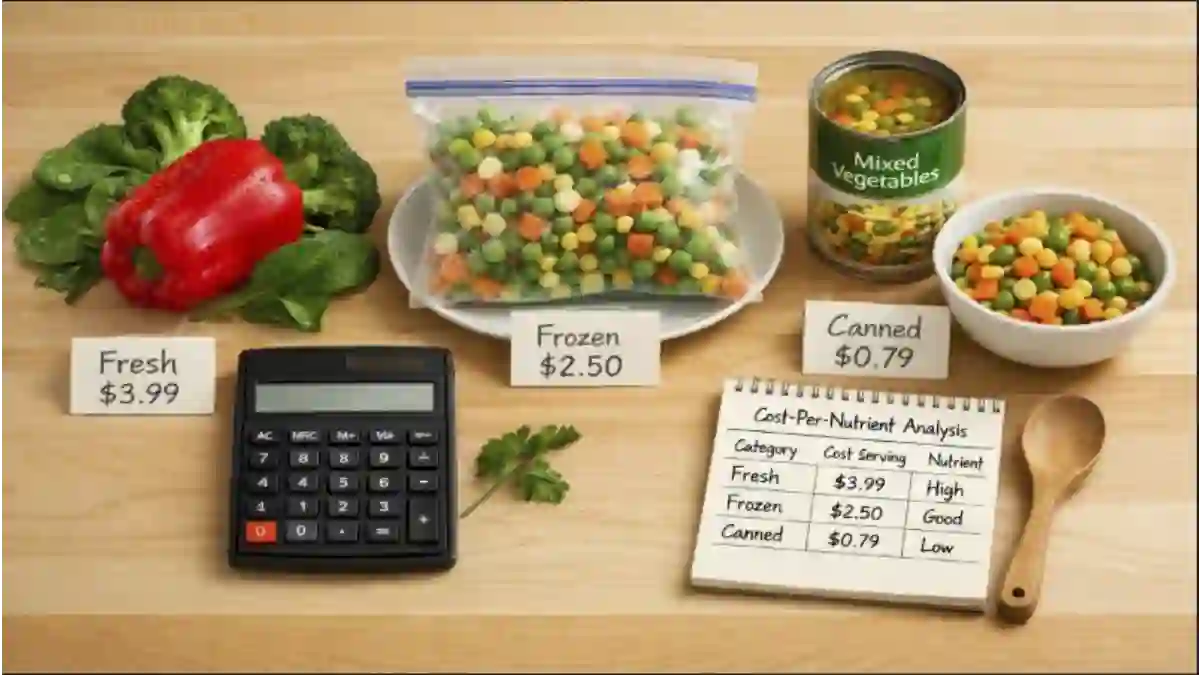
There’s a persistent grocery store hierarchy most people carry around without ever questioning it: fresh produce is the “real,” nutritious choice, frozen is an acceptable backup, and canned vegetables are somewhere near the bottom of the healthy-eating totem pole. Actual food science tells a genuinely different story, one where the “worse” options often deliver comparable — sometimes even superior — nutrition, at a meaningfully lower cost.
This breaks down what peer-reviewed research and USDA cost data actually show across all three categories, vegetable by vegetable, dollar by dollar, so you can make grocery decisions based on evidence rather than an assumption about which can looks the healthiest on the shelf.
Jump Links
- Why the “Fresh Is Always Best” Assumption Doesn’t Hold Up
- What Actually Happens to Nutrients in Each Process
- The Landmark Research Behind This Comparison
- Cost Comparison: What the Data Actually Shows
- Cost-Per-Nutrient Table
- Nutrient-by-Nutrient Breakdown
- Vegetable-Specific Notes
- What to Watch For: Added Sodium and Sugar
- When Fresh Genuinely Wins
- When Frozen Genuinely Wins
- When Canned Genuinely Wins
- Building a Cost-Effective, Nutrient-Dense Weekly Plan
- FAQ
- The Bottom Line
Why the “Fresh Is Always Best” Assumption Doesn’t Hold Up
The core issue with assuming fresh is automatically superior comes down to something most people don’t factor in: time. Fresh produce begins losing nutritional value the moment it’s harvested, and that decline continues throughout shipping, retail display, and however many days it sits in your refrigerator before you actually eat it. Frozen and canned vegetables, by contrast, are typically processed within hours of harvest, locking in nutrients at a point much closer to peak freshness than the “fresh” produce sitting on a store shelf days or weeks after being picked.
This isn’t a fringe claim — it’s supported by decades of published food science research, including studies from the University of Illinois, UC Davis, and an Austrian research team, all reaching a genuinely consistent conclusion: canned or frozen produce shows no substantial nutritional disadvantage compared to fresh, once you account for the rapid nutrient deterioration that happens in fresh produce during storage.
What Actually Happens to Nutrients in Each Process
Freezing uses low temperatures specifically to delay spoilage, and industrial freezing methods are genuinely effective at retaining color, texture, and nutritional content. Vegetables are typically blanched (briefly heated) before freezing to deactivate enzymes that would otherwise continue degrading nutrients even in the freezer, and while this blanching step causes some initial vitamin C and B vitamin loss, the nutrients that remain stay considerably more stable during storage than they would in fresh produce sitting in a refrigerator.
Canning involves a heat-based preservation process that can reduce certain heat-sensitive vitamins, though modern canning methods have meaningfully reduced these losses compared to older techniques. Interestingly, canned tomatoes specifically tend to have higher levels of some B vitamins compared to fresh cooked tomatoes, demonstrating that canning’s effect on nutrients varies significantly depending on the specific vegetable and nutrient in question, rather than being a uniform, across-the-board reduction.
Fresh produce retains the highest possible nutrient levels only in a narrow window immediately after harvest. In practice, by the time produce reaches a store shelf and then sits in a home refrigerator for several days, a meaningful share of that initial nutrient advantage has already eroded — sometimes to the point where it falls behind its frozen or canned counterpart.
The Landmark Research Behind This Comparison
Much of the most detailed comparative research in this space comes from a two-part study conducted by researchers Rickman, Barrett, and Bruhn, examining nutrient retention across raw, canned, and frozen produce. Their findings concluded that freezing and canning actually preserve nutrient value effectively — while heat treatment during processing does cause some initial loss of vitamin C and B vitamins, the nutrients that remain in the processed product stay considerably more stable during subsequent storage than nutrients in fresh produce.
A separate, frequently cited study specifically examining frozen versus fresh vegetables stored for five days found that fresh produce lost nutritional value more quickly over that storage period, and that by day five, the frozen produce had actually become more nutritious than the fresh produce it was compared against. Additional vitamin content analysis across foods including corn, carrots, and broccoli found no large nutritional differences between fresh and frozen versions overall, with vitamin content sometimes even higher in the frozen product — frozen broccoli, for example, was found to contain more riboflavin than fresh broccoli in that analysis.
On the cost side specifically, a Michigan State University-affiliated economic analysis examining cost alongside nutrition reached the same nutritional conclusion (comparable nutrient delivery across all three forms) while also determining that canned vegetables were consistently the cheapest option of the three, on a cost-per-edible-serving basis.
Cost Comparison: What the Data Actually Shows
According to USDA Economic Research Service data cited in this research, canned vegetables had a lower cost per edible cup compared with both frozen and fresh options, while nutrient delivery — measured specifically as nutrients per calorie — was found to be broadly similar across all three packaging types. This is a genuinely significant finding: the cheapest option in this comparison isn’t nutritionally compromised in any meaningful, broad sense; it’s simply cheaper.
The USDA has separately estimated that eating five servings of fruits and vegetables daily, when purchasing a strategic variety of fresh, frozen, and canned forms, costs approximately $3 per person per day — a genuinely achievable number for most household budgets, and one that leans on exactly the kind of mixed-format shopping strategy this research supports.
Cost-Per-Nutrient Table
| Format | Relative Cost Per Edible Serving | Nutrient Delivery (Per Calorie) | Shelf Life | Prep Convenience |
|---|---|---|---|---|
| Canned | Lowest | Comparable to fresh and frozen | Longest (often 1–5 years) | Highest (ready to heat/eat) |
| Frozen | Moderate | Comparable to fresh; sometimes higher for specific nutrients (e.g., riboflavin in broccoli) | Long (typically 8–12 months) | High (minimal prep) |
| Fresh | Highest (accounting for spoilage waste) | Highest only immediately post-harvest; declines with storage time | Shortest (days to about 2 weeks) | Lowest (requires washing, cutting, cooking) |
It’s worth noting that “fresh” carrying the highest effective cost accounts for a real, often-overlooked factor: food waste from spoilage before use, which functionally raises fresh produce’s true cost-per-nutrient-delivered once you factor in the portion that gets thrown out unused.
Nutrient-by-Nutrient Breakdown
- Vitamin C: The most sensitive to storage time and heat processing overall. Freshly picked, recently eaten produce has the highest vitamin C levels, but this advantage erodes quickly with storage; frozen vegetables often retain equal or better vitamin C levels compared with fresh produce that’s already sat for several days.
- Folate: Similarly variable between forms, with fresh, very recently harvested produce having an edge that narrows or disappears once fresh produce has been stored for even a short period.
- B vitamins (general): Canned vegetables tend to show slightly lower B vitamin levels compared with fresh cooked vegetables, with tomatoes as a notable exception, where canned versions actually showed higher B vitamin levels than fresh cooked tomatoes in the referenced research.
- Vitamin A, carotenoids, and vitamin E: Research specifically examining these nutrients found that freezing and canning generally preserve their nutrient value effectively.
- Minerals (potassium, magnesium, iron, calcium): These remain notably stable through both freezing and canning processes, showing minimal loss compared to fresh.
- Fiber: Generally well-preserved across all three forms, with minimal meaningful difference between fresh, frozen, and canned.
- Phenolic compounds (associated with potential cancer and heart disease risk reduction, though overall health impact isn’t fully established): These can be reduced in vegetables packed in brine or syrup, while vacuum-packed or liquid-free canned options tend to retain higher phenolic compound levels.
Vegetable-Specific Notes
- Apricots (and similarly delicate fruits/vegetables): Frozen versions can actually have meaningfully higher vitamin C content than fresh, since vitamin C is sometimes specifically added during processing as part of the preservation method itself.
- Broccoli: Frozen broccoli has been found to contain more riboflavin than fresh broccoli in comparative testing.
- Tomatoes: Canned tomatoes showed higher B vitamin content than fresh cooked tomatoes in referenced research, making this a notable exception to the general pattern of canning slightly reducing B vitamins.
- Peas: Frozen peas are frequently noted as tasting sweeter than fresh peas that have sat in a store or refrigerator for several days, since peas’ natural sugars convert to starch relatively quickly after harvest — flavor evidence that lines up with the broader nutrient-retention research.
- Leafy greens and fresh herbs: These tend to lose more volatile aromatic compounds during freezing and thawing, resulting in a blander flavor profile compared to other vegetable categories, making fresh a stronger choice specifically for these items when flavor is a priority.
- Watery vegetables (cucumbers, lettuce, tomatoes): These develop a notably softer, sometimes mushy texture after freezing and thawing, due to ice crystal formation rupturing cell walls, making them poor candidates for freezing regardless of nutrient content.
What to Watch For: Added Sodium and Sugar
The genuine caveat in all of this research is that these nutritional comparisons apply to vegetables in their basic, unadulterated processed form — plain canned or frozen vegetables, not versions packed with heavy sauces, added sugar, or excessive sodium. Checking ingredient lists specifically for added salt, sugar, or sauce is worth doing regardless of which format you choose, since these additions can meaningfully shift a product’s overall nutrition profile even when the base vegetable’s core nutrient content remains comparable across forms. Opting for “no salt added” canned varieties and plain (not sauced) frozen vegetables keeps the comparison in this article genuinely applicable to your actual grocery choices.
When Fresh Genuinely Wins
- When you’ll eat it within a day or two of purchase, minimizing the storage-related nutrient decline that erodes fresh produce’s advantage over time.
- For delicate leafy greens and fresh herbs, where flavor and texture hold up meaningfully better fresh than frozen.
- When texture matters most for raw applications, like salads, where frozen or canned versions of watery vegetables specifically don’t hold up well.
- When buying in-season, locally grown produce, which typically travels a shorter distance and sits in the supply chain for less time before reaching you, narrowing the freshness-decline gap that affects longer-traveled fresh produce.
When Frozen Genuinely Wins
- For vegetables you won’t cook within a few days of buying, since frozen retains nutrients far better than fresh produce sitting unused in a refrigerator.
- For reducing food waste, since frozen portions can be used exactly as needed without the risk of unused fresh produce spoiling before you get to it.
- For vegetables like broccoli, peas, and corn, where research has specifically found frozen versions to be nutritionally comparable or even superior to fresh.
- For consistent, ready-to-cook portions without the prep work of washing, trimming, and cutting fresh produce each time.
When Canned Genuinely Wins
- When cost is the primary factor, since canned vegetables consistently showed the lowest cost per edible serving in the referenced economic research.
- For pantry staples with a very long shelf life, useful for stocking up during sales or maintaining an emergency food supply.
- For tomatoes specifically, where canned versions showed a genuine B vitamin advantage over fresh cooked tomatoes in the research.
- For zero-prep convenience, since canned vegetables are ready to heat and eat immediately, with no washing, cutting, or cooking time required.
Building a Cost-Effective, Nutrient-Dense Weekly Plan
A strategic mix of all three formats, rather than committing exclusively to one, is what the underlying research actually supports as the most cost-effective, nutritionally sound approach:
- Buy fresh for vegetables you’ll use within the next couple of days, and for leafy greens, herbs, and anything primarily eaten raw.
- Stock your freezer with plain frozen vegetables for backup meals, smoothies, and dishes where you won’t notice a texture difference from thawing (soups, stir-fries, casseroles).
- Keep a rotating canned pantry stock of no-salt-added vegetables and canned tomatoes specifically, both for their cost efficiency and their long shelf life as a genuine grocery-budget safety net.
- Rotate your fresh purchases based on how quickly you’ll actually use them, buying smaller fresh quantities more frequently rather than large amounts that risk spoiling before use.
📌 YOU MIGHT ALSO LIKE:
The $2 ‘Pantry’ Probiotic: How to Make Your Own Sauerkraut and Save $10 a Jar
How to Meal Prep for 5 Days in 60 Minutes (Under $3 Per Serving)
FAQ
Is it really true that frozen vegetables can be more nutritious than fresh?
Yes, in specific documented cases. Research comparing frozen and fresh vegetables stored for five days found the frozen produce had become more nutritious than the fresh produce by that point, and separate research found frozen broccoli containing more riboflavin than fresh broccoli.
Are canned vegetables really the cheapest option?
According to USDA cost data referenced in comparative research, yes, canned vegetables consistently showed a lower cost per edible cup compared to both frozen and fresh options.
Do canned vegetables have significantly less nutrition than fresh or frozen?
Not broadly, no. Research measuring nutrients per calorie found nutrient scores were similar across all three packaging options, though canning does cause some initial loss of specific heat-sensitive vitamins like vitamin C, similar to the losses seen from blanching frozen vegetables.
Should I avoid canned vegetables because of sodium?
Checking for “no salt added” varieties addresses this concern directly, since the base vegetable’s nutrient content in comparative research applies to plain, unseasoned versions rather than products with added sauces or heavy seasoning.
Which vegetables should I always buy fresh rather than frozen or canned?
Leafy greens and fresh herbs tend to lose more flavor-related aromatic compounds when frozen, and watery vegetables like cucumbers, lettuce, and fresh tomatoes develop an undesirable, mushy texture after freezing, making fresh the better choice specifically for these categories.
What’s the most cost-effective overall strategy for buying vegetables?
A strategic mix of all three formats based on how quickly you’ll use each item — fresh for near-term use and raw applications, frozen for backup meals and cooked dishes, and canned for pantry staples and maximum cost efficiency — is what the underlying research actually supports as the most nutritionally sound and budget-friendly approach.
The Bottom Line
The assumption that fresh vegetables automatically outrank their frozen and canned counterparts doesn’t hold up against actual peer-reviewed food science. Decades of research consistently show comparable nutrient delivery across all three formats, with frozen and canned vegetables sometimes outperforming fresh specifically because they’re processed near peak freshness rather than declining in a store or refrigerator for days. Add in canned vegetables’ clear cost advantage, and the smartest, most budget-friendly approach isn’t choosing one format exclusively — it’s strategically mixing all three based on what you’re actually cooking and how quickly you’ll use it.
For more budget-friendly food and wellness guides, check out more posts over at The Frugal Glow.
Sources: