
Stop Buying $110 Fast Fashion Denim: How to Score Authentic Levi’s for Under $30
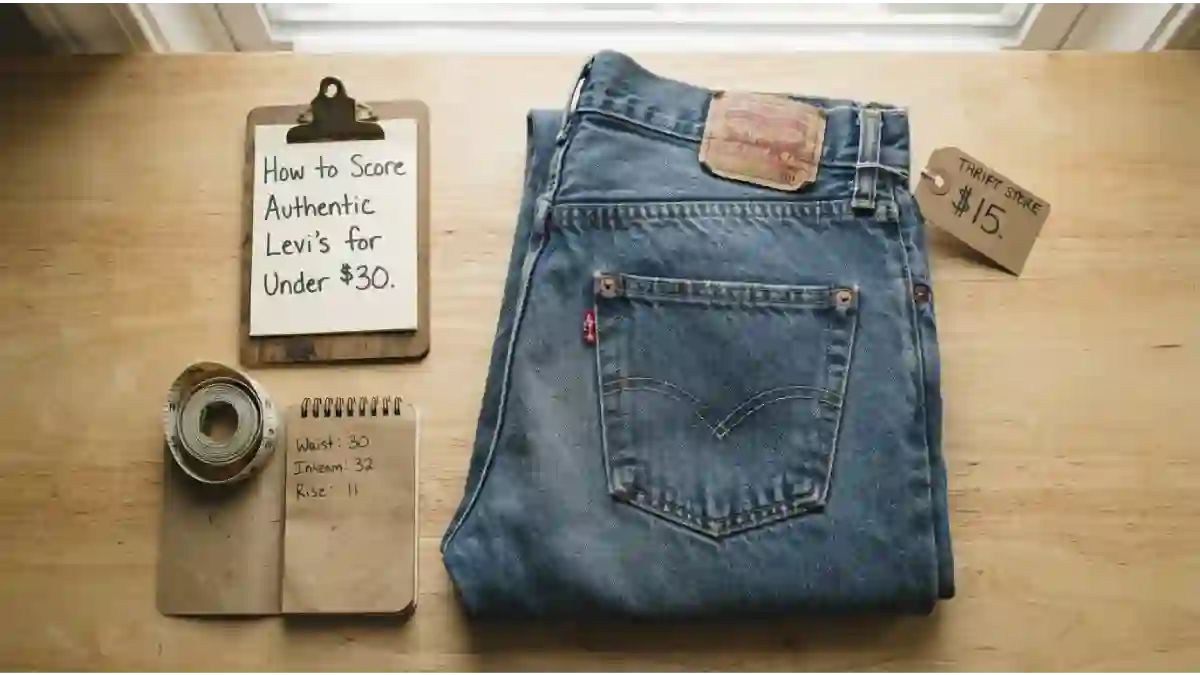
The $110 price tag on a pair of new Levi’s is enough to make anyone do a double-take. I remember standing in the store, holding a pair of Low Straight Women’s Jeans, and thinking: I could buy a week’s worth of groceries for this. Then I looked at the fast fashion alternative across the mall—a $30 pair that looked similar but felt like cardboard.
I bought neither.
Instead, I went home, opened my laptop, and started digging. I found out that Levi’s has a Secondhand site where they sell their own authenticated used jeans. I found out that local thrift stores are packed with vintage Levi’s that are better made than anything on the shelf today. And I found out that with a little patience, you can score authentic, long-lasting denim for under $30.
This is the guide to doing exactly that. No gimmicks. No sketchy resellers. Just real ways to stop overpaying for jeans that won’t last.
Jump Links
- The $110 Trap: Why New Denim Is a Bad Deal
- The Secret Levi’s Doesn’t Advertise: Their Secondhand Store
- How to Navigate Levi’s Secondhand Like a Pro
- The Thrift Store Goldmine: Scoring Vintage for $15
- The 4 Fits Worth Hunting For
- The Authentication Cheat Sheet: Big E, Small e, and Redline Selvedge
- The 30-Second Inspection (What to Check Before You Buy)
- The Tailoring Trick That Saves the “Almost” Pairs
- The Math: What I Saved in One Year
- Frequently Asked Questions (FAQ)
- Final Thoughts: The Best Jeans Are Already Broken In
The $110 Trap: Why New Denim Is a Bad Deal
Let’s be clear: new Levi’s are not bad jeans. They’re just wildly overpriced for what they are.
The math on new denim: A pair of Levi’s 501s at full price runs you $110 (or $59.50 if you catch a 40% off sale). That’s a lot of money for a single piece of clothing. And while the quality is decent, it’s not what it used to be. Modern Levi’s often use a blend of cotton and elastane for stretch, and the fabric weight is lighter than vintage pairs. They’re comfortable, but they’re not built to last decades.
The fast fashion alternative: On the other end of the spectrum, you have the $30 fast fashion jeans. They look okay for a few months, then they start to bag out at the knees, fade unevenly, and fray at the seams. The cost-per-wear on these is terrible—you end up replacing them every year.
The sweet spot: Authentic, pre-owned Levi’s. They’re already broken in, made from heavier cotton, and cost anywhere from $15 to $40 depending on where you look. The cost-per-wear is pennies compared to either new or fast fashion.
The takeaway: You don’t need to spend $110 to get great jeans. You just need to know where to look.
The Secret Levi’s Doesn’t Advertise: Their Secondhand Store
Here’s something most people don’t know: Levi’s has an official secondhand platform called Levi’s Secondhand. It’s a resale site where they sell authenticated used Levi’s that have been cleaned, inspected, and priced to move.
Why it’s a goldmine: You get the confidence of buying directly from Levi’s, but at a fraction of the price. I checked the site recently and found 501 Original Fit jeans for $36—and they were running a “Buy One, Get One for $1” promo, which means you can get two pairs for $37. That’s $18.50 per pair for authentic Levi’s.
What to expect: The inventory changes constantly. Some days you’ll find a deep selection of 501s, 505s, and 550s. Other days it’s picked over. The key is to check frequently and know your measurements before you buy.
The bonus: Levi’s Secondhand also has a trade-in program. You can send in your old Levi’s and get credit toward a new (used) pair. It’s a circular system that keeps denim out of landfills and money in your wallet.
What a Levi’s employee told me: “The Secondhand site is our best-kept secret. People think they have to pay full price for the brand, but the resale site has the same quality for a third of the cost.”
How to Navigate Levi’s Secondhand Like a Pro
The Secondhand site is easy to use, but there are a few tricks to getting the best deals.
Filter by fit: Use the sidebar to filter by fit (501, 505, 517, 550). This narrows down the selection so you’re not scrolling through hundreds of pairs.
Know your measurements: Vintage sizing is all over the place. A “32” from 1995 might fit like a modern 30. Always check the measurements listed on the product page—waist, rise, and inseam—and compare them to a pair you already own.
Check the condition notes: Levi’s Secondhand grades each pair. Some are “Like New,” some are “Gently Worn,” and some have visible wear (which is often the point with vintage). Read the notes carefully so you know what you’re getting.
Wait for the sales: Levi’s Secondhand runs promotions regularly—40% off, “Buy One Get One,” and free shipping events. Sign up for their email list and wait for the deals.
What a frequent buyer told me: “I’ve bought three pairs from Levi’s Secondhand and paid less than $80 total. They all fit perfectly and look better than the new pairs I used to buy.”
The Thrift Store Goldmine: Scoring Vintage for $15
If you want to go even cheaper, the thrift store is your best friend. This is where the real vintage Levi’s live—the ones made in the USA from heavy selvedge denim that will outlast you.
Where to look: Local thrift stores (Goodwill, Salvation Army) are the best. Check both the men’s and women’s sections—some of the best-fitting pairs are in the men’s section, and they often have higher rises and straighter legs.
What to bring: A soft measuring tape, a list of your measurements, and a pair of jeans that fit you perfectly. This lets you compare the thrifted pair to something you know works.
The price range: At a true thrift store, vintage Levi’s run $10–20. At a curated vintage store, they run $40–100. The thrift store is where you find the $15 steals.
What a thrift expert told me: “The best finds are in the stores that look the most chaotic. If the racks are organized and curated, the prices are higher. If the racks are a mess, that’s where the $10 Levi’s are hiding.”
The 4 Fits Worth Hunting For
Not all vintage Levi’s are created equal. These four fits are the ones worth your time.
501s: The Holy Grail
Button-fly. Straight-leg. High-rise. The 501 is the original blue jean, and it’s universally flattering. It’s the most sought-after vintage fit for good reason: the rise is flattering, the leg is straight without being skinny, and the button fly is a detail that modern jeans often skip.
505s: The Underrated Classic
Zipper fly. Mid-rise. Straight leg. The 505 is less famous than the 501, but many denim heads consider it more flattering. The zipper fly makes it easier to wear, and the mid-rise works for people who find the 501’s high rise too dramatic.
517s: The Baby Bootcut
A subtle bootcut that’s chic when styled right. The 517 has a slightly wider leg than the 501, which makes it a good option for people who want a vintage look without the straight-leg silhouette.
550s: The Relaxed Fit
High-rise. Relaxed through the hips and thighs. The 550 is the “I just threw these on” jean—comfortable, slightly baggy, and effortlessly cool. It’s not a collector piece, but it’s a reliable everyday fit that sells consistently on resale platforms.
What a vintage hunter told me: “Don’t sleep on the men’s section. Some of the best-fitting pairs were made for someone’s dad in the ’80s. The rise is often higher, and the leg is straighter.”
The Authentication Cheat Sheet: Big E, Small e, and Redline Selvedge
This is where you separate a $15 steal from a $150 mistake. Vintage Levi’s are valuable enough that fakes and reproductions exist. Here’s how to tell what you’re holding.
The Red Tab
Look at the right back pocket. Is there a small red tab? Read the text on it.
- “LEVI’S” in all capitals (Big E): Pre-1971. This is the most valuable indicator.
- “Levi’s” with only the L capitalized (small e): Post-1971. The bulk of vintage 501s on the resale market.
The Care Tag
Care tags began appearing in Levi’s garments in the 1970s. The format, language count, and content changed across eras. A pair with no care tag is likely pre-1972, since care instructions weren’t legally required before then. A pair with a care tag is post-1970.
The Inseam
Flip the jeans inside out. Look at the inner thigh seam.
- Single felled inseam (single stitch): Pre-mid-1980s.
- Double-stitched inseam: Mid-1980s or later.
The Selvedge Line
Roll up the cuff and look at the outseam edge.
- Redline selvedge: A red thread running along the finished edge. Pre-1986, made with Cone Mills denim.
- No selvedge (serged edge): Post-shuttle-loom production. Not a true vintage pair.
Country of Origin
“Made in USA” indicates pre-2003 production for most Levi’s styles. Post-2003 production shifted overseas.
What a denim authenticator told me: “The red tab is the fastest check, but it’s not the only one. Cross-reference the tab with the care tag, the inseam, and the selvedge. If one detail doesn’t match the era, walk away.”
The 30-Second Inspection (What to Check Before You Buy)
Before you hand over your money, inspect the jeans for condition issues that could turn a steal into a loss.
The crotch check: The crotch is the most common failure point on vintage denim. Thinning or holes in the crotch indicate heavy wear and may need repair. Hold the jeans up to the light. If you can see through the fabric, it’s worn thin.
The knees: Thinning at the knees is normal on well-worn vintage denim and can be a positive aesthetic feature—the natural honeycombs that fade in over time. But holes or tears that will expand with wear are a structural concern.
The belt loops: Worn or broken belt loops indicate heavy use and may need repair.
The closure: Test the zipper or button fly. A stuck or broken zipper is repairable but adds cost.
The fabric integrity: Hold the denim up to light. If you can see light through the fabric in multiple areas, the denim is worn thin overall and has limited remaining lifespan.
What a vintage seller told me: “I’d rather buy a pair with a small hole in the knee than a pair with a thin crotch. Holes can be patched. Thin denim can’t be fixed.”
The Tailoring Trick That Saves the “Almost” Pairs
The perfect pair might need a little tweaking. A small waist pinch, a hem, or a dart can transform an “almost” into a forever pair.
The rule: It’s easier to take in than to let out. If you’re between sizes, size up. A tailor can take in a waistband, shorten a hem, or adjust the hips. They can’t add fabric that isn’t there.
What to ask for: A waist pinch—taking in the center back seam—costs $10–20. A hem costs $10–15. A dart costs $15–25. Total investment: $15 jeans plus $30 tailoring equals $45 for a pair that fits perfectly.
What a tailor told me: “Vintage denim is the easiest to alter because the fabric is so durable. A waist pinch on a pair of 501s takes twenty minutes. The result is a pair that fits like it was made for you.”
The Math: What I Saved in One Year
Let me break down the actual dollars.
If I bought new Levi’s at full price:
| Item | Cost | How Often | Annual Cost |
|---|---|---|---|
| New Levi’s (full price) | $110 | Every 2 years | $55 |
| Total | $55 |
If I bought fast fashion denim:
| Item | Cost | How Often | Annual Cost |
|---|---|---|---|
| Fast fashion jeans | $30 | Every 6 months | $60 |
| Total | $60 |
What I actually spend:
| Item | Cost | How Often | Annual Cost |
|---|---|---|---|
| Levi’s Secondhand | $36 | Every 2 years | $18 |
| Thrifted vintage (with tailoring) | $35 | Every 3 years | $11.67 |
| Total | ~$30 |
Annual savings: $25–$30
Over 5 years: $125–$150
And the vintage pair will last longer, look better, and develop character that no new pair ever will.
📌 YOU MIGHT ALSO LIKE:
The 5×5 Wardrobe Challenge: How to Survive a Month with Just 5 Clothes and 5 Shoes
The Ultimate TJ Maxx & Marshalls Shopping Guide for Budget Capsule Wardrobes
Frequently Asked Questions (FAQ)
1. How do I know if a pair of Levi’s is truly vintage?
Check the red tab first. “LEVI’S” in all capitals (Big E) means pre-1971. “Levi’s” with a small e means post-1971. Cross-reference that with the care tag (post-1970), the inseam (single stitch means pre-mid-1980s), and the selvedge line (redline means pre-1986).
2. What’s the best vintage Levi’s fit for beginners?
The 501 is the safest bet. It’s the most iconic, the most widely available, and the most universally flattering. The 505 is a close second if you prefer a zipper fly and a slightly lower rise.
3. How much should I pay for vintage Levi’s at a thrift store?
At a true thrift store, $10–20 is a good price. At a curated vintage store, expect $40–100. If you’re paying more than $100, you’re paying for rarity or collector value, not everyday wear.
4. What if the jeans don’t fit perfectly?
Buy them anyway if the waist and hips are close. A tailor can take in the waist, shorten the hem, or adjust the hips for $10–30. It’s easier to take in than to let out, so if you’re between sizes, size up.
5. How do I spot a fake or reproduction pair?
Look for inconsistencies in the era markers. A “Big E” tab with a 1990s care tag doesn’t add up. A “Made in USA” label with a modern zipper doesn’t add up. Cross-reference every detail—the tab, the tag, the inseam, the selvedge, and the country of origin.
6. Are vintage Levi’s worth the effort?
Yes. Vintage Levi’s are made from higher-quality cotton, constructed with stronger stitching, and designed to last for decades. They develop a patina that new denim can’t replicate. And at $15–$36 a pair, they’re cheaper than fast fashion over their lifespan.
7. What’s the difference between selvedge and non-selvedge denim?
Selvedge denim is woven on traditional shuttle looms, which produces a tighter, denser fabric with a clean finished edge. Non-selvedge denim is woven on modern projectile looms, which is faster and cheaper but produces a less durable fabric. Vintage Levi’s from before the 1980s were almost always selvedge.
8. How should I care for vintage Levi’s?
Wash them inside out in cold water, and hang them to dry. Avoid the dryer, which can shrink the denim and damage the fibers. Wash them sparingly—every 10 wears or so—to preserve the indigo and the patina.
Final Thoughts: The Best Jeans Are Already Broken In
The $110 price tag is a trap. The fast fashion alternative is a false economy. The real value is in the jeans that have already been worn, washed, and broken in—the ones that have a story and a patina that no new pair can replicate.
The under-$30 routine:
- Check Levi’s Secondhand first (and wait for the sales)
- Hunt local thrift stores for vintage pairs ($15–$20)
- Know the four fits worth buying
- Check the red tab, the care tag, the inseam, and the selvedge
- Inspect the crotch, knees, and fabric integrity
- Tailor the “almost” pairs
That’s it. A pair of jeans that will outlast anything you’ll find on a fast fashion rack.
I’ve been buying vintage and secondhand Levi’s for years. My jeans are better, my wallet is happier, and I’ve saved hundreds of dollars.
That’s not cheap. That’s smart.
That’s the frugal glow. And it’s hanging on a thrift store rack right now. 👖💛
*For more budget fashion guides, thrift shopping strategies, and money-saving style advice, visit The Frugal Glow.*