

Matte vs. Dewy: The Best Budget Foundations Under $12 for Every Skin Type
Jump Links
- Why “Which Finish Is Better” Is the Wrong Question
- What Dermatologists Actually Say About Matte vs. Dewy
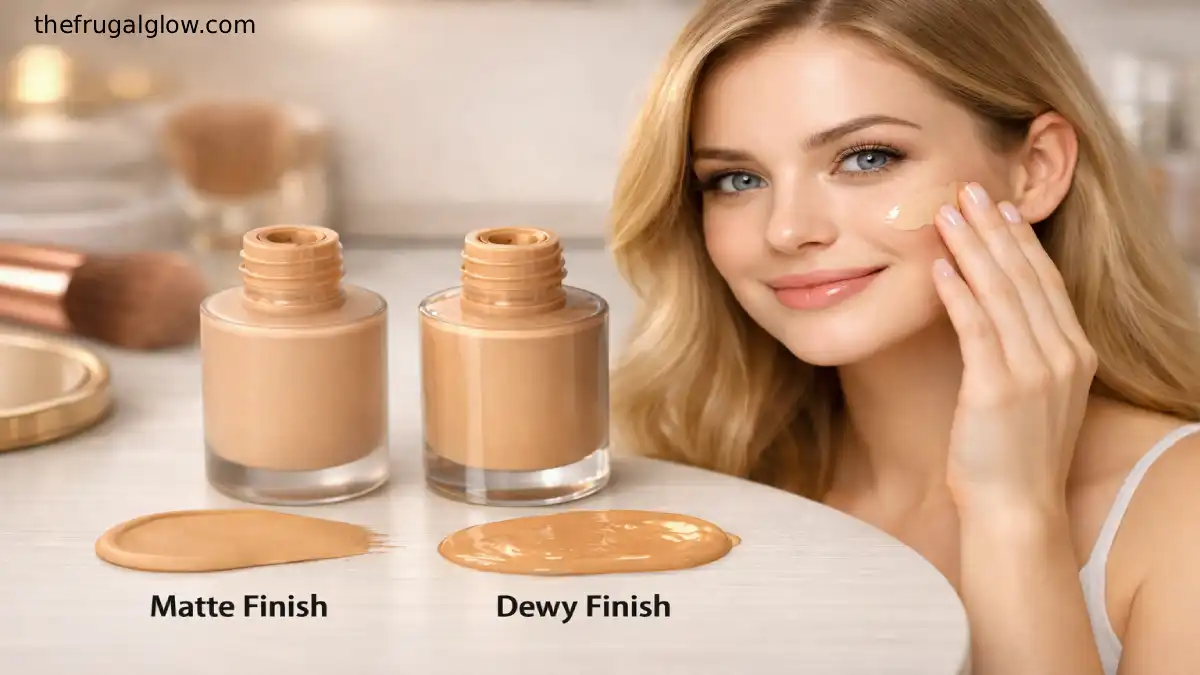
- Matte vs. Dewy: The Core Differences
- Choosing Your Finish by Skin Type
- Budget Formula Checklist: What $12 or Less Should Still Deliver
- Signs You’ve Chosen the Wrong Finish for Your Skin
- Powder, Cream, and Liquid: How Formula Type Interacts With Finish
- How to Apply Matte Foundation for the Best Results
- How to Apply Dewy Foundation for the Best Results
- The Zone-Matching Method for Combination Skin
- Common Mistakes With Each Finish Type
- When to Switch Finishes Based on Season or Occasion
- Cost Breakdown: Budget vs. Luxury for Each Finish
- The Bottom Line
- FAQ
Why “Which Finish Is Better” Is the Wrong Question
I spent way too long treating “matte or dewy” like it was a personality quiz answer instead of an actual skin-compatibility question. I bought a gorgeous dewy foundation because everyone online was raving about the “glass skin” look, wore it exactly twice, and spent both days blotting my T-zone every hour because my combination skin turned that luminous glow into straight-up shine by 10 a.m.
The real issue wasn’t the foundation, it was that I never stopped to ask whether a dewy finish was actually compatible with my skin’s oil production in the first place. I’d been choosing my foundation finish the same way I picked out a new lipstick shade, based purely on what looked pretty in a photo, without giving a single thought to how that formula would actually behave against my specific skin’s oil and hydration levels over an eight-hour day. Once I started matching finish type to actual skin behavior instead of trends, and started reading ingredient lists on budget formulas instead of assuming price determined quality, my foundation routine finally started working with my skin instead of against it.
This guide breaks down the real, dermatologist-backed differences between matte and dewy formulas, how to figure out which one your specific skin type needs, and how to find genuinely solid options under $12 so you’re not stuck choosing between your skin’s comfort and your budget.
What Dermatologists Actually Say About Matte vs. Dewy
This distinction isn’t just a marketing preference, it’s rooted in real differences in how these formulas interact with skin. Board-certified dermatologist Leslie Baumann has specifically cautioned that the rich ingredients and plant oils commonly found in dewy formulas can contribute to greasy skin, clogged pores, and breakouts for people whose skin already produces excess oil. This is a genuinely important consideration for anyone with oily or acne-prone skin who’s drawn to the trendy, glowy look without factoring in how their specific skin type will respond to it.
On the flip side, dermatologists have also pointed out that matte formulas aren’t universally ideal either. Matte foundations work primarily by absorbing oil and controlling shine, which is genuinely beneficial for oily and combination skin, but that same oil-absorbing mechanism can make already-dry skin look more textured, dull, or flaky, since it’s actively pulling moisture-adjacent components away from a skin type that’s already lacking in them. This is exactly why a one-size-fits-all recommendation, whether it comes from a friend’s glowing review or a viral social media trend, so often falls flat once it meets a different reader’s actual skin.
The consistent expert guidance across both dermatology and professional makeup artistry circles points toward the same conclusion: there isn’t a universally “better” finish, only a finish that’s better matched to your specific skin’s oil production and hydration needs. This matters just as much (arguably more) than which specific product or price tier you choose within that finish category. Once you internalize that framing, shopping for foundation becomes a much simpler exercise: instead of asking which finish is trending or which one a favorite influencer swears by, you’re asking a far more practical question, which formula actually behaves well against your specific skin for eight or more hours at a stretch.
Matte vs. Dewy: The Core Differences
| Factor | Matte Finish | Dewy Finish |
|---|---|---|
| Core mechanism | Absorbs oil, controls shine | Adds luminosity, reflects light |
| Common key ingredients | Silica, clay, oil-absorbing powders | Glycerin, hyaluronic acid, light-reflecting particles |
| Best skin compatibility | Oily, combination, acne-prone | Dry, normal, mature |
| Typical wear time | Longer-lasting, more resistant to shine breakthrough | May need more frequent touch-ups in warm or humid conditions |
| Visual effect | Smooth, velvety, blurred texture | Luminous, “your skin but better” glow |
| Coverage tendency | Often higher, more buildable coverage | Often more sheer to medium, buildable coverage |
Neither finish is objectively superior, they’re simply built to solve different skin behaviors. Choosing based on your actual skin type rather than which finish is trending will get you a far better day-to-day result than following the latest viral makeup trend without considering compatibility.
Choosing Your Finish by Skin Type
| Skin Type | Recommended Finish | Why |
|---|---|---|
| Oily | Matte, or a soft “natural matte” hybrid | Oil-absorbing ingredients help control shine and extend wear time throughout the day |
| Dry | Dewy | Hydrating ingredients like glycerin and hyaluronic acid prevent foundation from emphasizing flaky or textured areas |
| Combination | Zone-matching (matte on T-zone, dewy on cheeks) or a balanced satin finish | Addresses different oil levels across different areas of the face |
| Acne-prone | Lightweight matte or oil-free formula, avoid heavy dewy oils | Heavy dewy formulas with rich oils can occasionally exacerbate breakouts on already reactive skin |
| Mature | Dewy or luminous satin | Hydrating, light-reflecting formulas tend to sit better in fine lines than flat matte formulas, which can emphasize texture |
| Normal | Either, based on preference | Normal skin generally tolerates both finish types well, making this mostly a style choice |
Budget Formula Checklist: What $12 or Less Should Still Deliver
Just because you’re shopping in the budget range doesn’t mean you should settle for a formula that fights against your skin type. Here’s what to actually look for on the label, regardless of price.
| For a Matte Formula, Look For | For a Dewy Formula, Look For |
|---|---|
| Silica or clay listed among the first several ingredients | Glycerin or hyaluronic acid listed among the first several ingredients |
| “Oil-free” or “non-comedogenic” labeling for acne-prone skin | “Hydrating,” “luminous,” or “radiant” labeling |
| Talc or silica-based setting powders for touch-ups | Light-reflecting particles like mica for a natural glow |
| Buildable coverage claims for texture-concealing needs | Serum-based or “skin tint” style formulas for a lightweight feel |
Reading ingredient lists is just as valuable in the budget aisle as it is anywhere else, since a well-formulated $10 matte foundation with genuine oil-absorbing ingredients will outperform a poorly formulated $30 one that’s mostly marketing language without the ingredients to back it up.
Signs You’ve Chosen the Wrong Finish for Your Skin
Sometimes the clearest way to understand whether your current finish is working is to look at how your skin behaves throughout the day. Here’s a quick diagnostic to help pinpoint whether a finish switch might solve issues you’ve been blaming on the foundation formula itself.
| Symptom by Midday | Likely Cause | Suggested Fix |
|---|---|---|
| Foundation looks greasy or has visibly “slid” around the T-zone | Dewy formula on oily or combination skin | Switch to matte, or zone-match with oil control on the T-zone |
| Foundation looks dry, patchy, or emphasizes fine lines | Matte formula on dry or mature skin | Switch to a hydrating dewy formula, or add more moisture in skin prep |
| Foundation looks fine in the morning but breaks down by early afternoon | Insufficient oil control for genuinely oily skin type | Try a longer-wear matte formula with stronger oil-absorbing ingredients |
| Foundation looks flat and lifeless despite good coverage | Overuse of powder on top of a matte formula | Reduce powder application, or switch to a satin or dewy finish for more natural depth |
| Breakouts increased after switching to a dewy formula | Rich oils in the formula clogging already-reactive pores | Switch to an oil-free, non-comedogenic option regardless of finish preference |
If you’re consistently running into one of these patterns despite trying different budget products within the same finish category, it’s a strong signal that the finish type itself, not the specific brand or price point, is the actual mismatch worth addressing.
Powder, Cream, and Liquid: How Formula Type Interacts With Finish
Beyond matte versus dewy, the base formula type, powder, cream, or liquid, also plays a meaningful role in how a finish ultimately performs on your skin, and it’s worth understanding this layer too when shopping on a budget.
| Formula Type | Typical Finish Tendency | Best For |
|---|---|---|
| Liquid | Can be formulated as either matte or dewy, most versatile | Most skin types, easiest to build coverage gradually |
| Cream | Tends to lean dewy or satin, richer texture | Dry or mature skin needing more moisture and coverage |
| Powder | Tends to lean matte, lightweight application | Oily skin, quick touch-ups, hot climates |
| Stick | Varies widely by specific formula, generally more portable | On-the-go application, travel, quick touch-ups |
Liquid formulas tend to offer the most flexibility for budget shoppers specifically, since drugstore liquid foundation lines frequently offer both a matte and a dewy or luminous version within the same product line, at the same accessible price point, letting you match your skin type without switching brands entirely or hunting across different price categories. This kind of side-by-side availability makes it easier to experiment and compare directly, since you’re testing the finish variable in relative isolation rather than also changing brand formulation, texture, or coverage level all at once.
How to Make a $5 Drugstore Foundation Look Like a $50 Luxury Finish
How to Apply Matte Foundation for the Best Results
- Start with a mattifying, oil-control primer. This creates a smoother base for the matte formula to grip onto and extends wear time.
- Apply in thin layers, building coverage only where needed. Matte formulas can look heavy quickly if over-applied, since they don’t have the light-reflecting quality that helps dewy formulas hide minor unevenness.
- Use a damp sponge or dense buffing brush for a smooth, airbrushed effect. Dragging strokes with a matte formula tends to show streaking more than with dewy formulas.
- Set only oil-prone areas with translucent powder. Over-powdering the entire face can push a matte look from “smooth” into “flat and cakey.”
- Carry blotting papers rather than reapplying foundation throughout the day. Since matte formulas are designed to last, a quick blot is usually enough to refresh your look without needing to reapply product.
How to Apply Dewy Foundation for the Best Results
- Prioritize hydrating skin prep. Since dewy foundation’s glow comes partly from the health of the skin underneath it, well-moisturized skin significantly improves the final look.
- Apply with a damp makeup sponge for the most natural, skin-like finish. This tool helps sheer out dewy formulas evenly rather than leaving streaky, uneven glow.
- Avoid heavy powder application, which flattens the luminous effect. If you need to set certain areas, use the lightest possible dusting, focused only where truly necessary.
- Layer a cream blush or highlighter on top for enhanced glow, applied before setting spray. This builds on the dewy effect rather than competing with it.
- Finish with a hydrating setting spray rather than a mattifying one. A mattifying spray can undercut the entire point of a dewy finish.
The Zone-Matching Method for Combination Skin
If you’re dealing with an oily T-zone and drier cheeks, a common frustration for combination skin, choosing one finish for your entire face often means compromising somewhere. Zone-matching solves this by treating different areas of your face differently, based on their individual oil and hydration needs, rather than forcing a single finish across your whole complexion.
- Apply a lightweight, hydrating base or dewy foundation across your entire face first, including your T-zone.
- Layer a small amount of oil-absorbing powder or matte concealer specifically over your T-zone, where oil tends to concentrate throughout the day.
- Leave your cheeks and other drier areas unset, or set them only very lightly, to preserve the natural glow in areas that need it most.
- Touch up only the T-zone as needed throughout the day, using blotting papers or a small amount of translucent powder, rather than reapplying foundation across your whole face.
This approach, increasingly recommended by both makeup artists and dermatologists for combination skin specifically, tends to produce a more balanced, natural-looking result than committing fully to either a purely matte or purely dewy approach across the entire face. It also has the added benefit of working with budget products from either category, since you don’t need a single specialized “combination skin” formula, just a smart combination of two accessible, inexpensive products used strategically across different areas of your face.
The $8 Drugstore Primers That Fill Pores Better Than High-End Brands
Common Mistakes With Each Finish Type
Matte foundation mistakes:
- Over-applying, which can emphasize texture and create a heavy, mask-like look rather than the intended smooth finish
- Skipping hydration underneath, which can leave already-dry areas looking even more textured and dull under a matte formula
- Setting the entire face with powder rather than just oil-prone zones, which flattens the finish and can look aging
Dewy foundation mistakes:
- Applying too heavily on oily skin, which tends to slide and look greasy rather than luminous within a few hours
- Skipping any powder at all on combination or oily-adjacent areas, letting shine build up unchecked
- Choosing a very rich, oil-heavy dewy formula on acne-prone skin, which can occasionally worsen breakouts
When to Switch Finishes Based on Season or Occasion
| Situation | Recommended Finish |
|---|---|
| Hot, humid summer days | Matte, or a long-wear satin finish |
| Cold, dry winter months | Dewy, to counteract seasonal dryness |
| Special occasion photos, evening events | Satin or soft matte, since heavy matte can look flat under camera flash while heavy dewy can look overly shiny |
| Everyday, low-key makeup days | Whichever finish matches your natural skin type most closely |
| Active or long workdays with little touch-up time | Matte, for its generally longer wear time without reapplication |
Your skin’s needs can genuinely shift with the seasons, so it’s worth having at least one budget option from each finish category on hand rather than committing permanently to just one, especially if you live somewhere with significant seasonal humidity or temperature swings. Keeping both a matte and a dewy formula in rotation, rather than treating your skin type as a fixed, permanent label, tends to lead to better results year-round than any single “best for your skin type” product ever could on its own.
Cost Breakdown: Budget vs. Luxury for Each Finish
| Finish Type | Budget Option (Under $12) | Luxury Option ($40-65) | Core Ingredient Overlap |
|---|---|---|---|
| Matte | $6-12 | $42-60 | Silica and oil-absorbing agents commonly appear in both tiers |
| Dewy | $7-12 | $45-65 | Glycerin and hyaluronic acid commonly appear in both tiers |
Since the core functional ingredients responsible for each finish’s effect are frequently present across both budget and luxury formulas, the price difference tends to reflect packaging, added skincare extras, and brand marketing more than a fundamentally different mechanism at work in the formula itself.
The Bottom Line
The matte-versus-dewy debate isn’t really about which finish is objectively better, it’s about which one is actually compatible with your skin’s oil production and hydration levels, a point dermatologists have been consistent about. Oily and acne-prone skin generally does better with a matte or lightweight, oil-free formula, while dry and mature skin tends to benefit from the hydrating ingredients in a dewy finish, and combination skin often does best with a zone-matched hybrid approach. None of this requires spending big, since well-formulated budget options under $12 exist for every one of these categories, as long as you know what to actually look for on the ingredient label. Take the time to actually observe how your own skin behaves by midday, rather than assuming a trend or a bottle’s price tag will tell you what you need to know, and the rest of the decision tends to fall into place fairly quickly.
For more honest, budget-friendly beauty guidance like this one, check out The Frugal Glow for more comparisons that help you shop smarter, not just cheaper.
FAQ
Is dewy foundation bad for oily skin?
It can be problematic for some people, since dermatologists have noted that the rich oils in many dewy formulas can contribute to greasiness and clogged pores on skin that already produces excess oil. Lightweight “waterlight” dewy formulas are a gentler alternative if you still want some glow.
Can dry skin wear matte foundation?
Yes, but it requires extra hydrating prep beforehand and ideally a matte formula that includes hydrating ingredients like hyaluronic acid, since a pure oil-absorbing matte formula can otherwise emphasize dry patches and texture.
What’s the best approach for combination skin?
Zone-matching, applying a hydrating or dewy base overall and layering oil control specifically on the T-zone, tends to work better than committing fully to one finish across the entire face.
Do I need to spend more than $12 to get a good matte or dewy foundation?
Not necessarily. Many budget formulas contain the same core functional ingredients, like silica for matte formulas or glycerin and hyaluronic acid for dewy ones, found in far more expensive versions.
Can I switch finishes based on the season?
Yes, and many people benefit from doing so. Dewy finishes tend to work well in colder, drier months, while matte finishes often perform better during hot, humid weather.
How do I know which finish my skin actually needs?
Pay attention to how your skin behaves by midday without any makeup on. If you notice significant shine, especially in your T-zone, a matte or hybrid approach is likely a better fit. If your skin feels tight or looks dull and flaky, a dewy finish will likely serve you better.