
How to Use Rice Water as a $0 Brightening Facial Toner (The Traditional Asian Glow Secret)
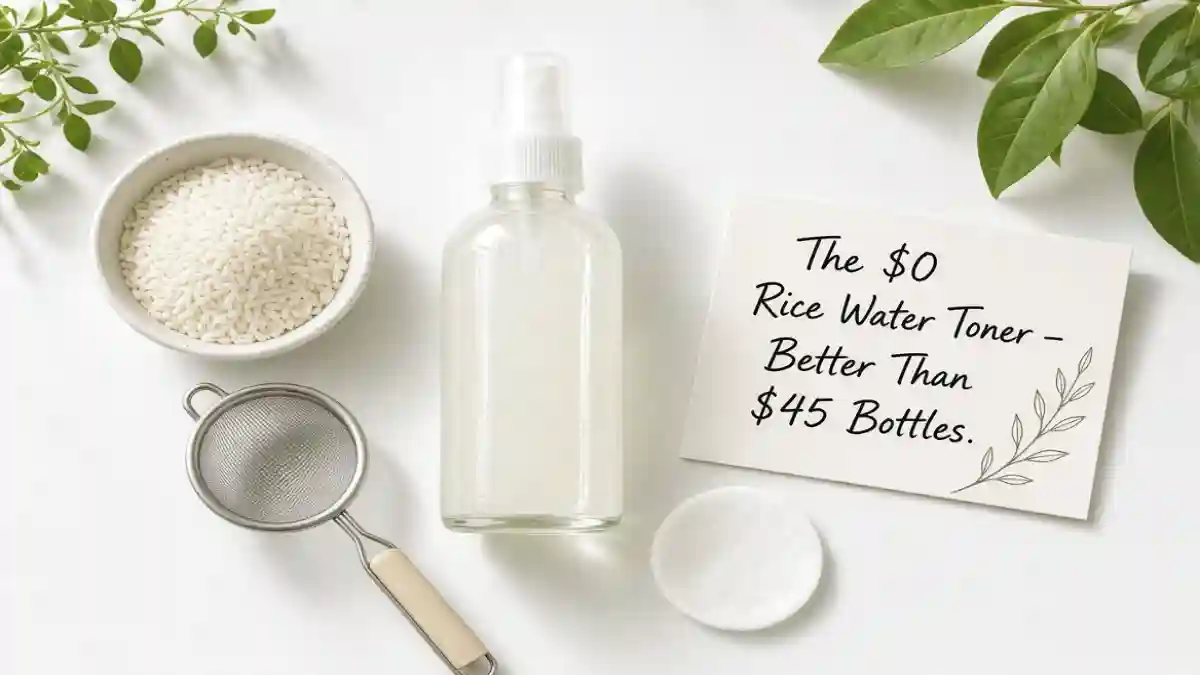
The $45 rice toner was sitting on my shelf. It came in a frosted glass bottle with a minimalist label. It promised “glass skin” and “traditional Korean wisdom.” I had bought it because everyone on TikTok said it was the secret to that lit-from-within glow.
Then I looked at the ingredient list. Rice extract. Water. A few preservatives. That was it.
I went to my kitchen. I grabbed a cup of rice. I soaked it in water. I let it sit overnight. The next morning, I strained the cloudy liquid into a spray bottle. I sprayed it on my face.
My skin looked exactly the same as it did with the $45 toner. Bright. Hydrated. Glowing. And I had just made it for about five cents.
That was the day I learned that the best brightening toner is already in your pantry.
This is the complete guide to using rice water as a $0 brightening facial toner. The science. The methods. The mistakes. And why you should never, ever pay $45 for a bottle of rice water again.
Jump Links
- The Kitchen Ingredient That Costs Nothing (And Does Everything)
- What Rice Water Actually Is (And Why It Works)
- What the Science Says (And What It Doesn’t)
- How to Make Rice Water Toner (The Three Methods)
- The Fermentation Method (The One That Actually Delivers)
- How to Apply It (The Right Way)
- The Rice Water Face Mask (The 15-Minute Glow Trick)
- How to Store It So It Doesn’t Spoil
- My Biggest Mistakes (So You Don’t Make Them)
- Who Should Skip Rice Water
- The Math: What I Saved in One Year
- Frequently Asked Questions (FAQ)
- Final Thoughts: The Glow Was Always in Your Pantry
The Kitchen Ingredient That Costs Nothing (And Does Everything)
Rice water has been used in Asian skincare for centuries. According to dermatologist Dr. Jane Yoo, the folklore traces back to village communities in Japan and China where women reportedly kept smooth, youthful-looking skin partly attributed to washing with the starchy water left over from rinsing rice .
Korean beauty brands modernized the tradition into toners, essences, and cleansers built around fermented rice extract. But the original version—the one that cost nothing—is still the most frugal way to get the benefits.
Why it’s free: If you cook rice, you already have rice water. It’s the cloudy liquid left over from rinsing or soaking the grains. You were going to pour it down the drain. Now you’re going to put it on your face.
What it contains: Raw rice water contains starches, small amounts of vitamins, minerals, and antioxidants . It’s rich in amino acids, B vitamins, and ferulic acid—a powerful antioxidant that protects the skin from environmental damage .
What it does: Rice water is mildly hydrating, gently soothing, and offers a light brightening effect over time. It’s not a miracle cure. It’s a gentle, supportive ingredient that makes your skin look healthier and more radiant with consistent use .
What a dermatologist told me: “Rice water is a nice-to-have in a hydrating toner. It’s gentle, it’s low-risk, and it’s free. But it’s not a substitute for proven actives like vitamin C or sunscreen for pigmentation concerns” .
What Rice Water Actually Is (And Why It Works)
Rice water isn’t a complicated product. It’s the water that’s left after you soak, rinse, or cook rice. The water-soluble compounds from the rice—starches, amino acids, vitamins—diffuse into the water, creating a cloudy, slightly milky liquid.
The key compounds:
- Amino acids (including proline): The building blocks of proteins like collagen and elastin. They help strengthen the skin barrier and maintain moisture balance .
- Ferulic acid: A powerful antioxidant that protects against UV damage and helps fade dark spots .
- Allantoin: A soothing compound that calms irritation and supports skin repair .
- B vitamins: Including inositol, niacin, B6, and B2, which can help reduce melanin production and brighten the skin .
- Starches: Create a fine film on the skin that helps retain moisture without clogging pores .
How it works on the skin: The starches and amino acids provide mild hydration and create a protective barrier. The antioxidants neutralize free radicals that cause dullness and premature aging. The B vitamins may help inhibit melanin production, leading to a gradual brightening effect .
What it doesn’t do: Rice water won’t dramatically fade hyperpigmentation, won’t replace sunscreen, and won’t deliver retinoid-level renewal. It’s a gentle, supportive ingredient, not a treatment for serious skin concerns .
What the Science Says (And What It Doesn’t)
Let me give you the actual research. Because the claims around rice water are often exaggerated.
The good news: A scientific analysis summarized in Vogue noted that “ingredients isolated from rice and its components have wide potential for use in skincare and cosmetic products.” The report found that rice-derived ingredients are “anti-aging, anti-inflammatory, whitening, photoprotective, and moisturizing” .
The specific findings: Rice bran extract has been shown to help with atopic dermatitis. Rice-derived ingredients may support skin barrier function and hydration. Ferulic acid, one of the key compounds in rice water, is a well-studied antioxidant .
The caveat: Most of the research is on rice extract or fermented rice extract, not raw DIY rice water. Commercial products use concentrated, stabilized forms of rice extract. The DIY version is more dilute and less stable .
What a dermatologist says: “Rice water’s reputation traces back generations. But dramatic claims of rice water alone curing hyperpigmentation or replacing sunscreen aren’t supported by evidence. It’s a gentle, supportive ingredient” .
The bottom line: Rice water is a legitimate, gentle toner with mild brightening and hydrating benefits. It’s not a miracle. It’s not a cure. But it’s free, it’s safe for most skin types, and it works.
How to Make Rice Water Toner (The Three Methods)
There are three main ways to make rice water at home. Each has its own advantages and disadvantages .
Method 1: The Quick Soak (30 Minutes)
This is the fastest method. It’s great if you need toner today.
Instructions:
- Rinse 1/2 cup of rice with water to remove surface impurities. Discard the first rinse water.
- Place the rinsed rice in a bowl and add 1.5 to 2 cups of filtered water.
- Let it soak for 30 minutes to an hour. The water will become cloudy.
- Strain the water into a clean bottle or spray bottle.
- Store in the refrigerator.
What you get: A light, mildly concentrated rice water. It’s gentle and good for daily use. The shelf life is about 3-4 days in the refrigerator .
Best for: Beginners, sensitive skin, and anyone who wants a quick, gentle toner.
Method 2: The Cooking Water (Concentrated)
This method uses the water left over from cooking rice. It’s more concentrated than the soak method.
Instructions:
- Cook rice as you normally would, but don’t add salt.
- Once the rice is cooked, strain the excess cooking water into a clean container.
- Let it cool completely.
- Store in the refrigerator.
What you get: A more concentrated, starchier rice water. It’s thicker and more hydrating. The shelf life is about 3-5 days in the refrigerator .
Best for: Dry skin, anyone who wants a more intensive hydrating treatment.
Method 3: The Fermentation (The One That Actually Delivers)
This is the traditional method, and it’s the one that maximizes the benefits. Fermentation breaks down the compounds in rice water, making them more bioavailable and creating probiotics that support the skin microbiome .
Instructions:
- Rinse 1/2 cup of rice with water. Discard the first rinse.
- Place the rinsed rice in a clean glass jar and add 2 cups of filtered water.
- Cover the jar loosely with a clean cloth or lid (not airtight).
- Let it sit at room temperature for 24-48 hours. You’ll notice bubbles forming and a slightly sour smell.
- Strain the liquid into a clean bottle.
- Store in the refrigerator.
What you get: A fermented, probiotic-rich rice water with enhanced brightening and balancing properties. The fermentation process creates lactic acid, which matches the pH of your skin and supports the microbiome .
Best for: Anyone who wants maximum benefits, especially those with acne-prone or unbalanced skin.
The warning: Fermented rice water is stronger. Do a patch test first. If you have sensitive skin, dilute it 1:1 with water before use .
The Fermentation Method (The One That Actually Delivers)
If you’re going to do one thing, do this. The fermentation method is the traditional way, and it’s the one that delivers the most benefits.
Why fermentation matters: According to Dr. Berg, when you ferment rice water, “you’ll have more lactic acid, which matches the pH of your skin. This good bacteria in yeast supports the microbiome in your skin, giving you tighter pores and less acne” .
The timeline: 24-48 hours at room temperature. After 24 hours, taste a small amount. It should have a tangy, slightly fermented flavor. If it’s still mild, let it go another 12-24 hours .
How to know it’s ready: Small bubbles on the surface. A slightly sour, tangy smell. A cloudy, milky appearance.
What to do with the rice: Don’t throw it away. Cook it and eat it. The fermentation process doesn’t ruin the rice—it just extracts some of the compounds into the water.
The safety note: Fermented rice water can harbor bacteria if not stored properly. Keep it in the refrigerator. Use it within 5-7 days. If it smells off or looks moldy, throw it out .
How to Apply It (The Right Way)
Rice water is a toner. Use it like a toner. Here’s the correct application method.
Step 1: Cleanse your face.
Start with a clean face. Remove makeup, sunscreen, and impurities.
Step 2: Apply the rice water.
Pour a small amount onto a cotton pad or into your palms. Gently pat it onto your face and neck. Don’t rub—patting helps the skin absorb the liquid more effectively .
Step 3: Let it sit (optional).
You can let it sit for 5-10 minutes before moving on to your next step. Some people rinse it off after 10 minutes, especially if they have sensitive skin. Others leave it on .
Step 4: Follow with serum and moisturizer.
Rice water is a hydrating layer, not a replacement for your serum or moisturizer. Follow with your usual routine.
How often: Start with 2-3 times per week to assess tolerance. If your skin responds well, you can use it once or twice daily .
The cotton pad trick: Soak cotton pads in rice water and use them as a DIY sheet mask. Leave them on for 15 minutes for a hydrating, “baby-soft” effect .
The ice cube trick: Freeze rice water into ice cubes. Rub a cube over your face in the morning to reduce puffiness and tighten the appearance of pores .
The Rice Water Face Mask (The 15-Minute Glow Trick)
This is the easiest upgrade to your rice water routine. It takes 15 minutes and delivers an instant glow.
What you need:
- Rice water (fermented or fresh)
- Cotton pads or a thin cloth
Instructions:
- Soak 3-4 cotton pads in rice water.
- Squeeze out the excess liquid so they’re damp, not dripping.
- Apply the pads to your face, covering your cheeks, forehead, and chin.
- Leave them on for 15 minutes.
- Remove the pads and pat the remaining liquid into your skin.
- Follow with moisturizer.
Why it works: The prolonged contact allows the rice water to hydrate and soothe more effectively than a quick swipe. The result is softer, smoother, more radiant skin .
The K-beauty influencer trick: Ava Lee, a Korean beauty influencer, recommends this exact method. She says the “baby face effect is assured” after just 15 minutes .
How to Store It So It Doesn’t Spoil
Rice water has no preservatives. That means it can spoil. Here’s how to store it so it lasts.
Refrigerate it. Always. Rice water should be stored in the refrigerator. Room temperature accelerates spoilage .
Use a clean glass bottle. Glass doesn’t leach chemicals. It’s also easier to clean.
Make small batches. Don’t make more than you’ll use in 5-7 days. It’s better to make fresh batches than to have spoiled rice water.
Check for spoilage. If the water smells off, looks cloudy in a bad way, or has visible mold, throw it out. Don’t risk it .
The freezer trick: Freeze rice water in ice cube trays. Thaw a cube when you need it. This extends the shelf life by months .
The timeline: Fresh rice water (soak method): 3-4 days. Fermented rice water: 5-7 days. Cooked rice water: 3-5 days .
My Biggest Mistakes (So You Don’t Make Them)
I made plenty of mistakes when I first started using rice water. Learn from me.
Mistake #1: Not rinsing the rice first.
My first batch was made from unrinsed rice. It was gritty and smelled like dust. Always rinse the rice 2-3 times before soaking. Discard the first rinse water .
Mistake #2: Using white refined rice instead of organic brown rice.
White rice has been stripped of its nutrients. Dermatologist Anna Claudia Butera says raw, unprocessed rice—like organic brown rice—is better because the nutrients are concentrated in the outer layers .
Mistake #3: Leaving it out at room temperature.
I left my first batch on the counter. It spoiled within two days. Refrigerate it immediately after straining .
Mistake #4: Not doing a patch test.
I applied rice water to my whole face without testing it first. I had a mild reaction. Always patch test on your inner arm first .
Mistake #5: Expecting overnight results.
Rice water is gentle. It takes weeks of consistent use to see a difference. Don’t give up after three days.
Mistake #6: Using it too often without diluting.
Fermented rice water is strong. If you have sensitive skin, dilute it 1:1 with water before use .
Mistake #7: Not straining thoroughly.
Small rice particles clogged my spray bottle and left residue on my face. Strain through a fine-mesh strainer or cheesecloth .
Who Should Skip Rice Water
Rice water isn’t for everyone. Here are the cases where you should skip it.
If you’re allergic to rice. Rare, but real. If you have a known rice allergy, don’t use it.
If you have very sensitive skin. Patch test first. Some people react to the starches or enzymes in rice water .
If you have a compromised skin barrier. Rice water is gentle, but if your skin is already irritated, wait until it heals.
If you’re prone to fungal acne. Rice water contains starches, which can feed yeast. If you have fungal acne, skip it.
If you’re pregnant or breastfeeding. Consult your doctor before using any new skincare ingredient.
What a dermatologist says: “Rice water is generally safe for most skin types. It’s gentle and low-irritation. But patch-test new products” .
The Math: What I Saved in One Year
Let me break down the actual dollars.
If I bought commercial rice toner:
| Item | Cost | How Often | Annual Cost |
|---|---|---|---|
| Rice toner (100ml) | $25 | Every 2 months | $150 |
What I actually spend:
| Item | Cost | How Often | Annual Cost |
|---|---|---|---|
| Rice (1/2 cup per batch) | $0.10 | Weekly | $5.20 |
| Filtered water | $0.05 | Weekly | $2.60 |
| Total | ~$8 |
Annual savings: $142
Over 5 years: $710
And my rice water is fresher, more potent, and completely free of preservatives.
📌 YOU MIGHT ALSO LIKE:
Why I Stopped Buying $50 Scrubs and Swapped to a $1 Brown Sugar and Honey Polish
The $2 Pantry Face Shield: How to Use Pure Cold-Pressed Olive Oil for Winter Dryness
Frequently Asked Questions (FAQ)
1. Does rice water really brighten the skin?
It may offer a mild, gradual brightening effect from consistent hydration and gentle antioxidants, but it isn’t a substitute for proven treatments for hyperpigmentation . The B vitamins and ferulic acid in rice water may help inhibit melanin production over time .
2. How often should I use rice water toner?
Start with 2-3 times per week to assess tolerance. If your skin responds well, you can use it once or twice daily .
3. How long does homemade rice water last?
Fresh rice water lasts 3-4 days in the refrigerator. Fermented rice water lasts 5-7 days. If it smells off or looks moldy, throw it out .
4. Should I rinse rice water off after applying it?
It depends. If you’re using it as a toner, you can leave it on. If you have sensitive skin, you may want to rinse it off after 10 minutes. Listen to your skin .
5. Can I use rice water if I have acne-prone skin?
Yes, but fermented rice water is better for acne-prone skin. The fermentation process creates lactic acid, which balances the skin’s pH and supports the microbiome . Rice water also has mild mattifying properties that can help control oil .
6. What’s the difference between white rice and brown rice for rice water?
Brown rice is better. White rice is refined and stripped of nutrients. Brown rice retains the bran and germ, where most of the vitamins and antioxidants are concentrated .
7. Can I use rice water with other skincare ingredients?
Yes. Rice water is a gentle, supportive toner that layers well with serums and moisturizers. It’s not photosensitizing, so it’s safe for daytime use .
8. Is rice water safe for sensitive skin?
Generally yes. It’s a gentle, low-irritation ingredient. But patch-test first, especially if you have very reactive skin . If you’re using fermented rice water, dilute it 1:1 with water .
Final Thoughts: The Glow Was Always in Your Pantry
The $45 rice toner is sitting on a shelf somewhere. My five-cent rice water is in my refrigerator. My skin is bright, hydrated, and glowing. And I didn’t break the bank to get it.
Rice water isn’t a miracle. It won’t cure hyperpigmentation. It won’t replace sunscreen. It won’t give you glass skin overnight. But it’s a gentle, effective, free toner that has been used for centuries for a reason.
The $0 routine:
- Rinse 1/2 cup of rice
- Soak in 2 cups of filtered water for 30 minutes (or ferment for 24-48 hours)
- Strain into a clean bottle
- Store in the refrigerator
- Apply to clean skin with a cotton pad
- Follow with serum and moisturizer
That’s it. A complete brightening toner for the price of the rice you were going to cook anyway.
I’ve been using rice water for over a year. My skin is brighter, my pores are smaller, and my wallet is happier. And I’ve saved over $140.
That’s not cheap. That’s smart.
That’s the frugal glow. And it’s waiting for you in your kitchen. 🍚💛
*For more DIY skincare recipes, budget beauty strategies, and money-saving wellness advice, visit The Frugal Glow.*