

How to Store Costume Jewelry to Prevent Tarnishing: 5 Free Household Tricks
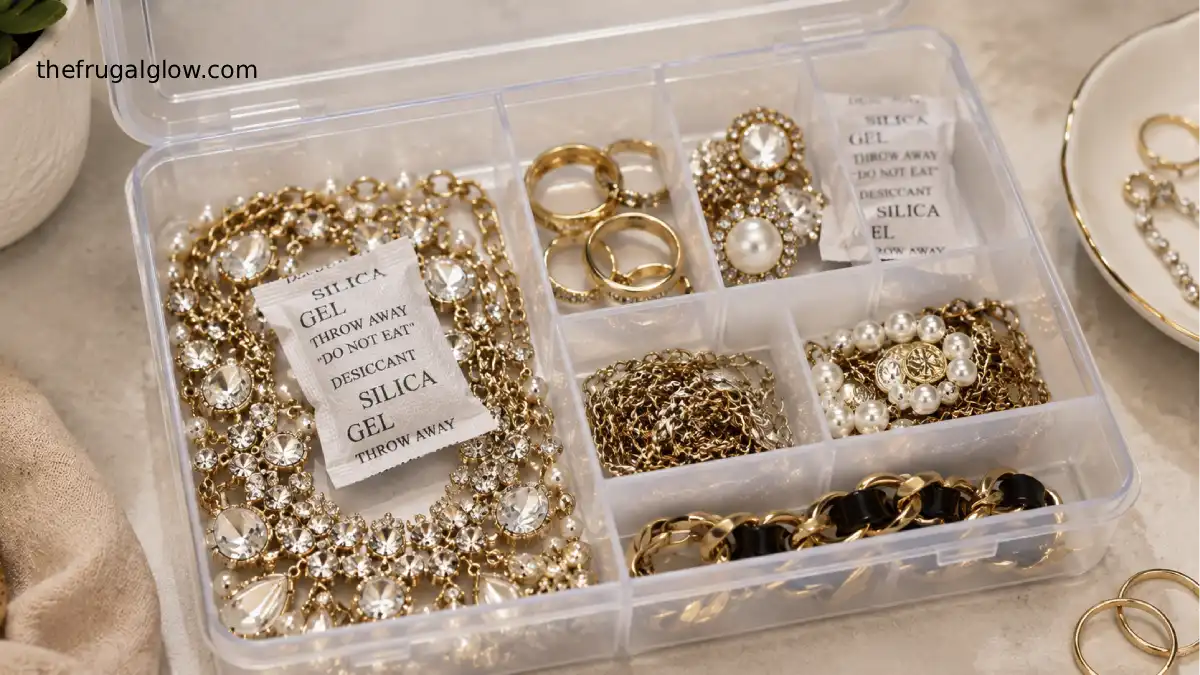
Nothing kills a good outfit faster than reaching for your favorite statement necklace and finding it dull, dark, or blotchy from tarnish. You didn’t do anything “wrong” — this is just what happens to most jewelry over time, especially the budget-friendly costume pieces that make up most people’s everyday rotation. The frustrating part is that a lot of jewelry care advice assumes you’re going to buy special anti-tarnish pouches, silica packets, or storage boxes. Here’s the actual good news: you almost certainly already own everything you need to stop tarnish before it starts, and none of it costs a single extra dollar.
These five tricks all target the same root cause — air, humidity, and sulfur exposure — using things that are already sitting in your kitchen, bathroom, or junk drawer.
Jump Links
- Why Costume Jewelry Tarnishes So Fast (And the Chemistry Behind It)
- Trick 1: Reuse Silica Gel Packets
- Trick 2: Ziploc Bags as Airtight Storage
- Trick 3: A Stick of Chalk in the Storage Container
- Trick 4: Cotton Balls as a Moisture Buffer
- Trick 5: Repurposed Egg Cartons or Pill Organizers
- Free Trick Comparison Table
- What to Avoid When Storing Jewelry
- Material-Specific Storage Notes
- FAQ
- The Bottom Line
Why Costume Jewelry Tarnishes So Fast (And the Chemistry Behind It)
Most costume jewelry is crafted from base metal alloys—such as brass, copper, nickel, or thin metallic plating—rather than inert precious metals like solid gold or platinum. Because these base metals possess a high chemical reactivity, they are constantly interacting with the elements in their immediate surroundings.
Here is the crucial detail most people miss: tarnish isn’t just everyday dirt or dust sitting on top of the metal. It is an actual chemical reaction (specifically, oxidation) happening directly on the surface.
When silver-toned or brass pieces are exposed to oxygen and sulfur-containing gases in the air, a dark, chemical byproduct forms, destroying the metal’s shine. Ambient humidity acts as the ultimate catalyst, speeding this entire degradation process up significantly.
This is exactly why leaving your favorite rings on a humid bathroom counter or tossed in an open decorative dish guarantees they will tarnish weeks faster than jewelry stored somewhere dry, dark, and airtight.
The Hidden Danger in Common Storage Materials
There is also a sneaky, counterintuitive detail that most jewelry lovers never learn until the damage is already done: the very materials you use to wrap, pack, or protect your jewelry could be actively destroying it.
According to the jewelry supply experts at Halstead, many everyday household papers and manufacturing materials emit tarnish-causing gases over time. Items like printed tissue paper, standard newspaper, and even certain craft papers or cardboard boxes contain sulfur-based dyes and acidic chemical compounds used during their production.
When you wrap your delicate costume pieces in these materials, you aren’t shielding them from the environment—you are actually trapping them inside a mini chemical chamber that accelerates tarnishing rather than preventing it.
This means that how you store your jewelry dictates its lifespan just as much as whether you store it at all. Fortunately, making a few free, strategic swaps in your daily routine can make a massive difference in preserving that brand-new sparkle.
Trick 1: Reuse Silica Gel Packets
Those little “do not eat” packets that come inside new shoes, handbags, vitamin bottles, and electronics aren’t trash — they’re a genuinely effective, completely free tarnish-prevention tool. Silica gel absorbs moisture from the air around it, and since humidity is one of the two biggest tarnish accelerators (right alongside sulfur exposure), keeping the air around your jewelry dry slows the whole reaction down significantly.
How to use it:
- Save every silica packet that comes with new purchases instead of tossing them.
- Drop one or two packets into each jewelry storage bag, box, or drawer compartment.
- Replace them every few months, or whenever you notice they feel less rigid (a sign they’ve absorbed as much moisture as they can hold).
This one costs literally nothing extra since the packets show up in things you’re already buying.
Trick 2: Ziploc Bags as Airtight Storage
Plain sandwich or snack-sized ziploc bags do almost the same job as a store-bought anti-tarnish pouch, just without the price tag. Since tarnish forms through a reaction with air and sulfur compounds, sealing jewelry away from open air is one of the simplest ways to slow the process dramatically.
How to use it:
- Squeeze as much air out of the bag as possible before sealing (a straw trick works well here — insert a straw, seal around it, suck the air out, then pull the straw and seal completely).
- Store one or two pieces per bag rather than piling several together, since pieces touching each other can transfer tarnish and cause scratching.
- Label each bag if you’re storing several pieces, so you’re not unsealing and resealing bags repeatedly just to find what you’re looking for (which reintroduces air every time).
Trick 3: A Stick of Chalk in the Storage Container
This one sounds almost too simple, but a plain stick of chalk (the kind from a kid’s sidewalk chalk set or an old classroom box) is a natural moisture absorber, working similarly to a mini silica packet.
How to use it:
- Drop one or two pieces of plain white chalk into your jewelry box, drawer, or storage bag.
- Replace the chalk every couple of months, since it does wear down and eventually stops absorbing moisture effectively.
- Avoid colored or scented chalk, since some dyes and additives aren’t ideal for direct contact with jewelry.
It’s a favorite budget trick specifically because most households already have a piece of chalk sitting around from kids’ activities, and a single stick can service an entire jewelry box for weeks.
Trick 4: Cotton Balls as a Moisture Buffer
Plain cotton balls tucked into a jewelry box or storage bag help absorb ambient humidity, especially useful for anyone storing jewelry in a bathroom, bedroom without air conditioning, or any naturally humid space.
How to use it:
- Tuck a few plain cotton balls into the corners of a jewelry box or drawer, or drop one into each individual storage bag alongside the jewelry.
- Swap them out every few weeks in especially humid climates, since cotton has a lower moisture capacity than silica gel and needs more frequent replacement.
- Skip using cotton balls that have been treated with lotion, oil, or makeup remover — you want plain, dry cotton only.
This one works especially well layered with Trick 2 (ziploc bags), since the cotton ball absorbs any residual humidity trapped inside the sealed bag.
Trick 5: Repurposed Egg Cartons or Pill Organizers
Keeping pieces separated is just as important as keeping air out, since jewelry touching other jewelry can transfer tarnish-causing residue and cause surface scratches. An empty, clean egg carton or a plastic weekly pill organizer makes a surprisingly effective free jewelry organizer.
How to use it:
- Wash and thoroughly dry an empty egg carton or pill organizer.
- Place one earring, ring, or small pendant per compartment so nothing touches.
- Combine this with Trick 1 or Trick 3 by tucking a silica packet or small chalk piece into one empty compartment of the same container for added moisture control.
- Store the whole container inside a drawer, away from windows, direct sunlight, and humid areas like bathrooms.
This trick solves two problems at once: it prevents tarnish-causing air exposure between touching pieces, and it keeps your jewelry drawer from turning into a tangled mess.
Free Trick Comparison Table
Here’s how these five free household tricks compare, so you can decide which combination works best for your specific storage situation.
| Trick | Moisture Control | Air Sealing | Best For | Replacement Frequency |
|---|---|---|---|---|
| Reused silica gel packets | Excellent | None on its own | Drawers, boxes, sealed bags | Every 2–3 months |
| Ziploc bags | Low on its own | Excellent | Individual pieces, travel | Reusable indefinitely |
| Chalk sticks | Good | None on its own | Jewelry boxes, drawers | Every 1–2 months |
| Cotton balls | Moderate | None on its own | Humid climates, bathrooms | Every 2–4 weeks |
| Egg cartons / pill organizers | None on its own | Moderate (if lid closes) | Separating and organizing pieces | Reusable indefinitely |
For the best results, most of these tricks work even better paired together — silica packets or chalk inside a sealed ziploc bag, for example, tackles both humidity and air exposure at the same time using two free materials instead of one.
What to Avoid When Storing Jewelry
A few common storage habits actually work against you, even when they seem harmless.
- Printed tissue paper or newspaper. Many contain sulfur-based dyes that can speed up tarnish rather than prevent it — plain, undyed materials are always the safer choice.
- Rubber bands directly touching jewelry. Rubber can react with metal and accelerate tarnish and discoloration on contact.
- Bathroom storage. Bathrooms are naturally humid from showers and steam, making them one of the worst places to store jewelry long-term, even in a nice box.
- Leaving pieces out in open dishes or trays. It looks pretty, but constant air exposure is exactly what speeds up tarnish the most.
- Storing jewelry with lotion, perfume, or makeup residue still on it. Always give pieces a quick wipe with a soft cloth before storing, since leftover product buildup accelerates tarnish just as much as humidity does.
- Piling multiple pieces together in one bag or compartment. Direct contact between pieces increases scratching and can transfer tarnish from one piece to another.
Material-Specific Storage Notes
Different costume jewelry materials react a little differently to air and humidity, so it helps to know what you’re working with.
- Brass and copper-based pieces: Highest tarnish risk of the bunch; benefit the most from airtight, moisture-controlled storage like the ziploc-and-silica combo.
- Gold-plated costume jewelry: The plating itself resists tarnish reasonably well, but the base metal underneath can react once the plating naturally thins with wear, so treat these the same as brass once you notice any color change.
- Silver-toned costume jewelry: Reacts primarily with sulfur in the air, so sealed storage away from open air matters more here than almost anything else.
- Rhinestone and stone-set pieces: Focus moisture control on the metal setting specifically, and avoid excess humidity near any glued stones, since dampness can weaken adhesive over time in addition to causing tarnish on the metal.
The Genius Dish Soap Trick for Cleaning Fake Diamonds Without Scratching Them
FAQ
How long can jewelry stay in a sealed ziploc bag before it needs air again?
Indefinitely, as long as the jewelry was clean and completely dry before sealing. Sealed storage is actually one of the best long-term options for costume jewelry you don’t wear often.
Do these tricks work for jewelry I wear every day, or only for pieces in storage?
They work best for pieces currently in storage. For daily-wear jewelry, the priority shifts to wiping pieces down after each wear and storing them properly overnight rather than leaving them out on a dresser or bathroom counter.
Can I combine multiple tricks in the same storage container?
Yes, and it’s actually recommended. Pairing a moisture absorber like silica gel or chalk with an airtight ziploc bag tackles both major tarnish triggers — humidity and air exposure — at the same time.
Is it true that rubber bands can damage jewelry in storage?
Yes. Rubber can react with certain metals and speed up tarnishing and discoloration wherever it makes direct contact, so it’s best to avoid using rubber bands to bundle jewelry together.
Will these tricks stop tarnish completely, or just slow it down?
They significantly slow the process down, but tarnish is a natural chemical reaction that happens over time regardless. These tricks dramatically extend how long jewelry stays shiny between cleanings rather than preventing tarnish permanently.
Do I need different storage tricks for gold-plated versus silver-toned costume jewelry?
The core tricks work for both, but silver-toned pieces benefit especially from airtight storage since they react strongly with sulfur in the air, while gold-plated pieces mainly need protection once the plating has started to wear thin.
How to Fix a Stuck or Broken Zipper on Your Favorite Bag in 30 Seconds
The Bottom Line
You don’t need a drawer full of specialty anti-tarnish products to keep your costume jewelry looking fresh — a few silica packets you were about to throw away, a stray piece of chalk, some cotton balls, an old egg carton, and a stack of ziploc bags can do almost the exact same job. Combine a couple of these tricks together, keep pieces sealed, dry, and separated, and your jewelry collection will stay sparkling for a whole lot longer without costing you anything extra.
For more free and budget-friendly beauty and style tricks, check out more guides over at The Frugal Glow.