

The ‘Thrift Store’ Handbag Guide: 5 Secrets to Finding Luxury Leather for $10
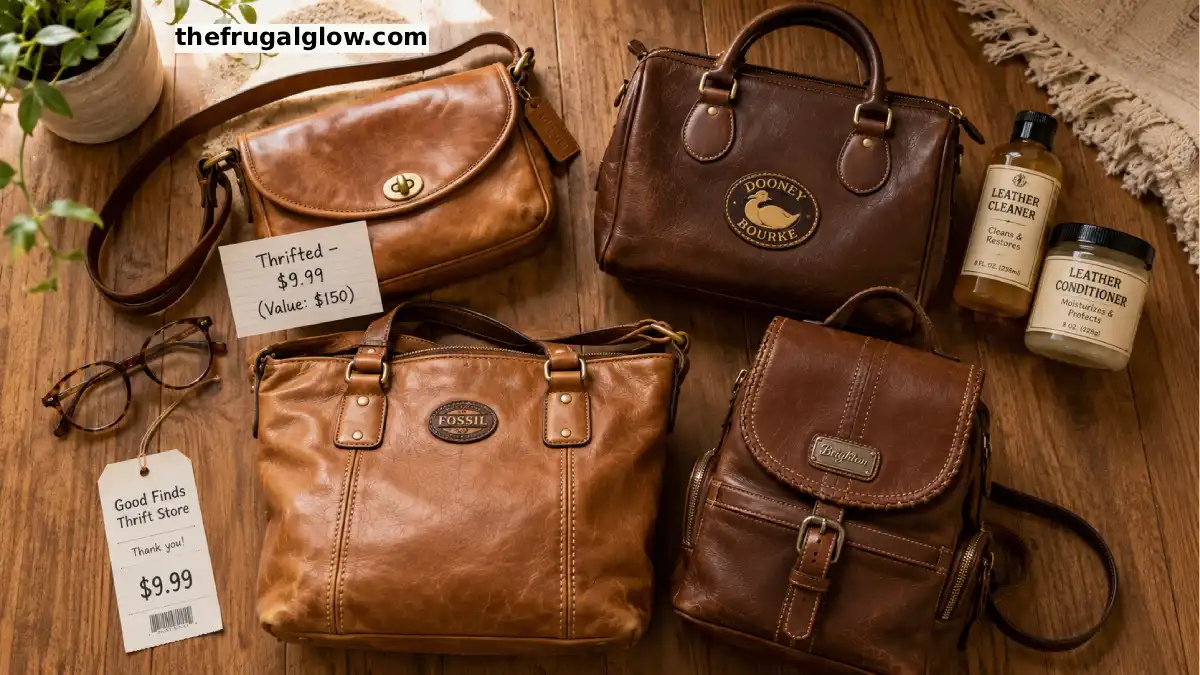
Let me tell you about the $10 Coach bag that made my heart stop.
I was pushing through a crowded thrift store on a random Tuesday. The shelves were packed with faded polyester and broken shoes. I almost walked out. But something made me check the bottom shelf of the handbag section.
There it was. A vintage Coach crossbody in British tan. The leather was soft and worn in the best way. The stitching was perfect. The brass hardware had that heavy, substantial feel that cheap bags never have. I turned it over. Made in New York. Not China. New York. From the 1980s.
The price tag said $9.99.
I grabbed it like someone was about to snatch it out of my hands. I ran to the register. I paid. I walked out of that store feeling like I had just robbed the place.
I took it home. I cleaned it with leather conditioner. The patina deepened. The bag looked even better. I looked up the same model online. It was selling for $150-200 on vintage resale sites.
That was three years ago. I’ve found dozens of luxury bags since then. Dooney & Bourke. Michael Kors (the older, better-made ones). Fossil. Brighton. Even a few Gucci belts. All for under $15. All genuine leather. All built to last a lifetime.
Today, I’m sharing my five secrets for finding luxury leather at thrift stores. Where to look. What to feel for. How to spot fakes. And how to bring a neglected bag back to life.
Let’s get into it.
Jump Links
- The Tuesday Afternoon That Changed How I Shop
- Why Thrift Stores Are Full of Luxury Leather (That Nobody Notices)
- Secret #1: Know Which Brands to Look For (Beyond the Obvious)
- Secret #2: Feel the Leather (Your Hands Know More Than Your Eyes)
- Secret #3: Check the Hardware (The Dead Giveaway)
- Secret #4: Learn to Spot Fakes (What the Thrift Store Missed)
- Secret #5: Know Where to Look (The Hidden Spots)
- How to Clean and Restore Thrifted Leather (The $3 Revival)
- The Best Days and Times to Thrift for Handbags
- The Math: What I Saved in Three Years
- Frequently Asked Questions (FAQ)
- Final Thoughts: Luxury Is Waiting on the Bottom Shelf
The Tuesday Afternoon That Changed How I Shop
I need to describe that moment in the thrift store.
I wasn’t even looking for a handbag. I was looking for a coffee mug. I had a headache. I was killing time before a dentist appointment. The store was hot and crowded. The smell of old clothes and wood polish was giving me a headache.
I was about to leave when I saw the handbag section. It was a mess. Bags piled on top of each other. Straps tangled. Some bags were so dusty I could write my name on them.
I almost walked past. I’m so glad I didn’t.
I started digging. Plastic bags. Pleather bags. Bags with broken zippers. Bag after bag after bag of junk. I was about to give up when I saw a glimpse of tan leather at the very bottom of the pile.
I pulled it out. A vintage Coach bag. I didn’t even know Coach made bags in New York. I thought they were all made in China. But there it was. “Coach. Made in New York City.”
The leather was thick and soft. The stitching was perfect. The hardware was solid brass. It had clearly been used and loved for decades.
I looked at the price. $9.99.
I bought it. I took it home. I cleaned it with leather conditioner I already had. The bag transformed. The leather deepened to a rich caramel. The scratches faded. The patina glowed.
I started researching. I learned about vintage Coach. I learned about the leather they used in the 80s and 90s – thick, full-grain leather that wears like iron. I learned about the serial numbers and the creed stamps.
That $10 bag started my obsession. Now I thrift for handbags all the time. I’ve found over twenty luxury leather bags in three years. Most cost me $5-15. Most are worth $50-200. Some are worth more.
The secret isn’t luck. It’s knowledge. Once you know what to look for, you’ll see luxury leather everywhere. And most people will walk right past it.
Why Thrift Stores Are Full of Luxury Leather (That Nobody Notices)
Let me explain why thrift stores are a goldmine for leather bags.
People donate what they don’t use.
That vintage Coach bag? Someone’s grandmother used it for 20 years. Then she passed away. Her family cleaned out her closet. They saw an old beat-up purse and donated it. They didn’t know it was valuable. They just wanted it gone.
Most thrift store employees are not trained in luxury goods.
They sort through thousands of items every day. They don’t have time to research every bag. They glance at it, tag it, and put it on the shelf. A $200 vintage Coach looks the same as a $20 plastic bag to an untrained eye.
Luxury bags are built to last.
That’s the whole point. A well-made leather bag from the 80s or 90s is often in better condition than a plastic bag from last year. They were designed to be used for decades. They hold up. They still have life left.
Younger shoppers don’t know vintage brands.
Millennials and Gen Z grew up with fast fashion. They know Zara and Shein. They don’t know that Dooney & Bourke was once the “it” bag. They don’t know that vintage Coach is better than new Coach. They walk right past the good stuff.
The bottom shelf is overlooked.
Thrift store employees put the best stuff on the top shelf or hanging on racks. The bottom shelf is where they dump the overflow. That’s where the treasures hide. Most people don’t bend down.
All of these factors work in your favor. The knowledge gap. The time pressure. The physical effort of bending down. If you’re willing to look where others don’t, you will find luxury leather for pocket change.
Secret #1: Know Which Brands to Look For (Beyond the Obvious)
Everyone knows Louis Vuitton and Gucci. You won’t find those at thrift stores (usually). But there are dozens of high-quality leather brands that most people overlook.
The Best Brands to Look For:
| Brand | What to Look For | Typical Thrift Price | Resale Value |
|---|---|---|---|
| Coach (vintage) | Made in USA, leather creed stamp, solid brass hardware | $8-15 | $50-200 |
| Dooney & Bourke | All-weather leather, duck patch, heavy stitching | $10-20 | $40-150 |
| Fossil | Soft leather, vintage styles from 1990s-2000s | $5-10 | $20-50 |
| Brighton | Detailed stitching, decorative hardware, leather lining | $10-15 | $30-80 |
| The Sak | Crochet or leather, boho styles, well-made | $5-8 | $15-40 |
| Roots | Canadian brand, soft leather, sturdy construction | $8-12 | $30-60 |
| Baggallini | Nylon (not leather), but great travel bags | $3-5 | $10-25 |
| Longchamp | Le Pliage nylon totes, leather handles | $10-20 | $40-100 |
What about Michael Kors?
It depends. Older Michael Kors (made in Italy or Turkey) can be good quality. Newer Michael Kors (made in China) is often poor quality. Look for the “MK” logo. If it’s large and obvious, it’s probably newer and lower quality. If it’s subtle and well-made, it might be worth buying.
What about Kate Spade?
Similar to Michael Kors. Older Kate Spade (1990s-2000s) is excellent quality. Newer Kate Spade is hit or miss. Look for “Kate Spade New York” with a small logo, not “kate spade” with a giant logo.
The absolute best find: Vintage Coach made in New York City. Look for bags from the 1970s-1990s. They have a leather creed stamp inside. They say “Made in the United States” or “Made in New York City.” The leather is thick and heavy. The hardware is solid brass. These bags are indestructible.
Secret #2: Feel the Leather (Your Hands Know More Than Your Eyes)
This is the most important skill. You can learn to identify quality leather by touch alone.
What good leather feels like:
- Thick and substantial: It has weight. It doesn’t feel flimsy or papery.
- Soft but firm: It should bend easily but hold its shape.
- Smooth to the touch: No rough spots, no sticky patches.
- Warm: Real leather doesn’t feel cold and plastic-y.
- Smells like leather: Not chemicals. Not plastic. Not nothing.
What bad leather (pleather) feels like:
- Thin and light: You can barely feel it.
- Stiff and crackly: It doesn’t bend smoothly.
- Cold: Like touching a plastic bag.
- Smooth in a fake way: Too uniform. Too perfect.
- Smells like plastic or chemicals.
The “push test”:
Press your finger into the leather. Good leather will show a slight indentation that slowly returns. Pleather will either not indent at all, or it will stay indented (like cheap foam).
The “bend test”:
Gently bend the bag. Good leather will flex and return to shape. Pleather will crease or crack.
The “sniff test”:
Real leather has a distinct smell. It’s warm and organic. Pleather smells like a new shower curtain. Your nose knows.
Pro tip: If you’re not sure, look for the leather tag. Most genuine leather bags have a small tag inside that says “genuine leather,” “full-grain leather,” or “top-grain leather.” If it says “PU leather” or “PVC leather,” that’s plastic. Put it back.
Secret #3: Check the Hardware (The Dead Giveaway)
High-end leather bags use high-end hardware. Cheap bags use cheap hardware.
What good hardware looks like:
- Heavy: Pick up the bag. The zipper pull should have weight.
- Solid metal: Not plastic coated to look like metal.
- Brass or nickel: Warm tones (brass) or cool tones (nickel). Not shiny, coated “gold.”
- Smooth zippers: Should zip and unzip without catching.
- Engraved or embossed logos: Not printed on stickers.
What bad hardware looks like:
- Light and hollow: Feels cheap in your hand.
- Plastic: Tap it with your fingernail. Plastic makes a dull sound. Metal makes a clear “ping.”
- Peeling or flaking: Cheap metal coatings wear off.
- Sticky or rough zippers: Signs of low-quality manufacturing.
- Stickers instead of engravings: If the logo is a sticker, it’s not real.
The zipper test:
Zippers are expensive to manufacture well. Cheap bags use cheap zippers. Look for zippers from YKK (a Japanese company that makes most good zippers). Many high-end bags use YKK zippers. If you see “YKK” on the zipper pull, that’s a good sign.
The thread test:
Look at the stitching. High-end bags use thick, durable thread. The stitching should be straight and even. No loose threads. No skipped stitches. If the stitching looks like it was done by a drunk person, put the bag back.
Secret #4: Learn to Spot Fakes (What the Thrift Store Missed)
Sometimes thrift stores get fakes. They don’t know. You need to know.
Common signs of fake luxury bags:
- Misspelled logos: “Cucci” instead of “Gucci.” “Chanel” spelled with two Ns. If the brand name is misspelled, it’s fake.
- Crooked logos: The logo should be centered and straight.
- Poor stitching: Uneven, loose, or crooked stitches.
- Cheap materials: Pleather instead of leather. Plastic hardware instead of metal.
- Fake serial numbers: Some luxury brands have serial numbers. Fake ones often have numbers that don’t match the brand’s format. Research before you buy.
How to spot fake Coach:
Vintage Coach bags have a leather creed stamp inside. The stamp should have the Coach logo, a serial number, and the country of origin. Fake Coaches often have misspelled words or incorrect serial numbers. The leather should be thick and heavy. Fake Coaches are thin and light.
How to spot fake Dooney & Bourke:
Dooney bags have a duck patch. On real Dooneys, the duck is well-embroidered. On fakes, the duck looks weird – misshapen, cheap thread, wrong colors.
How to spot fake Michael Kors:
Real MK bags have evenly spaced logos. The “MK” logo should be crisp and clean. Fake ones often have blurry or crooked logos. Also, real MK bags have good zippers (YKK). Fakes have cheap zippers.
The golden rule: If you’re not sure, don’t buy it. There will be another bag. Don’t spend money on something that might be fake.
Secret #5: Know Where to Look (The Hidden Spots)
Most people walk through thrift stores like they’re in a regular store. They look at eye level. They scan quickly. They leave.
The treasures are not at eye level.
Location #1: The bottom shelf
This is where the overflow goes. Bags get piled up. Straps get tangled. Most people don’t want to bend down. You will. Get on your knees. Dig through the pile. The good stuff is at the bottom.
Location #2: The belt rack
Luxury belts often end up on the belt rack. People donate belts with their bags. The belt rack is usually near the accessories. Check it. I’ve found Coach belts for $3.
Location #3: The coat rack
Sometimes handbags get hung on the coat rack. Especially larger totes and satchels. Check the coat section. It’s worth a few minutes.
Location #4: The “as is” or “damaged” section
Many thrift stores have a section for items that need repair. Broken zippers. Missing straps. Scratched leather. These items are often 50-75% off. If you know how to fix them (or don’t mind the flaws), you can get luxury bags for $2-5.
Location #5: The display case
Some thrift stores put the “good stuff” in a locked glass case. Check it. But don’t stop there. The best deals are not in the case. The case is for items they know are valuable. The bottom shelf is for items they don’t know about.
Location #6: The store that just opened
New thrift stores have fresh inventory. They haven’t been picked over. Visit new stores within the first month of opening.
Location #7: The wealthy neighborhood
Drive to the thrift stores in the rich part of town. People donate better stuff. I’ve found my best bags in stores near country clubs and gated communities.
How to Clean and Restore Thrifted Leather (The $3 Revival)
You found a bag. The leather is dry. The hardware is tarnished. It smells like someone’s grandma’s closet. Don’t worry. You can fix it.
What you need (total cost: $3-5):
- Leather cleaner (saddle soap, $3 at Walmart)
- Leather conditioner (mink oil or leather honey, $5-10 – one bottle lasts years)
- Soft cloth (old t-shirt or microfiber)
- Soft toothbrush (for hardware)
- Baking soda (for smells)
- Metal polish (for brass hardware, optional)
Step 1: Clean the leather (10 minutes)
- Wipe the bag with a dry cloth to remove dust.
- Apply a small amount of saddle soap to a damp cloth.
- Gently rub the entire bag.
- Wipe off excess soap with a clean, damp cloth.
- Let dry for 30 minutes.
Step 2: Condition the leather (5 minutes + overnight)
- Apply leather conditioner to a soft cloth.
- Rub into the leather in circular motions.
- Pay extra attention to dry or cracked areas.
- Let the conditioner soak in overnight.
- Buff with a clean cloth in the morning.
Step 3: Clean the hardware (5 minutes)
- Use a soft toothbrush to remove dirt from crevices.
- For brass hardware, use a small amount of metal polish.
- For nickel hardware, use soap and water only (polish can damage nickel).
Step 4: Remove smells (optional)
- Place the bag in a large ziploc bag with an open box of baking soda.
- Seal and leave for 24-48 hours.
- The baking soda will absorb odors.
- Shake out the baking soda.
Step 5: Fix minor issues (if needed)
- Loose stitching: Take it to a cobbler or seamstress ($5-10).
- Broken zipper: Replace at a luggage repair shop ($10-20).
- Missing strap: Buy a generic strap on Amazon ($5-10) or use a scarf.
- Scratches: Leather conditioner will minimize most scratches. Deep scratches can be filled with leather filler ($5).
The before and after: A dry, dirty, neglected bag can look like a million bucks after cleaning and conditioning. The patina deepens. The leather softens. The hardware shines. You’ll fall in love.
The Best Days and Times to Thrift for Handbags
Timing matters. Here’s when to go.
Best day: Tuesday or Wednesday mornings.
New donations come in over the weekend. They get sorted on Monday. They hit the floor on Tuesday morning. Go on Tuesday or Wednesday right when the store opens.
Best time: Opening time.
Get there when the doors open. You’ll have first pick of the new stuff. By noon, the good stuff is gone.
Best season: After Christmas and spring cleaning season (March-April).
People donate old items to make room for new gifts (after Christmas) or during spring cleaning (March-April). Inventory is high. Prices are low.
Worst day: Saturday.
Too crowded. Too picked over. The best items are gone by Saturday morning. Go on weekdays.
Worst time: Late afternoon.
The store is picked over. The employees are tired. The good stuff is gone.
Pro tip: Build relationships with thrift store employees. Be friendly. Ask when new stock arrives. Some stores will even hold items for you (not all, but some).
The Math: What I Saved in Three Years
Let me break down the actual dollars.
What I paid at thrift stores (over 3 years):
- Vintage Coach crossbody: $10
- Dooney & Bourke satchel: $8
- Fossil tote: $6
- Brighton backpack: $12
- The Sak hobo: $5
- Coach belt: $3
- Vintage Coach briefcase: $15
- Michael Kors (older style): $7
- Roots backpack: $9
- Longchamp Le Pliage: $10
- Total spent: $85
What these bags would cost retail (or resale):
- Vintage Coach crossbody: $150
- Dooney & Bourke satchel: $80
- Fossil tote: $40
- Brighton backpack: $70
- The Sak hobo: $25
- Coach belt: $40
- Vintage Coach briefcase: $200
- Michael Kors (older style): $50
- Roots backpack: $60
- Longchamp Le Pliage: $100
- Total retail value: $815
Savings: $730 over 3 years
Average cost per bag: $8.50
Average value per bag: $81.50
That’s a 900% return on investment. And I get to carry beautiful, well-made leather bags every day.
Why I Swapped My $500 Designer Belt for This $15 Old Navy Find
Frequently Asked Questions (FAQ)
1. How can I tell if a bag is real leather or pleather?
Use the touch, smell, and bend tests. Real leather is warm, smells like leather, and bends without creasing. Pleather is cold, smells like chemicals or nothing, and creases when bent. Also, look for a tag that says “genuine leather,” “full-grain leather,” or “top-grain leather.” If it says “PU leather” or “PVC leather,” it’s plastic.
2. What if the bag is dirty or smells bad?
Most thrift store bags just need a good cleaning. Use saddle soap for dirt and baking soda for smells (place the bag in a ziploc bag with an open box of baking soda for 24-48 hours). For musty smells, fresh air and sunlight work wonders. Don’t put leather in the washing machine or dryer.
3. Are vintage bags better than new ones?
Often, yes. Vintage bags (pre-2000) were made with thicker, higher-quality leather and better craftsmanship. Many brands moved production overseas in the 2000s, and quality declined. A vintage Coach from the 1980s will outlast a new Coach from 2024.
4. How do I know if a bag is worth reselling?
Research. Look up the bag on eBay, Poshmark, or Mercari. Search for the brand and style (use the serial number if available). Filter by “sold items” to see what people actually paid, not just what sellers are asking. If it’s a desirable brand in good condition, it’s worth reselling.
5. What should I do if I accidentally buy a fake?
Most thrift stores have a return policy (usually store credit, not cash back). Check the receipt. If you can’t return it, use it as a learning experience. Keep it, donate it, or use it as a “practice” bag for cleaning and restoration.
6. Can I haggle at thrift stores?
Sometimes. Some thrift stores (like independent ones) will negotiate, especially if the item has been there for a while or has minor damage. Ask nicely. The worst they can say is no. Chain stores like Goodwill typically do not haggle.
7. How do I clean the inside of a thrifted bag?
Turn the bag inside out if possible. Vacuum the interior with a brush attachment. Wipe with a damp cloth (for fabric lining). For leather lining, use the same cleaner and conditioner as the outside. For stubborn smells, baking soda works for the inside too.
8. Is it worth buying bags with broken zippers or missing straps?
Yes, if the price is low enough. A cobbler can replace a zipper for $10-20. A luggage repair shop can fix or replace straps. If the bag is otherwise in good condition and you love it, the repair cost is still less than buying new.
Final Thoughts: Luxury Is Waiting on the Bottom Shelf
Here’s what I want you to take away.
You don’t need to spend $200 on a new leather bag. You don’t need to buy from luxury boutiques or resale sites. The best leather bags are waiting for you at thrift stores. They’re just sitting there. Overlooked. Underpriced. Waiting.
The knowledge is the secret. Once you know what to feel for, what brands to look for, and where to look, you will find luxury leather for pocket change.
That vintage Coach bag I found for $10? I use it almost every day. It’s 40 years old. It’s in perfect condition. It will outlast any bag I could buy new today.
And every time I carry it, I smile. Not just because it’s beautiful. Because I paid $10 for something that cost $200 in the 80s and is still worth $150 today.
That’s not luck. That’s skill.
So this weekend, go to a thrift store. Go on a Tuesday morning. Go to the handbag section. Bend down. Check the bottom shelf. Feel the leather. Check the hardware.
You might find nothing. Or you might find a $10 bag that changes how you think about luxury.
That’s the frugal glow. And it’s waiting at the bottom of the pile. 👜💛
For more thrift shopping guides, vintage fashion tips, and money-saving style strategies, visit The Frugal Glow.