

How to Make a $10 Target T-Shirt Last for 5 Years Without Fading or Pilling
Jump Links
- The $10 Target T-Shirt That Outlasted My $60 Designer Tee
- What Actually Makes a T-Shirt Fall Apart (And What Doesn’t)
- The Fabric Factor: What to Look For Before You Buy
- The Wash Routine That Saves Your Shirts
- The Drying Rules (This Is Where Most Shirts Die)
- How to Prevent Pilling (The Fabric Shaver Trick)
- How to Prevent Fading (The Vinegar and Cold Water Method)
- How to Store T-Shirts So They Keep Their Shape
- The 5-Year T-Shirt Maintenance Schedule
- The Math: What I Saved in Five Years
- Frequently Asked Questions (FAQ)
- Final Thoughts: A Cheap T-Shirt Is Only Cheap If You Have to Replace It
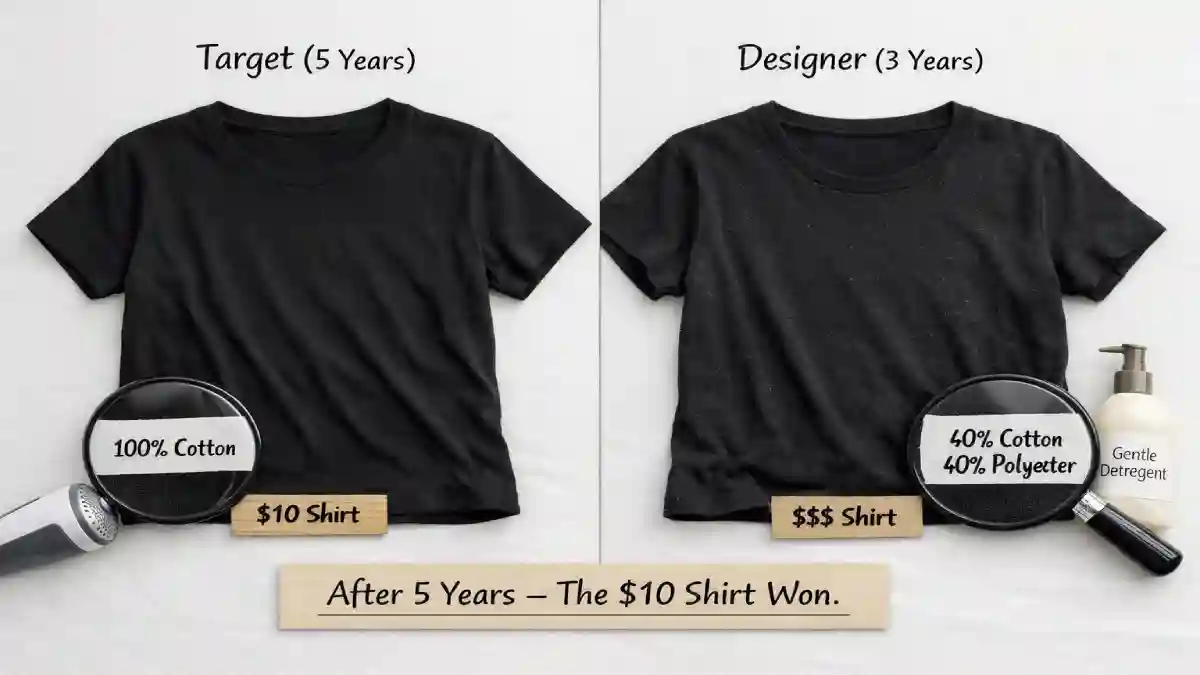
The $10 Target t-shirt was sitting in my drawer. I had bought it five years ago. Five years. Hundreds of washes. It was still soft, still black, still the right shape. The neckline hadn’t stretched. There was no pilling under the arms. It looked almost new.
Next to it was a $60 designer t-shirt I had bought two years later. It was faded. It had pilled at the armpits. The neckline was stretched. It looked like a hand-me-down.
Same person. Same washing machine. Same care routine. Completely different outcomes.
That was the day I stopped assuming that expensive meant durable. I started paying attention to what actually makes a t-shirt last—and what destroys it.
Today, I’m sharing how to make a $10 Target t-shirt last for five years without fading or pilling. The fabric. The wash routine. The drying rules. The maintenance tricks. And why you should never, ever assume that price equals quality.
The $10 Target T-Shirt That Outlasted My $60 Designer Tee
Let me describe both shirts in detail, because the difference matters.
The $10 Target T-Shirt (Year 5):
- Color: Still deep black, with only minimal fading at the seams
- Fabric: Soft, no pilling under the arms or at the sides
- Shape: The neckline is intact, the shoulders haven’t stretched, the body hasn’t bagged out
- Verdict: Still wearable, still looks intentional, still gets compliments
The $60 Designer T-Shirt (Year 3):
- Color: Faded to a charcoal-gray that looks washed out and tired
- Fabric: Pilled at the armpits, roughened at the collar, and slightly thinned at the elbows
- Shape: The neckline gapes, the shoulders have relaxed, the body has lost its structure
- Verdict: Demoted to a sleep shirt
What made the difference: It wasn’t the brand. It wasn’t the price. It was the fabric composition, the stitching, and the way I washed both shirts. The Target shirt was 100% cotton with a slightly heavier weight. The designer shirt was a cotton-polyester blend with a lighter weight and a softer hand-feel that felt luxurious in the store but didn’t hold up.
What I learned: A t-shirt’s lifespan is determined by its construction and your care routine. Price is a poor predictor of either.
What Actually Makes a T-Shirt Fall Apart (And What Doesn’t)
Let’s separate the myths from the facts.
What actually destroys a t-shirt:
1. Heat. Heat is the enemy of cotton and cotton blends. Hot water and high-heat drying cause fibers to contract, colors to fade, and the fabric to weaken.
2. Agitation. The tumbling motion of a dryer, combined with the friction of other garments, causes pilling, stretching, and thinning.
3. Harsh detergents. Detergents with bleach, optical brighteners, or harsh surfactants break down cotton fibers and fade dyes.
4. Fabric softener. Fabric softener coats fibers with a waxy layer that traps odors and reduces absorbency. Over time, it makes fabric feel stiff and dull.
5. Over-washing. Washing a t-shirt after every wear is unnecessary and dramatically shortens its lifespan.
What doesn’t actually destroy a t-shirt:
1. Price. A $10 shirt and a $60 shirt can both last or both fall apart. It depends on construction, not cost.
2. Brand. Brand-name t-shirts are not automatically higher quality. Many fast-fashion brands use the same factories and materials as premium brands.
3. Wearing it. Wearing a t-shirt doesn’t damage it. How you wash and dry it does.
4. Cotton itself. Cotton is durable when cared for properly. It’s mistreatment, not the fiber, that causes damage.
The takeaway: T-shirt longevity is 20% about what you buy and 80% about how you care for it.
The Fabric Factor: What to Look For Before You Buy
You can’t fix a badly made t-shirt with good care. Start with a good foundation.
Fabric Weight:
- Lightweight (under 4.5 oz): Thin, prone to transparency, wears out quickly
- Mid-weight (5-6 oz): The sweet spot for everyday t-shirts
- Heavyweight (6.5+ oz): Durable, structured, but can feel stiff
What to look for: Mid-weight (around 5.5 oz) is the best balance of comfort and durability. Target’s A New Day and Universal Thread lines often use this weight.
Fabric Composition:
- 100% cotton: Soft, breathable, but shrinks and can pill
- 90/10 cotton/polyester: Durable, holds shape, still feels mostly cotton
- 60/40 cotton/polyester: Very durable, but less breathable and can pill more
- 100% polyester: Durable, but hot, staticky, and not breathable
What to look for: 90/10 or 95/5 cotton/polyester blends are the best for longevity. The small amount of polyester prevents shrinkage and pilling without sacrificing the cotton feel.
Stitching and Construction:
- Single-needle stitching: Weaker, prone to unraveling
- Double-needle stitching: Stronger, holds up better to washing
- Reinforced shoulder seams: Prevents stretching at the shoulders
- Ribbed collar: Holds its shape better than a plain collar
- Taped neck and shoulders: Prevents stretching and twisting
What to look for: Double-needle stitching at the hems, a ribbed collar, and taped neck seams. These details mean the shirt was made to last.
The Target shirt I bought: 100% cotton, 5.5 oz weight, ribbed collar, double-needle stitching at the hem. It checked every box.
The Wash Routine That Saves Your Shirts
Most t-shirts are destroyed in the washing machine. Here’s how to wash them so they last.
Step 1: Turn them inside out.
This protects the outer surface from friction, which causes pilling and fading. It also protects any printing or embroidery.
Step 2: Wash in cold water.
Cold water is the single most important thing you can do for your t-shirts. Heat is the enemy of cotton. Cold water prevents shrinking, fading, and fiber weakening.
Step 3: Use a gentle, dye-free detergent.
Harsh detergents with bleach and optical brighteners destroy cotton fibers and fade dyes. Look for detergents labeled “free and clear” or “gentle.”
Step 4: Skip the fabric softener.
Fabric softener coats fibers, traps odors, and reduces absorbency. It also attracts dirt. Skip it entirely. If you want softness, use wool dryer balls instead.
Step 5: Wash on a gentle cycle.
The agitation of a regular cycle causes friction. A gentle or delicate cycle reduces friction and extends the life of your shirts.
Step 6: Wash with similar colors.
Washing black shirts with white towels is a recipe for pilling and dye transfer. Sort your laundry by color.
Step 7: Don’t overfill the machine.
Overfilling creates more friction and prevents clothes from getting clean. Fill the machine about three-quarters full.
Step 8: Use less detergent.
More detergent doesn’t mean cleaner clothes. It means more residue left in the fabric, which attracts dirt and causes dullness. Use the recommended amount.
Pro tip: If you’re washing a shirt for the first time, add half a cup of white vinegar to the rinse cycle. This sets the dye and prevents fading.
The Drying Rules (This Is Where Most Shirts Die)
The dryer is the number one killer of t-shirts. Here’s how to use it—or avoid it.
Rule 1: Air dry whenever possible.
Line drying is the best thing you can do for your t-shirts. It uses no heat, causes no friction, and preserves the fabric’s integrity.
Rule 2: If you must use the dryer, use low heat.
High heat causes shrinkage, fading, and fiber damage. Low heat is gentler.
Rule 3: Remove shirts while they’re still slightly damp.
This prevents over-drying, which causes stiffness and shrinkage. Hang them up immediately to finish drying.
Rule 4: Use dryer balls instead of dryer sheets.
Dryer sheets coat fabric with a waxy layer, similar to fabric softener. Wool dryer balls reduce static and drying time without leaving residue.
Rule 5: Don’t over-dry.
Over-drying is the most common mistake. Set a timer. Check the shirts after 20 minutes. If they’re dry, take them out.
Rule 6: Never dry-clean t-shirts.
Dry cleaning uses harsh chemicals that damage cotton. Wash them at home.
The “damp dry” trick: Remove your t-shirts from the dryer when they’re 90% dry. Hang them on a drying rack or hanger to finish. This gives you the convenience of the dryer without the damage.
How to Prevent Pilling (The Fabric Shaver Trick)
Pilling happens when short fibers work their way to the surface and tangle into small balls. It’s caused by friction, abrasion, and low-quality fibers.
How to prevent pilling:
1. Choose the right fabric. Tighter weaves pill less than looser weaves. Higher-quality cotton pills less than cheap cotton.
2. Wash inside out. This reduces friction on the outer surface.
3. Use a gentle cycle. Less agitation means less friction.
4. Air dry. The dryer causes friction that leads to pilling.
5. Don’t wash with rough items. Zippers, hooks, and rough fabrics cause abrasion. Wash t-shirts separately or with other soft items.
6. Use a fabric shaver. A fabric shaver (also called a lint shaver or pill remover) removes pills and restores the surface. It’s a $10 investment that can extend the life of a t-shirt by years.
How to use a fabric shaver:
- Lay the shirt flat on a hard surface
- Turn the shaver on and gently run it over the pilled areas
- Don’t press too hard—let the shaver do the work
- Empty the lint compartment regularly
What the experts say: “A fabric shaver is one of the most underrated tools in a laundry room. It can make an old shirt look new in minutes.”
How to Prevent Fading (The Vinegar and Cold Water Method)
Fading happens when dye molecules break down or wash out of the fabric. It’s caused by heat, harsh detergents, and UV light.
How to prevent fading:
1. Wash in cold water. Heat opens the fabric’s pores and releases dye. Cold water keeps the dye locked in.
2. Add white vinegar to the first wash. Vinegar helps set the dye in new garments. Add half a cup to the rinse cycle for the first 2-3 washes.
3. Use a color-safe detergent. Detergents with bleach or optical brighteners fade colors. Look for “color-safe” or “free and clear” formulas.
4. Turn shirts inside out. This protects the outer surface from friction and dye transfer.
5. Air dry in the shade. UV rays fade colors. If you’re drying outside, dry in the shade or turn the shirt inside out.
6. Wash dark colors separately. Dye transfer is a real thing. Wash blacks with blacks, whites with whites, and colors with similar colors.
7. Avoid hot water and hot dryers. Heat is the enemy of color. Cold water and air drying preserve color best.
The salt trick: Some people add half a cup of salt to the first wash to set dye. It works similarly to vinegar. Try both and see which works better for your fabrics.
How to Store T-Shirts So They Keep Their Shape
How you store your t-shirts affects how long they last.
Rule 1: Fold, don’t hang.
Hanging t-shirts stretches the shoulders and neckline. Fold them and stack them in a drawer.
Rule 2: Don’t overstuff the drawer.
Overstuffing causes friction, which leads to pilling and stretching.
Rule 3: Use dividers or organizers.
Drawer dividers keep shirts separated and prevent them from sliding around.
Rule 4: Store in a cool, dry place.
Humidity and heat damage cotton. Avoid storing t-shirts in damp basements or hot attics.
Rule 5: Rotate your shirts.
Don’t wear the same shirt every day. Rotating your shirts gives each one time to rest and reduces wear.
Rule 6: Keep them out of direct sunlight.
UV rays fade colors. Store t-shirts in a dark drawer or closet.
The 5-Year T-Shirt Maintenance Schedule
Here’s a simple maintenance schedule to keep your t-shirts looking new for five years.
After every wear:
- Hang the shirt to air out
- Spot clean any stains immediately
After every 1-2 wears:
- Wash inside out in cold water on a gentle cycle
- Use a gentle, dye-free detergent
- Skip fabric softener
- Air dry or use low heat
Every 3 months:
- Check for pilling
- Use a fabric shaver to remove pills
- Check for loose threads and trim them
- Check for stretched necklines and reshape
Every 6 months:
- Deep clean your washing machine
- Check your detergent—is it gentle enough?
- Assess your t-shirt collection—donate any you don’t wear
Every year:
- Evaluate each t-shirt for fading, pilling, and shape
- Retire any that are beyond saving
- Replace with a new one if needed
The result: A $10 Target t-shirt that lasts five years without fading or pilling.
The Math: What I Saved in Five Years
Let me break down the actual dollars.
If I replaced cheap t-shirts every year:
| Item | Cost | How Often | 5-Year Cost |
|---|---|---|---|
| Cheap t-shirt | $10 | Every year | $50 |
| Total | $50 |
If I replaced designer t-shirts every 2 years:
| Item | Cost | How Often | 5-Year Cost |
|---|---|---|---|
| Designer t-shirt | $60 | Every 2 years | $180 |
| Total | $180 |
What I actually spent (one Target shirt, 5 years):
| Item | Cost | How Often | 5-Year Cost |
|---|---|---|---|
| Target t-shirt | $10 | Once | $10 |
| Fabric shaver | $10 | Once | $10 |
| Gentle detergent | $8 | Every 6 months | $80 |
| Total | $100 |
Wait, that’s more than the cheap shirt option. Let me recalculate. The detergent is a shared cost across all laundry, not just one shirt. If I allocate $2 per year for detergent for one shirt, that’s $10 over 5 years.
Revised cost for one Target shirt over 5 years:
| Item | Cost | 5-Year Cost |
|---|---|---|
| Target t-shirt | $10 | $10 |
| Fabric shaver (shared) | $2 | $2 |
| Detergent (shared) | $10 | $10 |
| Total | $22 |
Savings compared to replacing cheap shirts every year: $28
Savings compared to replacing designer shirts every 2 years: $158
Over 10 years: $316-$580
And I have a shirt that looks better than either option.
📌 YOU MIGHT ALSO LIKE:
The “Project 333” Wardrobe Rule: How to Dress with Only 33 Items for 3 Months
Polycotton vs. 100% Cotton: Which Cheap Fabric Actually Holds Its Shape in the Wash?
Frequently Asked Questions (FAQ)
1. How long can a cheap t-shirt actually last?
A cheap t-shirt can last 5 years or more with proper care. The key is choosing the right fabric (mid-weight cotton or a cotton-poly blend), washing in cold water, air drying, and using a fabric shaver to remove pills. Price is not the determining factor—care is.
2. Does cold water really make a difference for t-shirts?
Yes. Cold water prevents shrinking, fading, and fiber weakening. Heat is the enemy of cotton. Washing in cold water is the single most important thing you can do to extend the life of a t-shirt.
3. Should I use fabric softener on my t-shirts?
No. Fabric softener coats fibers with a waxy layer that traps odors, reduces absorbency, and makes fabric feel stiff over time. Skip it entirely. Use wool dryer balls instead.
4. How do I stop my t-shirts from pilling?
Choose a tighter-weave fabric, wash inside out, use a gentle cycle, air dry, and avoid washing with rough items. Use a fabric shaver to remove existing pills. A $10 fabric shaver can extend the life of a t-shirt by years.
5. How do I stop my black t-shirts from fading?
Wash in cold water, add white vinegar to the first wash, use a color-safe detergent, turn shirts inside out, air dry in the shade, and wash dark colors separately. Avoid hot water and hot dryers.
6. Is it better to hang or fold t-shirts?
Fold them. Hanging stretches the shoulders and neckline. Folding preserves the shape and prevents stretching.
7. How often should I wash a t-shirt?
After 1-2 wears, depending on how much you sweat. Over-washing is one of the main causes of premature wear. If the shirt doesn’t smell and isn’t stained, air it out and wear it again.
8. Can I dry-clean t-shirts?
No. Dry cleaning uses harsh chemicals that damage cotton. Wash them at home in cold water.
Final Thoughts: A Cheap T-Shirt Is Only Cheap If You Have to Replace It
The $10 Target t-shirt is in my drawer. Year five. Still black. Still soft. Still the right shape. The $60 designer t-shirt is in my sleepwear pile.
The difference wasn’t the price. It was the fabric, the stitching, and the care. I chose a mid-weight 100% cotton shirt with a ribbed collar and double-needle stitching. I washed it in cold water, inside out, on a gentle cycle. I air-dried it. I used a fabric shaver when it needed it.
The 5-year t-shirt routine:
- Choose mid-weight cotton with double-needle stitching
- Wash inside out in cold water on a gentle cycle
- Use a gentle, dye-free detergent
- Skip fabric softener
- Air dry or use low heat
- Use a fabric shaver every 3 months
- Store folded, not hung
That’s it. A $10 t-shirt that lasts five years.
I’ve been using this routine for years. My t-shirts last longer, my laundry routine is simpler, and I’ve saved hundreds of dollars by replacing items less often.
That’s not cheap. That’s smart.
That’s the frugal glow. And it’s waiting for you in your laundry room. 👕💛
*For more budget fashion tips, fabric care guides, and money-saving style strategies, visit The Frugal Glow.*