Walk into any beauty aisle or scroll through social media for five minutes, and you’ll come away convinced you need a ten-step routine, three serums, a toner, an essence, and a $60 cream just to have decent skin. If you’re a beginner on a tight budget, that’s not just overwhelming. It’s expensive, and it’s usually unnecessary.
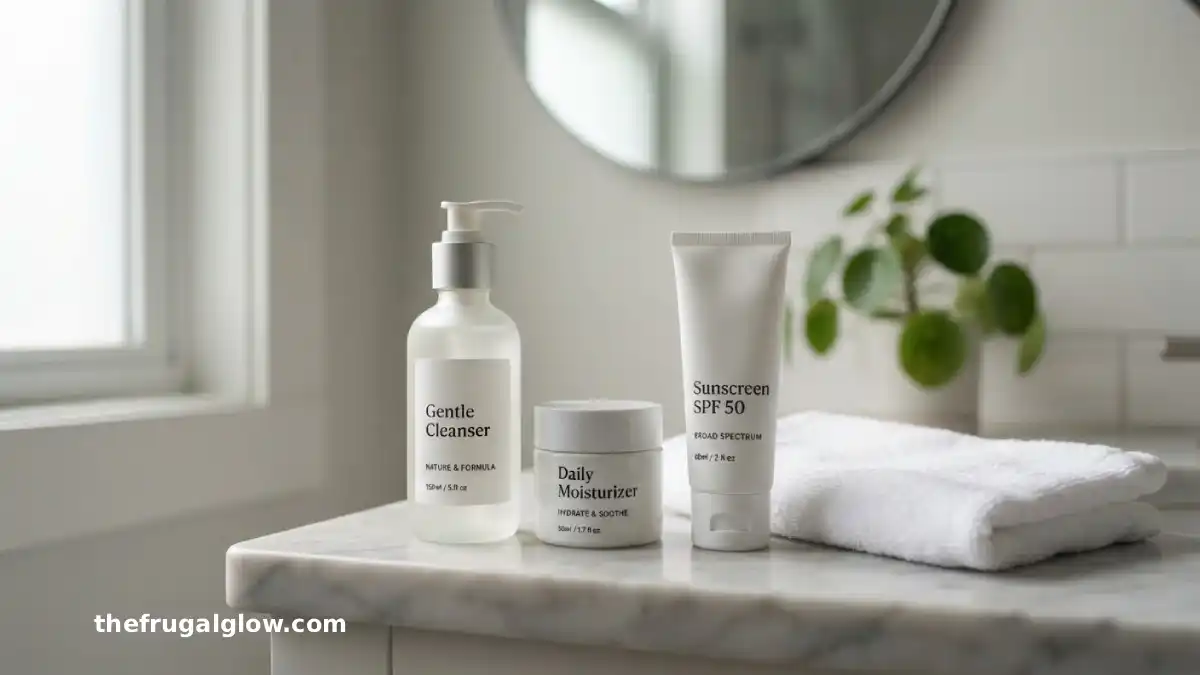
Here’s the good news. Board-certified dermatologists keep coming back to the same simple idea: a gentle cleanser, a moisturizer, and sunscreen. An affordable skincare routine for beginners really can start with those three drugstore basics, for roughly the price of a fast-food meal.
In this guide, you’ll learn how to build that routine step by step, what each product should do, what real drugstore prices look like right now, and which common beginner mistakes quietly waste your money. We’ll also be upfront about what a basic routine can’t do, so you know when it’s time to see a professional.
Jump Links
- What a Beginner Routine Really Needs
- Know Your Skin Type First
- Step 1: Choose a Gentle Cleanser
- Step 2: Pick a Simple Moisturizer
- Step 3: Use Sunscreen Every Day
- Your Simple Morning and Night Routine
- Real Drugstore Prices and Three Budget Tiers
- Optional Step 4: Treating Acne Without Overspending
- How to Introduce New Products Safely
- Smart Ways to Stretch Your Skincare Dollar
- Skincare Myths That Waste Money
- Common Beginner Mistakes and Quick Fixes
- When to See a Dermatologist
- Frequently Asked Questions
- Final Thoughts
What a Beginner Routine Really Needs
Let’s start with the most important point: you don’t need much. The American Academy of Dermatology (AAD) says that skin care products don’t need to be expensive to be effective, and that a simple three-step approach of cleansing, moisturizing, and protecting your skin can help reduce costs while keeping your skin healthy.
The AAD also points out that using lots of different products can get costly and may irritate your skin or cause contact dermatitis. In another AAD resource, board-certified dermatologist Ivy Lee says an effective routine doesn’t need to be complicated or cost a small fortune.
Other experts agree. In a widely shared guide to the three must-do steps, dermatologist Dr. Elbuluk advises that you should only take on a routine you’ll stick with and resist adding new steps until you’ve mastered the basics. NPR’s Life Kit also describes a basic routine as three pillars: cleanse, treat, and protect.
So here’s your starter formula:
- Cleanse gently.
- Moisturize to help your skin hold on to water.
- Protect with sunscreen.
That’s it. Everything else is optional, and most of it can wait.
A quick honesty check: a basic routine supports healthy skin, but it isn’t a treatment for medical conditions like severe acne, eczema, rosacea, or suspicious moles. We’ll cover when to get professional help near the end.
Know Your Skin Type First
Choosing the right products starts with a rough idea of your skin type. The AAD describes the main types this way:
| Skin Type | How It Typically Behaves | What to Look For |
|---|---|---|
| Normal | Clear and not sensitive | A gentle cleanser and a lightweight moisturizer |
| Dry | Flaky, itchy, or rough | A creamy cleanser and a richer moisturizer |
| Oily | Shiny and greasy | A gel or foaming cleanser and a lightweight, non-comedogenic moisturizer |
| Combination | Dry in some areas and oily in others | A gentle cleanser and a lightweight moisturizer, with extra moisture on dry zones |
| Sensitive | May sting or burn after using products | Fragrance-free products with short ingredient lists |
If you aren’t sure about your skin type, the AAD recommends talking with a board-certified dermatologist before starting any routine. That said, most beginners can get started with a gentle, fragrance-free cleanser and moisturizer and adjust from there.
One more tip: don’t assume oily skin means you can skip moisturizer. The AAD advises moisturizing your face, body, and lips even if you have oily skin.
Step 1: Choose a Gentle Cleanser
A cleanser has one job: remove dirt, oil, sweat, and leftover products without stripping your skin. The AAD says a gentle cleanser removes dirt, oil, and debris and helps prevent clogged pores and breakouts.
What to look for:
- Gentle and fragrance-free. The AAD recommends avoiding products with fragrances and drying alcohols, which may irritate your skin.
- The right texture for your skin. Gel or foaming cleansers often suit oily skin, while cream or lotion cleansers tend to feel better on dry skin.
- A “non-comedogenic” or “won’t clog pores” label. The AAD suggests looking for this wording if you’re prone to breakouts.
How often to wash:
The AAD’s budget guidance is to cleanse before bed and use water or a gentle cleanser in the morning. To prevent irritation, it recommends limiting face washing to twice a day and after sweating. In other words, over-washing won’t make you cleaner. It can just make you drier and more irritated.
How to wash:
- Wet your face with lukewarm water.
- Massage a small amount of cleanser over your skin with your fingertips for about 20 to 30 seconds. The AAD recommends gently applying the cleanser in a circular motion.
- Rinse well and pat dry. Don’t scrub.
- Leave your skin slightly damp for the next step.
Budget tip: Store-brand cleansers can cost a fraction of name brands. A 12-ounce Equate Hydrating Facial Cleanser was listed at $6.88 on Walmart’s website, while a 16-ounce Cetaphil Daily Facial Cleanser for sensitive, combination to oily skin was listed at $11.88 on the same page.
Step 2: Pick a Simple Moisturizer
Moisturizer helps your skin hold on to water, and that’s why it matters for every skin type. Harvard Health explains that dry skin is mostly about a lack of water, not a lack of oil, and that occlusive ingredients hold water in after it has been supplied by the moisturizer or by water itself.
The most important moisturizer tip: apply it to damp skin. The AAD says to get the most from your moisturizer by applying it to damp skin, because moisturizer traps water in your skin. So after washing, pat your face lightly and apply moisturizer while it’s still a little damp.
What to look for:
- Fragrance-free. It’s less likely to irritate.
- Matched to your skin type. Choose a lighter lotion or gel if you’re oily and a thicker cream if you’re dry.
- Non-comedogenic if you’re breakout-prone. Check the label.
- A short ingredient list. You don’t need fancy extras.
An ultra-cheap option: The AAD says you can consider petroleum jelly, an inexpensive product that can moisturize dry skin and nails and treat minor injuries. A 13-ounce jar of Equate petroleum jelly was listed at $2.36 on Walmart’s website. It can be a good fit for dry patches or as a thin nighttime layer, though some people with oily or acne-prone skin find it too heavy for all-over use. Try it on a small area first.
Mid-range options: For a classic cream, a 20-ounce tub of Cetaphil Moisturizing Cream and a 12-ounce tub of CeraVe Moisturizing Cream were each listed at $15.97. Because you only use a small amount at a time, a large tub can go a long way.
One more note for later in life: the AAD says people who are perimenopausal and everyone 50 and older should be using a cream-based moisturizer, so if that’s you, lean toward richer creams.
Step 3: Use Sunscreen Every Day
If you only buy one product, make it sunscreen. NPR’s Life Kit quotes a dermatologist who says the biggest issue she sees is people not wearing sunscreen, because sunscreen does most of the work that a skin care routine needs. Another dermatologist on the same episode underscores that sunscreen is a must no matter how much melanin is in your skin.
The AAD says sun protection helps prevent wrinkles, age spots, and skin cancer, and it recommends applying sunscreen to all skin not covered by clothing.
What to look for:
- Broad-spectrum. This means it protects against both UVA and UVB rays.
- SPF 30 or higher. The AAD recommends SPF 30 or higher.
- A texture you’ll actually use. The best sunscreen is the one you’ll wear every day.
- Non-comedogenic, if you break out easily.
Save money with a dual-function product. The AAD suggests considering products like a moisturizer with sunscreen, as long as the sunscreen is broad-spectrum with an SPF of 30 or higher. Remember to reapply every two hours or after swimming or sweating. One thing to keep in mind from the AAD’s separate tips: a combination product is convenient, but it doesn’t replace reapplying.
Order matters: If you use a separate moisturizer and sunscreen, Healthline notes that sunscreen should go on after cleanser and moisturizer.
Real prices: On Walmart’s website, CeraVe AM Face Moisturizer with SPF 30 (3 ounces) was listed at $14.97, and Cetaphil Sheer Mineral Sunscreen Lotion SPF 30 (3 ounces) at $11.00. A store-brand Equate Sport Broad Spectrum Sunscreen Lotion, SPF 30 (8 fluid ounces) started at $4.88. Sport formulas can feel heavier on the face, so test one first, and if it feels greasy or you break out, switch to a lighter face formula.
Your Simple Morning and Night Routine
Here’s what the whole routine looks like in practice. It takes about two to three minutes.
| Time | Step | What to Do |
|---|---|---|
| Morning | 1. Cleanse | Rinse with water or use a gentle cleanser, per the AAD’s budget guidance |
| Morning | 2. Moisturize | Apply to damp skin, or use a moisturizer with SPF 30+ as a two-in-one |
| Morning | 3. Protect | Apply broad-spectrum SPF 30+ if your moisturizer doesn’t already contain it, and reapply every two hours outdoors |
| Night | 1. Cleanse | Wash with a gentle cleanser to remove sunscreen, oil, and dirt before bed |
| Night | 2. Treat (optional) | Use an acne treatment only if you need one, and start slowly (see below) |
| Night | 3. Moisturize | Apply to damp skin, using a regular moisturizer or a thin layer of petroleum jelly on dry patches |
Some mornings you can keep it even simpler. If your skin feels fine after a quick rinse, water alone is a legitimate option, according to the AAD. At night, don’t skip the wash. Sunscreen, sweat, and pollution don’t wash off by themselves.
Real Drugstore Prices and Three Budget Tiers
Here’s a snapshot of what basic products were listed for on Walmart’s website in November 2026. Prices change often and vary by store, so treat these as ballpark figures and look for sales.
| Product Type | Example Product | Listed Price | Notes |
|---|---|---|---|
| Cleanser | Equate Hydrating Facial Cleanser, 12 fl oz | $6.88 | Store brand, lowest-cost option |
| Cleanser | Cetaphil Daily Facial Cleanser, 16 oz | $11.88 | For sensitive, combination to oily skin |
| Cleanser | CeraVe Hydrating Facial Cleanser, 16 fl oz | $15.97 | For normal to dry skin |
| Moisturizer | Equate Petroleum Jelly, 13 oz | $2.36 | Inexpensive option for dry patches or a thin night layer |
| Moisturizer | Cetaphil Moisturizing Cream, 20 oz | $15.97 | Large size, richer cream |
| Moisturizer + SPF | CeraVe AM Face Moisturizer SPF 30, 3 oz | $14.97 | Two-in-one for mornings |
| Sunscreen | Cetaphil Sheer Mineral Sunscreen SPF 30, 3 oz | $11.00 | Mineral option |
| Sunscreen | Equate Sport Sunscreen Lotion SPF 30, 8 fl oz | From $4.88 | Store-brand, test for comfort on your face |
Now let’s put those prices into three budget tiers. These are examples, not requirements, and your best combo depends on your skin type.
| Tier | What’s in It | Approximate Upfront Cost |
|---|---|---|
| Bare-Bones | Equate cleanser ($6.88) + Equate Sport SPF 30 ($4.88) + Equate petroleum jelly ($2.36) | About $14.12 |
| Dual-Function | Equate cleanser ($6.88) + CeraVe AM Moisturizer with SPF 30 ($14.97) + Equate petroleum jelly for nights ($2.36) | About $24.21 |
| Comfort Basics | Cetaphil Daily Cleanser ($11.88) + CeraVe AM Moisturizer with SPF 30 ($14.97) + Cetaphil Moisturizing Cream ($15.97) | About $42.82 |
The takeaway: a complete routine that follows dermatologist guidance can start around $14 and still sit under $45 at the higher end. You’ll be buying larger bottles up front, but you’ll use only a small amount each time. Skip anything that isn’t on your list, no matter how good the sale looks.
Optional Step 4: Treating Acne Without Overspending
Many beginners start a routine because of breakouts. A gentle cleanser, moisturizer, and sunscreen won’t treat acne on their own, and you shouldn’t expect them to. If you have mild acne and want to try an over-the-counter option, adapalene gel is one budget-friendly choice.
Adapalene 0.1% gel is a topical retinoid that’s now sold over the counter. Walmart’s listing for Equate’s adapalene gel 0.1% (0.5 ounces) showed a price of $9.86, compared with higher prices for name brands.
If you try it, go slowly. According to Mayo Clinic, nonprescription acne medications commonly cause initial side effects such as mild dryness, redness, and scaling in the first few weeks. To minimize irritation, dermatologists generally recommend starting with a pea-sized amount a few nights a week before gradually increasing to nightly use as your skin adjusts.
A few safety notes:
- Add it after your basic routine is consistent, and add only one new product at a time.
- Follow the package directions carefully, and note the age guidance on the label.
- Your moisturizer and daily sunscreen matter even more when you use active ingredients, since they can make skin drier and more sensitive.
- If you’re pregnant, planning to become pregnant, or have any medical conditions, check with a doctor or pharmacist before using a retinoid.
- If your acne is moderate to severe, painful, scarring, or not improving, see a dermatologist instead of buying more products.
How to Introduce New Products Safely
Even simple products can cause problems if you add them all at once. Here’s a safer way to start:
- Start with the three basics. Use them consistently before adding anything else.
- Add one product at a time. If you get a reaction, you’ll know what caused it.
- Patch test. Put a small amount on your inner forearm or behind your ear for a day or two and watch for redness, itching, or burning.
- Give it time. Skin doesn’t change overnight, so give a new product a couple of weeks before judging it, unless it’s causing irritation.
- Stop if it hurts. Stinging, burning, or a new rash means it’s time to stop and rethink. The AAD notes that sensitive skin may sting or burn after product use, and that using too many products can cause contact dermatitis.
Smart Ways to Stretch Your Skincare Dollar
Beyond choosing affordable products, a few habits can make everything last longer and cost less.
- Use less than you think. A small amount of cleanser, a modest layer of moisturizer, and enough sunscreen to cover your face and neck are plenty. More product doesn’t mean better results.
- Buy the size you’ll actually finish. Large sizes often cost less per ounce, as the price listings above show, but only if you’ll use them before they expire.
- Choose dual-function products where it makes sense. A moisturizer with SPF can replace two products in the morning.
- Store products properly. The AAD recommends replacing caps and lids securely after each use and storing products in a clean, dry space at room temperature, away from direct sunlight.
- Check expiration dates. The AAD advises checking them so your products work as effectively as possible.
- Consider store brands. Many have simple, fragrance-free formulas at lower prices. Compare ingredient lists rather than buying on brand name.
- Skip trial kits and gift sets you don’t need. They often include extra steps you won’t use.
- Watch for sales, but only on products you already planned to buy. A deal on something that’s not on your list isn’t a deal.
Skincare Myths That Waste Money
Marketing loves to blur the line between what’s necessary and what’s merely nice to have. Here are a few myths to ignore.
Myth: More steps mean better skin. Dermatologists consistently recommend keeping things simple. The AAD warns that using too many products can irritate your skin and cost more.
Myth: Expensive products work better. Price isn’t a reliable measure of how well something works. The AAD states that products don’t need to be expensive to be effective.
Myth: Oily skin doesn’t need moisturizer. The AAD recommends moisturizing even if you have oily skin. Choose a lightweight, non-comedogenic formula.
Myth: “Oil-free” means “won’t clog pores.” Skinsort notes that the term “oil-free” isn’t regulated, so brands can define it however they like. Check the whole product, not just the claim on the front.
Myth: Sunscreen is only for beach days. The AAD says to apply sunscreen every day before you go outdoors. Sun protection matters for every skin tone.
Myth: You need a toner, essence, and eye cream from day one. These can be nice extras later, but they’re not part of the essential three. Master the basics first.
Common Beginner Mistakes and Quick Fixes
| Mistake | Why It Hurts | Quick Fix |
|---|---|---|
| Washing too often or scrubbing hard | Can dry out and irritate skin | Wash twice a day at most, plus after sweating, and use gentle pressure |
| Skipping moisturizer on oily skin | Skin can still be dehydrated, and it may feel tight | Use a lightweight, non-comedogenic moisturizer |
| Applying moisturizer to bone-dry skin | Less water gets trapped | Apply to slightly damp skin right after washing |
| Skipping sunscreen on cloudy days or indoors | Sun exposure adds up | Make it a daily habit, and reapply every two hours outdoors |
| Starting five new products at once | You can’t tell what’s helping or hurting | Introduce one product at a time |
| Buying products with strong fragrance or drying alcohols | May cause irritation | Choose fragrance-free formulas, per the AAD |
| Using active ingredients without moisturizer or SPF | Increases dryness and sensitivity | Keep your moisturizer and sunscreen consistent |
| Ignoring expiration dates or storing products in hot, humid spaces | Products may not work as well | Check dates, close lids tightly, and store in a cool, dry place |
When to See a Dermatologist
A budget routine is a great foundation, but it isn’t a substitute for medical care. The AAD advises seeing a board-certified dermatologist if you’re not sure about your skin type, and other dermatologists quoted in the three-step routine guide say to get help if your skin is frequently irritated or breaking out or you aren’t getting the results you want.
Consider making an appointment if you notice:
- Acne that’s painful, deep, leaving scars, or not improving after consistent care
- Skin that’s red, cracking, itchy, stinging, or rashy
- A mole or spot that changes in size, shape, or color, or that bleeds
- Rashes or reactions to products that don’t go away when you stop using them
If cost is a barrier, ask whether local community health centers or clinics offer lower-cost dermatology services in your area, and look for dermatologists through the AAD’s “Find a dermatologist” tool.
📌 YOU MIGHT ALSO LIKE:
- The $3-a-Month Squalane Oil Hack: How to Lock In Hydration Without Clogging Your Pores
- How to Use Rice Water as a $0 Brightening Facial Toner (The Traditional Asian Glow Secret)
- Want glowing skin without the luxury markup? Explore our Skin Care section for budget-friendly routines, honest reviews, and smart saving tips.
Frequently Asked Questions
What is the cheapest skincare routine for beginners?
The cheapest effective routine is the one dermatologists already recommend: a gentle cleanser, a moisturizer, and a broad-spectrum sunscreen with SPF 30 or higher. Using store-brand products, a basic setup can start at around $14 based on Walmart listings we checked. Prices vary by store and over time, so compare options and look for sales.
Do I need to wash my face in the morning and at night?
The AAD says to cleanse before bed and to use water or a gentle cleanser in the morning before applying your skin care products. It also recommends limiting face washing to twice a day and after sweating, because washing more often can cause irritation.
Can I use a moisturizer with SPF instead of a separate sunscreen?
Yes, as long as the product is broad-spectrum and has an SPF of 30 or higher, the AAD says a dual-function product can be a good way to simplify your routine and save money. Be sure to reapply every two hours when you’re outdoors, or after swimming or sweating. You don’t need an SPF product at night.
Is expensive skincare better than drugstore skincare?
Not necessarily. The AAD says products don’t need to be expensive to be effective, and dermatologist Ivy Lee says an effective routine doesn’t have to cost a small fortune. What matters most is choosing gentle products that suit your skin type and using them consistently.
When should I add a serum or acne treatment?
Add extras only after your cleanser, moisturizer, and sunscreen habits are consistent. Dermatologists quoted in the three-step guide say to resist adding steps until you’ve mastered the basics. If you add an acne treatment like adapalene, start slowly, introduce only one new product at a time, and check with a doctor or pharmacist if you’re pregnant or have any medical concerns.
How do I know if a product isn’t right for my skin?
Watch for stinging, burning, redness, itching, or a new rash. The AAD notes that sensitive skin may sting or burn after product use and that using too many products can cause contact dermatitis. Stop using the product, go back to your simple basics, and see a dermatologist if the problem doesn’t clear up.
Final Thoughts
Here’s the bottom line. You don’t need a shelf full of products, a ten-step routine, or a big budget to take good care of your skin. A gentle cleanser, a moisturizer applied to damp skin, and a broad-spectrum SPF 30+ sunscreen are the foundation that dermatologists keep recommending, and they’re all available at affordable prices.
Start with the three basics, add one thing at a time if you need to, and don’t pay for steps you don’t need. If your skin is irritated, breaking out, or just not improving, a board-certified dermatologist can give you personalized guidance that no product list can.
Want more budget-friendly beauty routines, honest product breakdowns, and smart ways to look and feel your best without overspending? Keep exploring The Frugal Glow for practical, wallet-friendly beauty advice you can actually use.