You know the moment. You’re standing at the bathroom mirror with a comb stuck halfway through a knot, wondering whether that $40 bottle behind the salon counter is the only thing standing between you and a frizzy, snapped-off mess. For detangling alone, it usually isn’t.
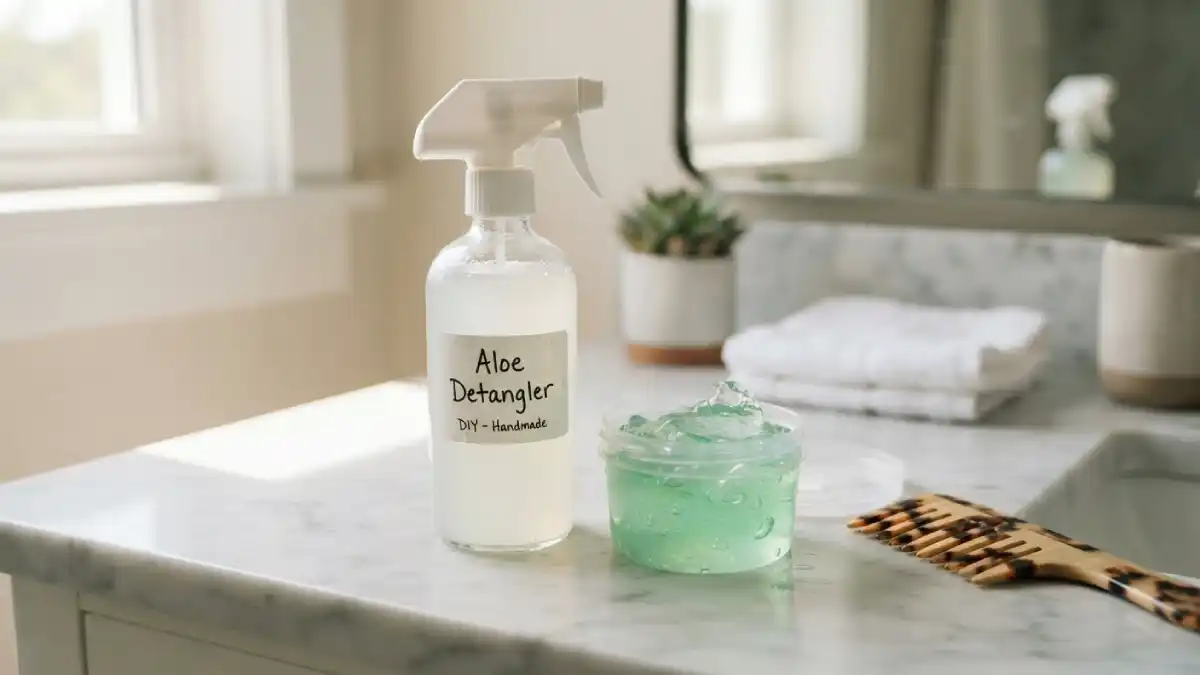
A homemade aloe vera detangling spray is one of the cheapest hair tricks you can make at home. It takes two ingredients, one spray bottle, and about five minutes. It won’t repair damage or replace every product in your routine, and we’ll be upfront about its limits. But it can deliver the one thing most of us actually buy a leave-in for: slip. That’s the smooth, glide-through-your-hair feel that keeps a comb from tugging and tearing.
In this guide, you’ll get the exact recipe, a simple method for detangling without breakage, a real cost comparison, and the safety rules most DIY posts skip. By the end, you’ll know whether this $2 spray belongs in your bathroom, and when it’s smarter to spend a little more.
Jump Links
- Why Do Some Leave-In Conditioners Cost $40?
- Why Aloe and Water Works for Detangling
- The Honest Reality Check
- What You Need for the $2 Aloe Detangling Spray
- How to Make Aloe Vera Detangling Spray Step by Step
- How to Detangle With It the Right Way
- How to Adjust the Recipe for Your Hair Type
- How Long It Lasts and How to Store It Safely
- DIY vs. Store-Bought: The Real Cost Breakdown
- Common Mistakes and Quick Fixes
- When You Should Still Buy a Leave-In
- Frequently Asked Questions
- Final Thoughts
Why Do Some Leave-In Conditioners Cost $40?
Walk down any beauty aisle and the price gap is wild. Some leave-ins cost less than a latte, while others cost more than a nice dinner out. One luxury aloe-based hair mist, for example, was listed at $39 for 5 fluid ounces at Bluemercury, which works out to $7.80 an ounce for a product that promises to detangle and hydrate.
So what are you actually paying for? Part of it is real formulation work. A well-made leave-in often bundles several jobs into one bottle. It adds slip, coats the hair so it feels smoother, sometimes includes heat or UV protection, and contains a preservative system so the bottle stays safe for months. The rest is stuff you can’t see on the label: branding, fancy packaging, fragrance, marketing budgets, and the salon markup.
Here’s a quick look at what a premium leave-in typically bundles together, and how much of it a two-ingredient aloe spray can realistically cover.
| What a Premium Leave-In May Do | What It Means for Your Hair | Can a $2 Aloe Spray Cover It? |
|---|---|---|
| Detangling slip | Reduces friction so a comb glides through damp hair | Yes, for mild to moderate tangles |
| Light hydration | Adds water so strands feel softer | Yes, but the effect is temporary |
| Smoothing film | Coats the cuticle so hair looks smoother | Partly, since aloe leaves a light film |
| Heavier conditioning agents | Silicones, oils, or other ingredients that cling to hair | No |
| Heat or UV protection | Shields hair from styling tools or the sun (depends on the formula) | No |
| Preservative system | Keeps the bottle safe for months | No, your batch is short-lived |
| Fragrance and branding | Scent, packaging, the salon experience | Not applicable |
Notice the pattern. The aloe spray handles the first two rows well, and that’s the part many of us care about most on a normal weekday morning. It simply isn’t built for the rest. Understanding that split is the whole secret to saving money without wrecking your hair: pay for the features you actually use, and skip the ones you don’t.
Why Aloe and Water Works for Detangling
Tangles happen when strands snag on each other. Detangling is mostly a friction problem, and the fix is lubrication. That’s all “slip” means: a thin, slick layer between strands that lets a comb or your fingers travel through instead of catching.
Water is the first piece of the puzzle. Hair is easier to handle when it’s damp, and dermatologist tips shared through the American Academy of Dermatology (AAD) say to wet your hair thoroughly, apply a leave-in, and detangle with your fingers or a wide-tooth comb while working in sections. The AAD also advises against brushing your hair while it’s dry, since that can lead to breakage and frizz.
Aloe is the second piece. Aloe vera gel is naturally slippery, and that texture is exactly what you want in a detangler. According to NaturallyCurly’s overview of aloe in hair products, the gel forms a thin polymer film on the hair’s surface that smooths the cuticle and helps with detangling, while also providing a mild hold. Curl Centric points to the same slippery texture as the reason aloe helps with knots.
Putting it in a spray bottle adds one more advantage: control. A mist spreads a thin, even layer across each section, so you don’t end up with a glob of gel in one spot and dry knots in another.
Now for the caveat. Healthline notes that there’s no clinical evidence that aloe vera strengthens hair or makes it grow, although it’s safe for most people and may be beneficial. So ignore the viral claims about miracle growth. What aloe offers is practical, not magical: slip, a light feel, and a smoother finish. That’s exactly why it works in a detangling spray, and why it would be a stretch to expect it to repair damage.
The Honest Reality Check
Before you toss your leave-in, let’s be straight about what this spray is and isn’t. Plenty of DIY posts oversell it, and you deserve the real picture.
“Instant” means instant slip, not instant repair. The moment you mist damp hair, it feels slicker and a comb moves more easily. That’s real, and you’ll notice it right away. But the spray doesn’t mend split ends, rebuild a damaged cuticle, or untangle serious matting on its own. Big knots still take patience, a gentle hand, and good technique.
It’s a detangler, not a full replacement. If your hair is healthy to moderately dry and your main goal is easier combing, this spray can absolutely replace a pricey detangling mist. If you bleach, color, or heat style often, a store-bought leave-in does extra jobs this spray can’t.
Results vary by hair type. Some people with low-porosity hair report that aloe gel can feel stiff or drying, and NaturallyCurly also points out that store-bought aloe gels differ a lot in what they actually contain. That’s why the recipe below is diluted, and why you should test it on one section of hair first.
Homemade doesn’t mean maintenance-free. This is the big one. Anything made with water can grow bacteria, yeast, and mold, and a homemade spray has no preservative system protecting it. The FDA’s page on microbiological safety and cosmetics lists consumer use, such as dipping fingers into a product, as one way microorganisms get in, and notes that microbial contamination is a common reason cosmetics get recalled. We’ll cover how to handle this properly in the storage section.
So here’s the reframed promise: a $2 aloe and water spray gives you free-flowing slip for pennies, as long as you make small batches and keep everything clean. That’s a deal worth taking, with your eyes open.
What You Need for the $2 Aloe Detangling Spray
The ingredient list is short on purpose. Every add-in is one more thing that can spoil, build up on your hair, or irritate your scalp.
Ingredients
- 2 tablespoons of aloe vera gel. Look for a gel with aloe as the first ingredient, no added dyes, and ideally no heavy fragrance or drying alcohol. A 12-ounce tub of Fruit of the Earth aloe gel was listed at $4.28, or 35.7 cents per ounce, on Walmart, though prices vary by store and seller. Keep in mind that gels labeled “100% aloe” usually still contain thickeners and preservatives. That’s normal.
- 14 tablespoons (7 fluid ounces) of distilled water. Distilled water starts out clean, which gives your batch a better shot at staying fresh. A gallon typically costs a couple of bucks at most grocery stores.
Tools
- An 8-ounce spray bottle with a fine-mist nozzle (dollar stores and drugstores carry them)
- Measuring spoons and a liquid measuring cup
- A small whisk or fork
- A fine-mesh strainer (optional, but it catches gel clumps that can clog the nozzle)
- A wide-tooth comb or a flexible detangling brush
Where the “$2” comes from. At those prices, the aloe in one batch costs roughly 36 cents and the water about a dime, so a refill runs well under a dollar. Add a dollar-store bottle and your very first bottle lands under two dollars, not counting the leftover gel in the tub. You’ll spend more up front if you buy the whole tub, but a single 12-ounce tub makes about a dozen batches.
How to Make Aloe Vera Detangling Spray Step by Step
Total time: about five minutes. Makes: one 8-ounce bottle.
- Clean your tools. Wash the bottle, measuring cup, and whisk with hot, soapy water, rinse well, and let them air-dry. Some people also wipe the bottle with rubbing alcohol and let it dry completely before filling.
- Loosen the gel. Spoon 2 tablespoons of aloe gel into your measuring cup and add 2 tablespoons of the distilled water. Whisk until you have a smooth, runny slurry with no clumps. Thick gel blends far more easily this way than if you drop it straight into the bottle.
- Add the rest of the water. Pour in the remaining 12 tablespoons of distilled water and stir gently so you don’t whip in a bunch of bubbles.
- Strain if needed. If you spot lumps, pour the mixture through a fine-mesh strainer to keep the nozzle from clogging.
- Fill the bottle. Use a small funnel or pour slowly, and leave a little air space at the top.
- Shake and label. Shake well, then stick a piece of tape on the bottle with today’s date. You’ll need it later.
- Refrigerate. Keep it cold between uses and give it a quick shake before each spritz.
Do a patch test first. Healthline suggests rubbing a small amount of aloe on the inside of your wrist and waiting up to two hours to see whether your skin reacts, since some people are allergic. It takes two minutes of effort and could save you a scalp full of irritation.
A note on fresh aloe. If you grow an aloe plant, you can use the clear inner gel from a fresh leaf. Just know that fresh gel contains no preservatives at all, so a batch made with it should be used up even faster, within a couple of days. Stick to the clear inner gel and avoid the yellow sap near the rind, which can irritate skin.
How to Detangle With It the Right Way
The spray provides the slip, but technique does the rest. This routine follows what dermatologists and hair experts commonly recommend for protecting your strands.
- Start with damp hair. After washing, blot your hair with a towel instead of rubbing it. Healthline’s guide on split ends also recommends detangling before you dry, brush, or style.
- Section your hair. Clip it into four to six sections, or more if your hair is thick or curly. Working in sections makes the whole process easier and gentler.
- Mist generously. Spray each section until it’s evenly damp and slippery, but not dripping.
- Use your fingers first. Gently separate the big knots and pull out shed hairs before any tool touches your hair.
- Switch to a wide-tooth comb. The same Healthline guide notes that the AAD recommends a wide-tooth comb because the wider teeth glide through without damaging the ends or causing breakage.
- Start at the ends and work upward. Use short, gentle strokes at the bottom first, then move higher as each section loosens. Never start at the roots and drag down through a knot.
- Re-mist as you go. If a section starts feeling dry or grabby, add more spray before continuing.
- Style as usual. Let your hair air-dry or style it the way you normally would. As a leave-in, a light mist is plenty. Soaking your hair doesn’t add extra slip.
Pro tip: If a knot won’t budge, stop pulling. Add more spray, wait about 30 seconds, and try again with your fingers. Forcing it is how healthy hair turns into broken hair.
How to Adjust the Recipe for Your Hair Type
One recipe won’t fit every head. Fine, straight hair can feel weighed down by too much gel, while tightly coiled hair often wants more slip. Use the table below as a starting point, then adjust by feel. Keep the total volume at 8 ounces and change only the amount of gel.
| Hair Type | Starting Amount of Gel (per 8 oz) | Tips |
|---|---|---|
| Fine or straight | 1 tablespoon | Focus on the ends and mid-lengths so the roots don’t go limp |
| Wavy | 2 tablespoons | Use the base recipe and scrunch gently while damp |
| Curly | 2 to 3 tablespoons | Section well and finger-detangle before using a comb |
| Coily or very textured | 3 to 4 tablespoons | Needs more slip, so work in small sections and re-mist often |
| Low-porosity or prone to stiffness | 1 to 2 tablespoons | Mist lightly, and cut back the gel if hair feels stiff |
| Color-treated or heat-styled | 2 tablespoons | Treat it as a detangler only and keep your heat protectant |
These amounts are practical starting points, not lab-tested rules. If your hair feels sticky or stiff, use less gel. If your comb still catches, add a little more or mist more generously before you comb.
How Long It Lasts and How to Store It Safely
This is the most important section in the whole article, so please don’t skip it.
Water-based products invite microbes. Mold is often easy to spot, but bacterial contamination is usually invisible, which means a spray can look and smell fine while it’s growing something you don’t want near your scalp. Commercial leave-ins are built with preservative systems to prevent that. Your two-ingredient spray isn’t. And although a store-bought aloe gel may contain preservatives, diluting it with plain water weakens that protection, so it’s safest not to assume your mix inherits it.
Follow these rules and you’ll keep risk low:
- Make small batches. Eight ounces or less is plenty.
- Always refrigerate. Cold storage slows microbial growth, though it doesn’t stop it.
- Use it within five days, and seven at the absolute most. That’s a conservative rule of thumb, not a lab-tested expiration date. Write the date on the bottle so you’re not guessing.
- Spray, don’t dip. Never stick your fingers or a comb into the bottle. The FDA specifically lists dipping fingers as a way contamination happens.
- Don’t share the bottle. The FDA also advises against sharing cosmetics, since you can share germs too.
- Toss it at the first red flag. Cloudiness, floating specks, a color change, or a sour or “off” smell all mean it’s done. When in doubt, throw it out. A new batch costs about 50 cents.
- Keep it away from your eyes. Rinse with water if you get some in them.
Want a longer shelf life? You’d need to add a broad-spectrum cosmetic preservative designed for water-based products and dose it according to the supplier’s instructions. Keep in mind that formulators note essential oils and vitamin E aren’t reliable preservatives. For most people, fresh small batches are simpler, safer, and cheaper than trying to engineer a shelf-stable formula in the kitchen.
Finally, stop using the spray and talk to a healthcare professional if you notice redness, burning, or itching on your scalp that doesn’t go away.
DIY vs. Store-Bought: The Real Cost Breakdown
Now for the math that started all this. The table below compares the DIY spray to the $39 aloe mist we looked at earlier, using the retailer listings referenced in this article. Prices change, so treat these as ballpark figures.
| Option | Approximate Cost | Size | Approximate Cost per Fluid Ounce |
|---|---|---|---|
| DIY aloe spray (refill batch) | About $0.47 | 8 fl oz | About 6 cents |
| DIY aloe spray (first batch, including the bottle) | Under $2.00 | 8 fl oz | Under 25 cents |
| Luxury aloe hair mist (retailer listing) | $39.00 | 5 fl oz | $7.80 |
Per ounce, the DIY spray costs more than 100 times less. To put that in real life terms, say you mist about half an ounce per detangling session, three times a week. That’s roughly 78 ounces a year. At DIY prices, that’s around $4.60. At $7.80 an ounce, it’s about $608.
To be fair, that’s not a perfect apples-to-apples comparison. The premium mist is a finished, preserved product that may include extras the DIY version lacks. But if all you need is slip for combing damp hair, you’re paying a steep premium for features you may not use.
Common Mistakes and Quick Fixes
Most problems with homemade detangling sprays come down to a handful of avoidable errors:
- Using too much gel. More isn’t better. Too much leaves hair stiff, sticky, or flaky.
- Skipping the dilution. Spraying straight gel or a super-thick mix makes a mess and clogs the nozzle.
- Spraying dry hair and yanking. The spray works best on damp hair, and dry hair breaks more easily when you force a comb through it.
- Adding oils or essential oils without knowing the risks. Oil and water don’t mix on their own, and extra ingredients add more things that can spoil or irritate.
- Keeping the bottle for weeks. This is the most common and most risky mistake.
- Using a fine-tooth comb or stiff brush on wet, curly hair. Wide-tooth tools and gentle, ends-first strokes protect your strands.
- Skipping the patch test. Aloe is safe for most people, but not everyone.
Here’s a quick troubleshooting table for the most common issues.
| Problem | Likely Cause | Quick Fix |
|---|---|---|
| Hair feels sticky or stiff | Too much gel in the mix or too much spray | Cut the gel by about a third and mist more lightly |
| White flakes appear | Gel residue building up | Use less product and shampoo to clear buildup |
| Nozzle keeps clogging | Gel clumps in the mixture | Strain the mix and whisk the gel into a slurry first |
| Hair still tangles badly | Not enough slip or very severe knots | Re-mist, finger-detangle first, and take your time |
| Cloudy liquid or sour smell | Contamination | Discard it and make a new batch with clean tools |
| Itchy or red scalp | Possible sensitivity | Stop using it and check in with a professional if it persists |
When You Should Still Buy a Leave-In
Being frugal doesn’t mean being stubborn. Some situations call for a store-bought product, and spending a little there is the smart move.
- You use hot tools regularly. This spray is not a heat protectant, and using styling tools on wet or damp hair can cause damage. Use a product labeled for heat protection and let your hair dry appropriately first.
- Your hair is bleached or heavily damaged. Very dry or compromised hair often needs richer conditioning ingredients than aloe and water can provide.
- You need a long shelf life. Traveling, gym bags, and busy weeks all favor a properly preserved product over a fridge-dependent homemade one.
- Your hair is tightly coiled and needs heavy moisture. A cream-based leave-in may do more for moisture and sealing than a light mist.
The smartest budget approach is to read the ingredient list, not the price tag. A solid mid-priced leave-in with a short, sensible ingredient list can do plenty. You can use your aloe spray for everyday detangling and keep one affordable preserved product on hand for heat days or special occasions. That way, you’re paying only for the features you actually use.
📌 YOU MIGHT ALSO LIKE:
Frequently Asked Questions
Does aloe vera and water really detangle hair?
For many people, yes, within limits. Aloe gel is slippery and leaves a light film on the hair that smooths the surface, which reduces the friction that makes combs snag, according to NaturallyCurly. That makes mild to moderate tangles easier to work through. It won’t fix severe matting, split ends, or damage, so pair it with a wide-tooth comb, small sections, and a patient hand.
How long does homemade aloe detangling spray last?
Not long. Because it contains water and has no preservative system, treat it as a few-day product. Keep it in the refrigerator, label it with the date, and aim to use it within five days, never going past seven. That’s a conservative rule of thumb rather than a tested expiration date, so toss it immediately if it turns cloudy, smells off, or changes color.
Can I use fresh aloe from my plant instead of store-bought gel?
You can, but use only the clear inner gel and avoid the yellow sap near the rind, which can irritate skin. Blend or whisk the gel until smooth and strain out any chunks. Fresh gel has no preservatives, so use the batch within a couple of days, and do a patch test first.
Can I use this spray every day?
Healthline says aloe vera is safe for most people, so a light mist on damp hair most days is reasonable if your skin and scalp tolerate it. Watch for buildup such as stiffness or white flakes, and shampoo when your hair starts to feel coated.
Can I use this spray as a heat protectant?
No. It isn’t formulated to protect hair from heat, and using hot tools on wet or damp hair can cause damage. If you style with heat, use a product labeled as a heat protectant and make sure your hair is dry enough for the tool you’re using.
Why does my hair feel sticky or stiff after using it?
Usually it’s too much gel in the mixture or too much spray on the hair. Some people with low-porosity hair also find aloe feels stiff, as NaturallyCurly notes. Cut back the gel, mist more lightly, and make sure you’re using it on damp hair rather than layering it over other products.
Final Thoughts
Here’s the bottom line. A $2 aloe and water spray won’t replace every product on your shelf, and it won’t work miracles on damaged hair. What it will do is give damp hair real slip for pennies per ounce, which is exactly what most of us need when a comb meets a knot. Use clean tools, make small batches, keep it in the fridge, and toss it before it gets old.
Pair it with a wide-tooth comb, work in sections, and start at the ends, and you’ll get a lot of the detangling benefit without the $40 price tag. If your hair needs heat protection or heavy repair, spend a little on a product that does that job, and keep saving everywhere else.
Want more budget-friendly beauty swaps, simple DIY recipes, and honest breakdowns of what’s actually worth your money? Keep exploring The Frugal Glow for smart, wallet-friendly ways to look and feel your best.
Sources
- Aloe Vera in Hair Products, NaturallyCurly
- Aloe Vera for Hair, Healthline
- How to Prevent Split Ends, Healthline
- 6 Curly Hair Tips From Dermatologists, American Academy of Dermatology
- Microbiological Safety and Cosmetics, U.S. Food and Drug Administration
- Aloe Vera for Hair, Curl Centric
- Beginner’s Guide to Natural Preservatives, The Things We’ll Make