
Clear Nail Polish vs. Jewelry Sealant vs. Wax: Which Cheap Fix Protects Costume Jewelry Longest?
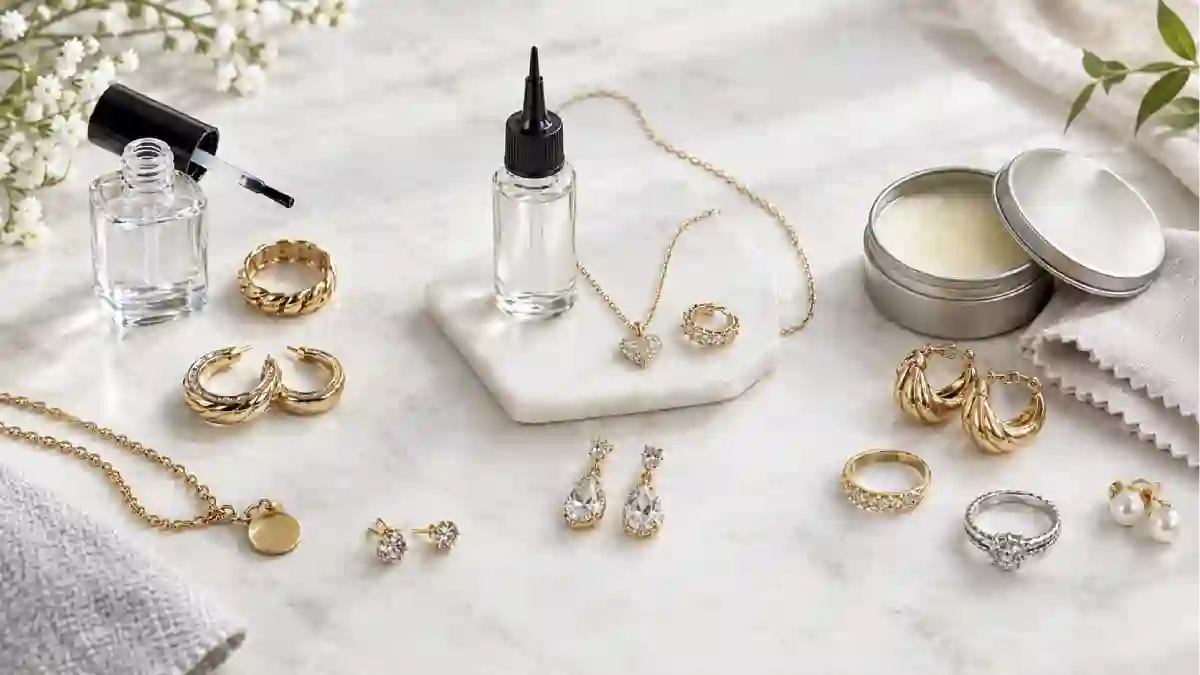
Anyone who owns costume jewelry has met the same two problems: the shiny finish dulls and darkens, and the metal starts leaving a green or gray mark on your skin. The internet has a handful of cheap fixes, and three of them come up again and again: a coat of clear nail polish, a dedicated jewelry sealant, or a thin layer of protective wax. All three work on the same basic principle, which is putting a barrier between the metal and the things that react with it. They differ in cost, effort, look, and (according to the people selling and using them) how long they last.
Here’s the part most comparison articles skip: no independent laboratory study compares these three methods head to head. What exists is manufacturer claims, jeweler advice, and reviewer experience, and some of it is contradictory. So this guide does two things. It lays out what’s actually known about each fix, clearly labeling which claims come from manufacturers and which come from users, and it gives you a simple four-week test you can run on your own cheap jewelry to find out which method works best for how you actually wear your pieces.
Jump Links
- The Short Answer
- Why Costume Jewelry Tarnishes and Stains Skin
- Option 1: Clear Nail Polish
- Option 2: Jewelry Sealant
- Option 3: Wax
- Side-by-Side Comparison Table
- How Much to Trust Each Claim
- Which Fix for Which Piece of Jewelry
- How to Apply Each Method
- Run Your Own 4-Week Test
- Cost Per Piece
- Mistakes That Shorten Protection
- When None of These Will Work
- FAQ
- The Bottom Line
The Short Answer
Based on what’s reported across jewelry brands, user reviews, and manufacturer information, here’s the most honest summary:
- Clear nail polish is the cheapest and easiest option, and it genuinely helps, but it’s the shortest-lived. Reports range from a few wears up to a couple of months, and frequent wear, water, and sweat wear it down fastest.
- Jewelry sealant (a dedicated clear coating made for metal) is reported to last longest. Manufacturer and seller claims run into the months, but those claims haven’t been independently verified.
- Wax is the easiest to apply and the simplest to remove, and it’s popular for preserving metal surfaces. But it’s a non-permanent barrier, and reviewers themselves say they can’t pin down how long it lasts, so it’s best for pieces that don’t rub against skin all day.
If you want the longest protection for a piece you wear often and you’re willing to pay a bit more upfront, a sealant is the logical choice. If you want a cheap, fast fix that you’re happy to redo every few weeks, clear nail polish is fine. If you want a gentle, reversible finish for display pieces or lightly worn items, wax makes sense.
Why Costume Jewelry Tarnishes and Stains Skin
Costume jewelry is typically made from base metals like brass, copper, zinc alloys, or nickel-containing alloys, often with a thin plated finish on top. These metals react with moisture, air, and the oils and acids on your skin. The reaction darkens the surface (tarnish) and, with copper-rich metals, can leave a green mark on skin. A thin plating layer wears away with friction, which exposes the base metal underneath.
All three fixes aim to slow this process by sealing the surface so air, moisture, and skin oils can’t reach the metal as easily. None of them repairs worn plating or changes what the piece is made of, which is an important limit we’ll come back to near the end.
Option 1: Clear Nail Polish
Clear nail polish is a lacquer. Dried, it forms a thin, transparent film over the metal, which blocks contact between your skin and the metal beneath. It’s the classic budget hack for a reason: nearly everyone already owns a bottle.
What’s good about it
- Cost and access. A single bottle costs a few dollars at most, and a coat on one piece uses a tiny amount.
- Speed. It dries quickly, though jewelry sources recommend letting it cure fully (some suggest overnight) before wearing.
- Familiarity. It’s easy to apply with the brush that comes in the bottle.
What’s less good
- It wears off. Estimates vary. One jewelry blog says a thin coat typically lasts 2 to 8 weeks of regular wear, another jewelry site says a few wears, and a third says the coating on frequently worn pieces can last as little as a week or two. Water, sweat, and friction break it down fastest.
- It can chip and flake. Because it’s a film applied to metal, not a bonded coating, it can peel at edges.
- Not designed for metal. Nail polish is formulated for nails, so it isn’t engineered with the specific protective properties of a metal coating, as sealant makers point out.
- Solvent risk. Nail polish and remover can damage some pearls, plastics, and glued parts, so avoid getting it on those.
Best for: Occasional wear, inside surfaces of rings, clasps, and other spots where a quick, cheap, redo-every-few-weeks fix is fine.
Option 2: Jewelry Sealant
Jewelry sealants are clear coatings made specifically for metal. ProtectaClear, from Everbrite Coatings, is one of the best-known examples, sold as an aerosol and in other formats.
What the manufacturer says (these are brand claims, not independent test results)
- The company describes it as a polymer resin coating that’s clear, durable, and intended to resist tarnish, oxidation, and wear.
- It says the formula contains antioxidants to help prevent tarnish, which it points to as a difference from nail polish.
- It says that once cured, the coating is skin-safe and can make jewelry hypoallergenic by keeping skin from contacting the metal.
What sellers and buyers say (unverified)
- A product Q&A response claims two good coats can last 6 months to a year or longer, depending on use. That’s a seller statement and not independent testing, so treat it as an optimistic estimate rather than a guarantee.
What’s less good
- Higher upfront cost than a bottle of polish.
- More steps. Many sealants need thorough cleaning, multiple thin coats, and proper curing time, and aerosols require a well-ventilated space.
- Still not permanent. Any coating can eventually wear off with friction, and it can’t restore plating that has already worn away.
- Marketing claims need caution. “Hypoallergenic” describes the barrier effect while the coating is intact, not a guarantee for everyone. If you have a known metal allergy, talk to a doctor or consider jewelry made from skin-safe materials instead.
Best for: Pieces you wear often, items you want to protect for months, and anyone willing to spend a little more to get longer-lasting protection.
Option 3: Wax
Wax is the gentlest of the three. Microcrystalline waxes, like the Renaissance Wax originally developed for use by the British Museum on art and artifacts, are rubbed lightly onto metal and buffed to a thin, clear, protective finish. Plain beeswax is a more rustic, budget-friendly relative.
What’s good about it
- Easy and reversible. You rub it on and buff it, and you can remove it later without chemicals.
- Clear and non-yellowing. The product description for one well-known microcrystalline wax says it buffs to a hard, transparent finish that won’t discolor.
- Water and fingerprint resistance. It creates a barrier against fingerprints and spills, and a little goes a long way.
- Good for raw or polished metal. Reviewers use it on brass, pewter, and other metals to protect against handling and tarnish.
What’s less good
- It’s non-permanent. One reviewer calls it an excellent non-permanent sealant for raw metal, and another says they can’t say how long it protects. That honesty is useful: there’s no reliable duration to quote.
- Friction removes it. On rings, bracelets, and anything that rubs against skin and clothing, wax can wear away quickly.
- Feel. A wax layer can leave a slightly slick or waxy feel if you don’t buff it well.
- Upfront price. A tin of museum-grade wax can cost more upfront than a bottle of polish, though a little goes a long way and one tin can protect many pieces.
Best for: Display pieces, lightly worn statement jewelry, and pieces that don’t rub on skin all day.
Side-by-Side Comparison Table
| Factor | Clear nail polish | Jewelry sealant | Wax |
|---|---|---|---|
| What it is | Nitrocellulose-type lacquer film | Polymer resin coating made for metal | Microcrystalline or beeswax barrier |
| Reported protection time | Few wears to ~2–8 weeks, sometimes up to a couple of months | Manufacturer/seller claims of months (unverified; one seller says 6–12) | Not reliably known; non-permanent |
| Upfront cost | Lowest | Medium | Low to medium |
| Effort | Low | Medium | Low |
| Look | Clear, can look glossy or chip | Clear, designed to be nearly invisible | Clear, natural, may feel slightly waxy |
| Best for skin-contact pieces | Short-term | Strongest option of the three | Weakest, wears off with friction |
| Easy to remove | With nail polish remover (watch gemstones and glued parts) | Harder; follow the product’s directions | Easy |
| Main weakness | Chips and peels | Higher cost, more steps | Doesn’t last on high-friction pieces |
| Best use | Quick, cheap fix | Frequently worn pieces | Display or lightly worn pieces |
Prices are approximate and may change at any time depending on the store, brand, size, and current sales.
How Much to Trust Each Claim
Because there’s no independent, controlled comparison of these three methods, it helps to know how much weight each type of information deserves.
| Claim | Where it comes from | How much to trust it |
|---|---|---|
| Clear polish lasts a few wears to ~2–8 weeks | Jewelry brand blogs and fashion blogs | Reasonable range, but based on general experience rather than controlled tests |
| Sealant lasts 6–12 months | A seller’s reply on a product page | Treat as a best-case marketing claim |
| Sealant is hypoallergenic | Manufacturer | Applies to the barrier effect while the coating is intact; not a guarantee for everyone |
| Wax is a non-permanent barrier | Product reviews | Consistent across reviewers, but no duration given |
| Dramatic “lab study” statistics showing polish backfires | A few websites | We couldn’t verify the studies, and some of these pages also promote competing products, so use caution |
This is why the best advice isn’t to trust any single number. It’s to match the fix to how the piece is worn, and to test it.
Which Fix for Which Piece of Jewelry
| Jewelry type | Suggested fix | Why |
|---|---|---|
| Ring (inner band) | Sealant, or nail polish if you’ll redo it often | High skin contact and friction, so you want the most durable barrier |
| Necklace clasp and chain | Sealant or nail polish | Clasps and chains rub against skin and hair |
| Pendant or charm | Wax or sealant | Lower friction, so wax can work |
| Bracelet or bangle | Sealant | Constant movement and friction |
| Statement piece worn occasionally | Wax or nail polish | Light wear means less need for a heavy-duty coating |
| Earrings (decorative part) | Wax or nail polish | Low contact with skin |
| Earring posts (the part in the piercing) | Be cautious | Flaking coating near a piercing can irritate; consider hypoallergenic posts instead |
| Pieces with pearls, opals, or glued stones | Avoid solvents; test or skip | Polish and solvents can damage porous or glued materials |
How to Apply Each Method
Clear nail polish
- Clean the piece with a soft cloth and a little mild soap, and dry it completely.
- Apply one thin coat to the parts that touch skin, such as the inside of a ring band or the back of a pendant. Thin coats cure better than thick ones.
- Let it dry thoroughly, ideally overnight, before wearing.
- Add a second thin coat only if you want extra protection.
- Reapply when you notice chipping or wear.
Jewelry sealant
- Clean the piece and let it dry completely, since coatings bond better to clean metal.
- Follow the product’s directions exactly. For an aerosol, work in a well-ventilated area and use light, even coats.
- Apply thin coats rather than one thick one.
- Let it cure for the full time listed on the label before wearing.
- Inspect periodically, and reapply if you notice wear.
Wax
- Clean and dry the piece.
- Apply a very small amount of wax with a soft cloth.
- Let it sit briefly, then buff with a clean cloth until the surface looks clear and smooth.
- Reapply periodically, especially to pieces that get handled often.
Run Your Own 4-Week Test
Since no one has published a reliable head-to-head comparison, the most useful thing you can do is run a simple test. It costs almost nothing and tells you what works for your skin, your climate, and your habits.
What you need: Four inexpensive pieces of similar jewelry, preferably the same style and metal (for example, four matching brass-tone rings or bracelets), plus your three products.
Steps:
- Label the pieces: A (clear nail polish), B (sealant), C (wax), and D (nothing, as your control).
- Clean all four the same way and let them dry fully.
- Treat A, B, and C following the directions above. Leave D untreated.
- Wear each piece under similar conditions for four weeks, such as the same hand or wrist for the same number of days.
- Check weekly. Note chipping, dulling, color changes, and any marks on your skin.
- Record the results in a table like the one below.
| Week | A: Clear polish | B: Sealant | C: Wax | D: Untreated |
|---|---|---|---|---|
| 1 | ||||
| 2 | ||||
| 3 | ||||
| 4 |
Take photos in the same light each week. After a month, you’ll know which fix holds up best on your pieces, and you’ll have evidence you can trust more than any single online claim.
Cost Per Piece
The actual cost per piece is tiny for all three, because you use very little product each time. The bigger difference is upfront price and how often you need to redo it.
| Method | Approx. upfront cost | How often you redo it | Practical cost over time |
|---|---|---|---|
| Clear nail polish | A few dollars (often already owned) | Every few weeks | Very low, but more frequent reapplication |
| Jewelry sealant | Roughly $10–$25 depending on size and format | Possibly months, per manufacturer claims | Low per piece if it lasts as claimed |
| Wax | Roughly $10–$30 depending on type and size | Often, especially on high-friction pieces | Low per piece since a little goes a long way |
Prices are approximate and may change at any time depending on the store, brand, size, and current sales.
Mistakes That Shorten Protection
- Coating dirty or damp jewelry. Oils and moisture trapped underneath can cause the coating to lift and can trap the problem against the metal.
- Applying one thick coat. Thick coats take longer to cure and are more likely to crack and peel than thin ones.
- Wearing the piece before it fully cures. A coating that hasn’t hardened can smudge, stick, or wear unevenly.
- Coating the wrong parts. Focus on surfaces that touch skin, and avoid gemstones, pearls, and glued components.
- Ignoring wear. A coating that’s chipped or scratched stops protecting. Check pieces regularly and reapply.
- Wearing coated jewelry in water. Showering, swimming, and washing dishes break down every coating faster. Remove jewelry first when you can.
- Putting on lotion and perfume over jewelry. Chemicals can weaken coatings and wax. Apply them first, let them dry, then put on jewelry.
- Expecting a permanent fix. All three methods are protective layers, not repairs.
When None of These Will Work
A few situations are beyond the reach of any coating:
- The plating has already worn through. If bare base metal is exposed, a coating can slow further reaction but can’t restore the finish. Re-plating or replacing the piece may be the better option.
- Heavily corroded or damaged pieces. Coatings seal the surface, but they don’t reverse corrosion that’s already happened.
- Nickel or metal allergies. If your skin reacts to the metal, a coating may reduce contact for a while, but it can wear through unnoticed. For allergies, hypoallergenic materials like surgical stainless steel, titanium, or solid gold are a more reliable choice, and a doctor can advise on what’s safe for you.
- Valuable, antique, or sentimental pieces. Jewelry experts generally advise skipping DIY coatings on valuable vintage items and consulting a professional jeweler instead.
- Porous or delicate materials. Pearls, opals, and similar materials can be damaged by solvents, so avoid applying nail polish near them.
📌 YOU MIGHT ALSO LIKE:
The Genius Dish Soap Trick for Cleaning Fake Diamonds Without Scratching Them
How to Store Costume Jewelry to Prevent Tarnishing: 5 Free Household Tricks
The 3-Ingredient DIY Spray That Removes Odors from Thrifted Leather Bags
FAQ
Which lasts longest: clear nail polish, jewelry sealant, or wax?
Manufacturer and seller claims suggest dedicated jewelry sealants last the longest, in the range of months, while clear nail polish is typically reported at a few wears to roughly two to eight weeks and wax is a non-permanent barrier. None of these durations has been confirmed by independent testing, so the most reliable way to find out is to test them on your own pieces.
Is clear nail polish safe to use on jewelry?
Generally yes for costume jewelry, though it can damage some pearls, plastics, and glued parts, so keep it away from those. If you have sensitive skin, test it on a small area first.
Does jewelry sealant really make jewelry hypoallergenic?
Manufacturers say the cured coating acts as a barrier between your skin and the metal, which can reduce reactions while the coating stays intact. It doesn’t change what the metal is, and the barrier can wear down over time. If you have a metal allergy, talk to a doctor.
Can I use beeswax or furniture wax on jewelry?
Wax can work as a gentle protective barrier on metal, but products vary. A purpose-made microcrystalline wax is designed to buff to a clear finish, while other waxes may leave a cloudy or sticky layer. Test on an inconspicuous spot first.
How often should I reapply each fix?
It depends on how often you wear the piece. Clear nail polish usually needs redoing every few weeks or when it chips, wax may need reapplication more often on high-friction pieces, and sealants may last months, though you should still inspect them regularly.
Will any of these stop green skin completely?
They can reduce contact between your skin and the metal while the coating is intact, which often prevents green marks. Once the coating wears through, the reaction can start again, so protection is temporary.
The Bottom Line
All three fixes can help costume jewelry last longer, and all three are cheap. Clear nail polish is the fastest and cheapest, but it’s the shortest-lived. A dedicated jewelry sealant is reported to protect longest, though those durations come from manufacturers and sellers rather than independent testing. Wax is the gentlest and most reversible, but it’s the least durable on pieces that rub against skin. The honest takeaway is that no one has proven which is best, so match the fix to the piece, keep your expectations realistic, and run the four-week test to see what holds up on your own jewelry.
For more budget-friendly jewelry care guides and honest comparisons, check out more posts over at The Frugal Glow.
Sources: