

The ‘Dopamine Fast’ Guide: How to Reset Your Brain and Focus for $0
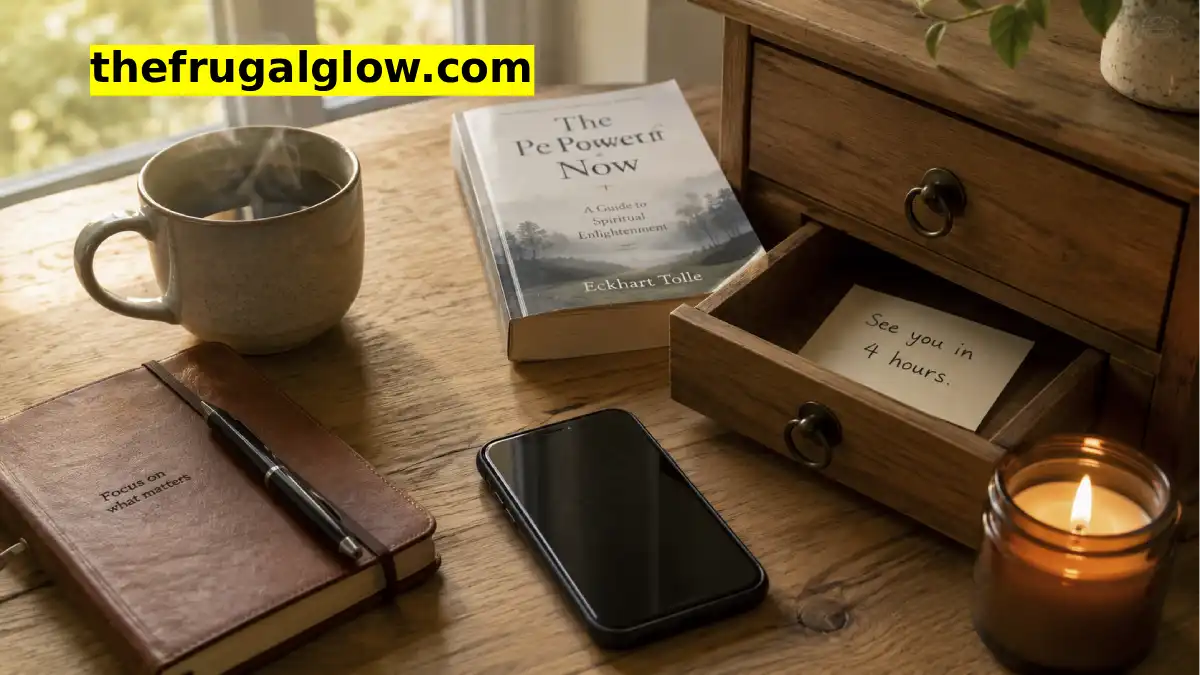
Let me tell you about the week I felt like a zombie.
I was scrolling, tapping, switching apps, repeating. Four hours a day on my phone. Another three on my laptop. I’d start reading an article, get a notification, check Instagram, reply to a text, open Twitter, and then realize I had forgotten what I was reading. My attention span was shot. I couldn’t focus for more than ten minutes. I felt tired even after eight hours of sleep. Nothing felt satisfying anymore.
I heard about something called a “dopamine fast.” It sounded extreme. The internet had turned it into a weird productivity flex. But I looked past the hype and found something interesting.
The basic idea is simple: take a break from high-stimulation activities so your brain resets its sensitivity to dopamine. Not forever. Just for a day. Or even just a few hours.
I tried it. No phone. No social media. No streaming. No processed sugar. No multitasking. For one Saturday.
The first few hours were uncomfortable. I was bored. My hand kept reaching for my phone. I felt anxious for no reason.
Then something shifted. By the afternoon, my mind felt quiet. Calm. Present. I read a book for two hours without checking my phone once. I had a conversation with my partner where I actually listened. I went for a walk and noticed the trees, the clouds, the sounds of birds.
By the end of the day, I felt more relaxed than I had in months. And the next day, my focus was sharper. My mood was better. The usual urges to scroll felt weaker.
The best part? It cost absolutely nothing. No app subscriptions. No fancy retreats. No equipment. Just time and intention.
This guide is the exact protocol I used. It’s not about starving yourself of joy. It’s about clearing out the noise so you can actually feel it again.
Let’s get into it.
Jump Links
- The Zombie Week That Made Me Question Everything
- What Is Dopamine (And Why Does It Need a ‘Fast’)?
- The $0 Dopamine Fast Protocol (Four Simple Steps)
- What to Eliminate (The High-Dopamine List)
- What to Keep (The Low-Dopamine List)
- What Happened When I Did My First Fast (Hour by Hour)
- The Science of Boredom (Why It’s Actually Good for You)
- How Often Should You Dopamine Fast?
- The Hidden Benefit: Saving Money Without Trying
- Common Mistakes People Make (And How to Avoid Them)
- Frequently Asked Questions (FAQ)
- Final Thoughts: You Don’t Need an App to Reset Your Brain
The Zombie Week That Made Me Question Everything
I need to describe what my brain felt like before I tried this.
I was sitting on my couch, phone in hand. I opened Instagram. Scrolled for three minutes. Switched to Twitter. Scrolled for two minutes. Switched to Reddit. Scrolled for five minutes. Back to Instagram. I did this for over an hour. Nothing was interesting. Nothing was satisfying. But I couldn’t stop.
I tried to read a book. I read one page. Checked my phone. Read another page. Checked my phone again. It took me an hour to read ten pages.
I tried to have a conversation with my partner. I kept glancing at my phone. They noticed. They asked if I was okay. I said I was fine. I wasn’t fine. I was addicted to a rectangle.
I looked up “why can’t I focus” and found articles about dopamine addiction. The science made sense. Every like, comment, notification, and video gave me a tiny dopamine hit. Over time, my brain got used to the constant stimulation. Normal activities – reading, walking, talking – felt boring by comparison. So I needed more stimulation. More scrolling. More tapping. More switching.
It was a vicious cycle. And I was stuck in it.
That weekend, I turned off my phone. I put it in a drawer. I told myself I could do anything else – read, walk, cook, nap, stare at the wall – but I couldn’t touch my phone for one full day.
The first few hours were miserable. I felt restless. Anxious. Bored. I kept reaching for my phone. My hand would go to my pocket and find nothing. It was embarrassing to realize how automatic the habit had become.
But by late afternoon, something changed. My mind stopped racing. I read a book for two hours without interruption. I made a meal from scratch and actually tasted it. I watched the sunset without the urge to photograph it for Instagram.
The next day, I was calmer. More focused. Less irritable. And I hadn’t spent a single dollar.
That was two years ago. I still do a dopamine fast every few weeks. It’s free. It’s effective. And it’s one of the best things I’ve ever done for my brain.
What Is Dopamine (And Why Does It Need a ‘Fast’)?
Let me explain the science in plain English.
Dopamine is not a “pleasure chemical.”
That’s a common myth. Dopamine is a motivation chemical. It drives you to seek rewards. It’s released when you anticipate something good, not just when you experience it.
That’s why scrolling feels compelling even when the content is boring. Your brain releases dopamine in anticipation of the next post being interesting. The next video being funny. The next notification being from someone you like.
The problem is tolerance.
Like caffeine or alcohol, your brain adapts to dopamine. When you’re constantly bombarded with high-stimulation activities (social media, video games, junk food, streaming), your brain downregulates its dopamine receptors. Things that used to feel good start feeling meh. You need more stimulation to get the same hit.
A dopamine fast is a “sensitivity reset.”
You temporarily avoid high-dopamine activities. Your brain upregulates its receptors. Low-dopamine activities (reading, walking, talking, cooking) start to feel more satisfying again.
Important: You are not “depriving yourself of dopamine.” That’s impossible. You still experience dopamine from low-stimulation activities. You’re just giving your brain a break from the hyper-stimulating stuff.
The goal is balance. Not abstinence forever. Just a reset.
The $0 Dopamine Fast Protocol (Four Simple Steps)
Here’s exactly what I do. It costs nothing. It takes one day (or half a day if you’re new).
Step 1: Choose your timeframe.
- Beginner: 4 hours (e.g., Saturday morning)
- Intermediate: One full waking day (e.g., 8 AM to 8 PM)
- Advanced: 24 hours (e.g., Saturday 8 AM to Sunday 8 AM)
Start with 4 hours. Don’t try 24 hours on your first attempt. You’ll fail and feel bad.
Step 2: Prepare your environment.
- Put your phone in a drawer or another room (not in your pocket)
- Log out of social media on your computer (or block the sites with a free extension like Freedom or Cold Turkey)
- Tell someone you’re doing it (accountability helps)
Step 3: Make a “yes” list.
Plan what you’ll do instead of scrolling. Write it down. Having a plan prevents the “what now?” panic.
Step 4: Do the fast.
No phone. No social media. No streaming. No video games. No processed sugar. No multitasking. No news. No online shopping.
Just low-dopamine activities. Reading. Walking. Cooking. Cleaning. Stretching. Journaling. Talking to someone. Sitting outside. Staring at the ceiling (yes, really).
When you feel bored, don’t reach for your phone. Sit with the boredom. That’s where the reset happens.
Step 5: Reflect.
At the end of your fast, write down what you noticed. How did you feel? What was hard? What was easy? What do you want to change going forward?
What to Eliminate (The High-Dopamine List)
These are the activities that overstimulate your brain. Eliminate them completely during your fast.
Social Media (all of it):
Instagram, TikTok, Facebook, Twitter, Snapchat, Reddit, LinkedIn, Pinterest, BeReal, Discord (unless for essential communication).
Entertainment Streaming:
YouTube (even “educational” videos – they’re still designed to keep you watching), Netflix, Hulu, Disney+, Amazon Prime, HBO Max, Twitch.
Gaming:
Any video games, mobile games, or online games. Even “casual” games like Solitaire or Wordle.
Junk Food & Added Sugar:
Candy, cookies, chips, soda, sweetened coffee drinks, processed snacks. Natural sugar from fruit is fine.
News & Media:
News websites, news apps, news alerts. Nothing is so urgent it can’t wait a few hours.
Online Shopping:
Amazon, eBay, Target app, any browsing of items to buy. No scrolling through “deals” or “recommended for you.”
Multitasking:
Eating while watching something. Listening to a podcast while walking. Working while checking your phone. Do one thing at a time.
What to Keep (The Low-Dopamine List)
These activities are allowed. They won’t overstimulate your brain.
Reading:
Physical books or e-readers (without internet). Fiction, nonfiction, whatever you enjoy. No news or social media.
Walking:
Outside or on a treadmill. No headphones. No podcasts. Just walking.
Cooking:
Prepare a meal from scratch. Use real ingredients. Taste as you go.
Cleaning & Organizing:
Clean your room. Organize a closet. Wash dishes by hand. The repetitive motion is meditative.
Stretching or Yoga:
Gentle movement. No need for a class or video. Just stretch what feels tight.
Journaling:
Write by hand. Stream of consciousness. No structure required.
Conversation:
Talk to someone in person. Or call them on the phone (not video). Actually listen.
Napping:
Sleep is great. Take a nap if you’re tired.
Staring into space:
No, really. Sit outside or by a window. Watch the clouds. Listen to birds. Do nothing.
Solo hobbies:
Drawing, coloring, knitting, puzzles, playing a musical instrument (not through a screen), woodworking, gardening.
What Happened When I Did My First Fast (Hour by Hour)
Let me give you the raw, unfiltered timeline of my first 4-hour fast.
Hour 0 (8:00 AM): I put my phone in my dresser drawer. Felt a jolt of anxiety. Already wanted to check it.
Hour 1 (8-9 AM): I made breakfast. Oatmeal. No phone on the counter. No podcast in my ears. Just me and the stove. It felt weirdly quiet. I was done with breakfast in 15 minutes. Then I sat there, not knowing what to do with myself.
Hour 2 (9-10 AM): The boredom hit hard. I paced around my apartment. I picked up a book and put it down. I picked up my phone out of habit, then remembered it was in the drawer. I felt restless and irritated. This was the hardest hour.
Hour 3 (10-11 AM): Something shifted. I sat on my couch and just… sat. I looked out the window. I watched a squirrel run across the fence. My mind stopped racing. I picked up the book again and read for 45 minutes without once thinking about my phone.
Hour 4 (11-12 PM): I went for a walk. No headphones. No phone. I noticed things I’d never seen before. A house with a purple door. A garden with sunflowers. A cat sitting in a window. I felt present. Calm. Happy.
After the fast: I got my phone out of the drawer. I had notifications. I checked them. But the urge to scroll was weaker. I put the phone down after 5 minutes and went back to my book.
That was the beginning of a much healthier relationship with my phone.
The Science of Boredom (Why It’s Actually Good for You)
Boredom is not the enemy. It’s the signal.
When you’re bored, your brain is telling you: “The current stimulation level is insufficient. Seek novelty.” In our modern world, we answer that signal with our phones. Scroll. Tap. Swipe.
But boredom has benefits that we’ve forgotten.
Boredom sparks creativity.
When your mind has nothing to do, it starts wandering. Daydreaming. Making connections between unrelated ideas. This is where creativity comes from. The best ideas don’t come while scrolling. They come while showering, walking, or staring out a window.
Boredom builds tolerance for discomfort.
Life is not always entertaining. Waiting rooms. Long lines. Quiet evenings. If you can’t tolerate boredom, you’ll reach for your phone every time. That’s not freedom. That’s addiction.
Boredom leads to better decisions.
When you’re constantly stimulated, you’re in reactive mode. You respond to notifications, alerts, and urges. When you’re bored, you’re in reflective mode. You think about what you actually want to do.
During my first dopamine fast, I sat with boredom for about 45 minutes. It was uncomfortable. But then my brain quieted down. I had an idea for a project I’d been stuck on for months. It came out of nowhere. Because I finally gave my brain space to think.
Boredom is not a problem to solve. It’s a signal to listen.
How Often Should You Dopamine Fast?
There’s no single right answer. Here’s what works for me.
Weekly mini-fast (4 hours): Every Saturday morning. No phone until noon. I read, walk, cook, or just sit. This is my baseline.
Monthly mid-fast (one full day): One Saturday per month. Phone in drawer. No streaming. No gaming. Just low-dopamine activities. I use this day to reset if I’ve been feeling scattered.
Quarterly deep fast (24+ hours): Once every 3-4 months. I’ll do a full weekend (Saturday to Sunday evening). This is intense. I only do it when I feel truly burnt out.
Start where you are. If you’ve never done this, start with 2 hours. Then 4 hours. Then a full day. Don’t jump to 24 hours. You’ll fail and feel bad about yourself.
Signs you need a dopamine fast:
- You check your phone within 5 minutes of waking up
- You feel anxious when you can’t find your phone
- You scroll through apps without enjoying them
- You have trouble focusing for more than 15 minutes
- You feel tired even after sleeping
- You’ve tried to reduce screen time and failed
If any of these sound familiar, try a fast this weekend.
The Hidden Benefit: Saving Money Without Trying
Here’s something I didn’t expect. Dopamine fasting saved me money.
When your brain is constantly seeking stimulation, you’re more likely to make impulse purchases. Amazon. Target. Food delivery. That “one-click buy” button is designed to exploit your dopamine system.
During my dopamine fast:
- I didn’t browse Amazon (no shopping)
- I didn’t order takeout (I cooked from scratch)
- I didn’t buy coffee (I made my own)
- I didn’t subscribe to anything (no streaming meant no “just one more episode” charges)
The math:
- Average impulse spending per week: $20-50 (based on my bank statements)
- Dopamine fast once per week: $20-50 saved
- Per month: $80-200 saved
- Per year: $960-2,400 saved
That’s not even counting the bigger purchases I avoided because I wasn’t being marketed to constantly.
I’m not saying dopamine fasting is a financial strategy. But it’s a nice bonus. When your brain is calm, you make better decisions. Including financial ones.
Common Mistakes People Make (And How to Avoid Them)
I made all of these mistakes. Learn from me.
Mistake #1: Starting with 24 hours
I tried to do a full day on my first attempt. I failed by 10 AM. I felt ashamed. Start with 2-4 hours. Build the muscle.
Mistake #2: Not preparing the environment
I said “no phone” but kept it in my pocket. I checked it “just to see the time” and ended up scrolling. Put it in another room. In a drawer. Under a pillow. Make it hard to access.
Mistake #3: Replacing phone scrolling with computer scrolling
I turned off my phone but then sat at my computer “to check email” and ended up on YouTube. Log out of social media on your computer. Use a site blocker if you need to.
Mistake #4: Doing nothing (literally)
I had no plan for what to do instead. So I just sat there, anxious, waiting for the fast to end. Make a “yes” list beforehand. Have activities ready.
Mistake #5: Going too hard on yourself
I thought I had to be “productive” during my fast. I told myself I had to read a difficult book or do a hard workout. That made me dread the fast. Low-dopamine activities can be easy. Napping is allowed. Staring out a window is allowed.
Mistake #6: Not telling anyone
I tried to do it secretly. Then my partner texted me and I felt obligated to respond. Tell the people you live with. “Hey, I’m doing a no-phone thing from 9 to 1. If it’s an emergency, call me.” They’ll understand.
Mistake #7: Expecting a miracle
One dopamine fast won’t fix years of phone addiction. It’s a practice, not a cure. Do it regularly. The benefits compound over time.
Digital Detox: 3 Secret Phone Settings That Reclaim 2 Hours of Your Life Daily
Frequently Asked Questions (FAQ)
1. Is a dopamine fast just starving yourself of pleasure? That sounds unhealthy.
No. That’s a misunderstanding. You’re not “starving yourself” of dopamine. Dopamine is still being released during low-dopamine activities like reading, walking, and talking. You’re just giving your brain a break from hyper-stimulating activities like social media and streaming. Think of it like a sugar reset. You’re not eliminating sugar forever. You’re taking a break so normal food tastes good again.
2. Do I have to do it for a full day? I can’t imagine 24 hours without my phone.
Start with 2 hours. Seriously. Pick a Saturday morning. Put your phone in a drawer from 9 AM to 11 AM. That’s it. See how it feels. If that’s easy, try 4 hours next time. Build up slowly. There’s no prize for suffering.
3. Can I listen to music or podcasts during a dopamine fast?
For a true fast, no. Music and podcasts are still high-dopamine stimuli. They fill your auditory space and prevent your mind from wandering. The goal is to be with your own thoughts. Silence is uncomfortable at first. That’s the point. That discomfort is where the reset happens.
4. What about work? I can’t just ignore my job.
Work is exempt. If you need your phone or computer for your job, use them. The fast applies to discretionary time only. Some people do their fast during non-work hours (weekends, evenings). Some people take a vacation day. Do what fits your life.
5. Is this backed by science or is it just internet pseudoscience?
The term “dopamine fast” was popularized online, but the underlying science is real. Dopamine tolerance and receptor downregulation are well-documented. Behavioral activation therapy (reducing high-stimulation activities to increase sensitivity to low-stimulation ones) is evidence-based. The specific protocol varies, but the principle is sound: take a break from overstimulation to reset your brain’s reward system.
6. Can kids or teenagers do a dopamine fast?
Yes, but adapt it. Kids have different needs and less autonomy. Try a family “screen-free hour” before dinner. No phones, no tablets, no TV. Play a board game, go for a walk, cook together. For teens, explain the science. Let them choose their own fast (even 30 minutes). Don’t force it or they’ll resent you.
7. I have ADHD. Will this work for me?
Maybe, but it may be harder. ADHD brains have different dopamine regulation. Some people with ADHD find dopamine fasts helpful for reducing overstimulation. Others find them impossible because their brains crave stimulation. Start very small (15-30 minutes). Be kind to yourself if it’s hard. Don’t use this as a way to shame yourself for your brain chemistry.
8. What if I relapse during the fast and check my phone?
You haven’t “failed.” You just had a moment. Put the phone back down. Continue the fast. Don’t reset the clock. Don’t restart tomorrow. Just keep going. The goal is not perfection. The goal is building a new habit, one moment at a time.
9. How long until I see results?
You’ll notice a difference after your first 2-4 hour fast. Your mind will feel calmer. The urges to check your phone will be weaker. Long-term benefits (better focus, less anxiety, more creativity) build over weeks and months of regular practice. Consistency matters more than intensity.
10. Is this really $0? What about all the apps and tools people recommend?
The fast itself costs nothing. You don’t need an app, a subscription, a course, or a coach. Some people use site blockers (free browser extensions like Freedom have free tiers). Some people use grayscale mode (free, built into your phone). Some people use a physical timer (free, it’s called a clock). The protocol I’ve described requires no purchases. Anyone with a phone can do it for free. Anyone who tells you otherwise is trying to sell you something.
Final Thoughts: You Don’t Need an App to Reset Your Brain
Here’s what I want you to take away.
You don’t need a $500 retreat. You don’t need a $15/month app. You don’t need special equipment or a certification or a coach.
You need a drawer. A few hours. And the willingness to be bored.
The phone in your pocket is designed to steal your attention. Not because the engineers are evil. Because attention is valuable. Your attention is the product. Every scroll, tap, and swipe is a transaction.
A dopamine fast is you deciding to close the store for a day. To stop selling your attention. To take it back.
The first few hours will be uncomfortable. Your brain will scream for stimulation. Your hand will reach for your phone. You’ll feel anxious for no reason.
That’s not a sign that you’re doing it wrong. That’s a sign that you’re doing it right.
Sit with the discomfort. Let your mind wander. Notice the world around you. Remember what it feels like to be present.
When you pick up your phone again, you’ll notice the difference. The apps will feel less compelling. The colors will seem louder. The urge to scroll will be weaker.
You haven’t lost anything. You’ve gained clarity.
And you didn’t spend a dollar.
That’s the frugal glow. And it’s already in your pocket. Just put it down for a while. 🧠💛
For more mental wellness strategies, focus techniques, and intentional living advice, visit The Frugal Glow.